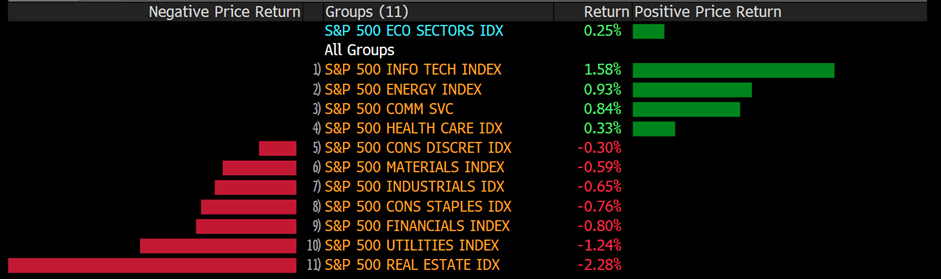
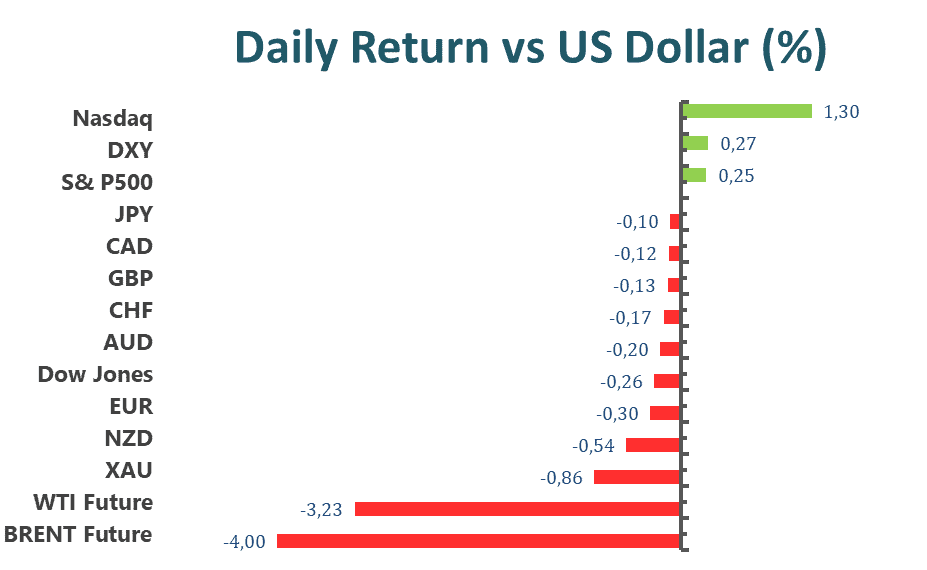
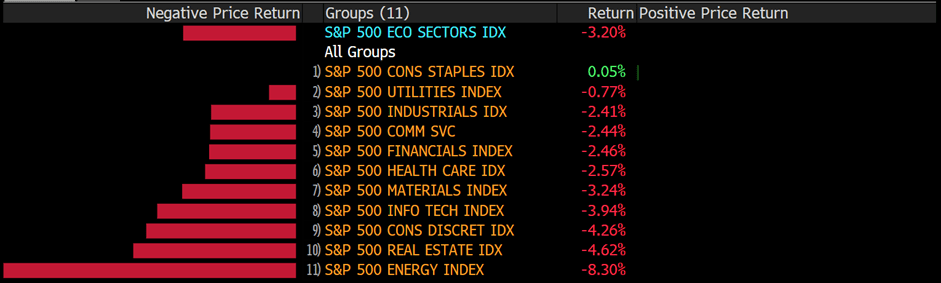
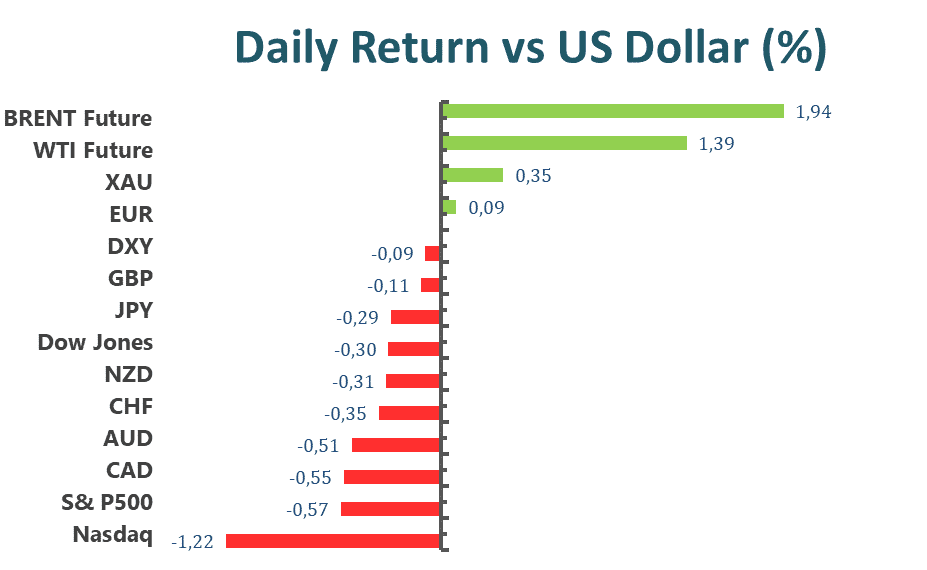
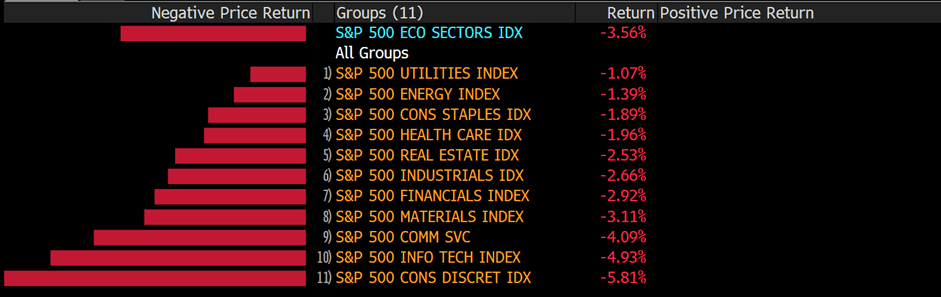
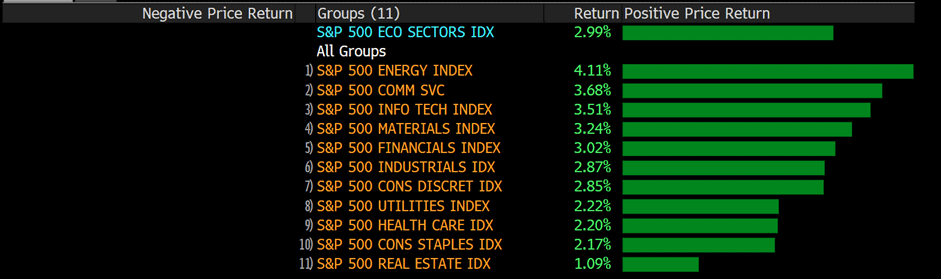
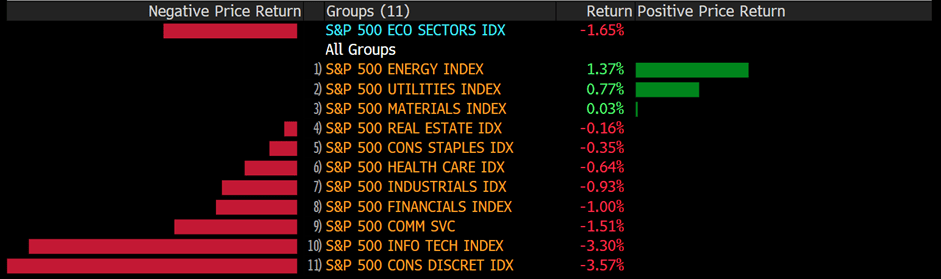
U.S. equity markets experienced another drop as CPI data came in above estimates. The Dow Jones Industrial Average lost 1.02% to close at 31834.11. The S&P 500 slid 1.65% to close at 3935.18. The Nasdaq composite dropped 3.18% to close at 11364.23. April CPI data came in at 8.3%, compared with estimates of 8.1%, and core CPI rose to a record 6.2%. Market participants were expecting a CPI reading that was either similar to or lower than the previous month’s reading, but a higher current month reading indicates that inflation has not peaked and is still on the rise; furthermore, with energy prices declining 2.7% for the month, other factors, such as food prices, still boosted the April CPI reading. The previous FOMC minutes do provide some assurances as the Fed has iterated that it would not hike rates by more than 50 basis points at a time, but the central bank remains that there are still multiple rate increases coming by the end of the year.
The cryptocurrency market experienced a strong pullback as inflation came in red hot. Additionally, the UST issue still weighs heavily on the cryptocurrency market. The stable coin lost its peg to the U.S. Greenback and fell to a low of 0.3 as market participants scramble to exit their positions. Bitcoin is currently trading below $30,000, and Ethereum is trading at $2084, as of writing.

Market participants will be focused on the initial jobless claims report and U.S. PPI report, both scheduled to be released during the American trading session.

Main Pairs Movement

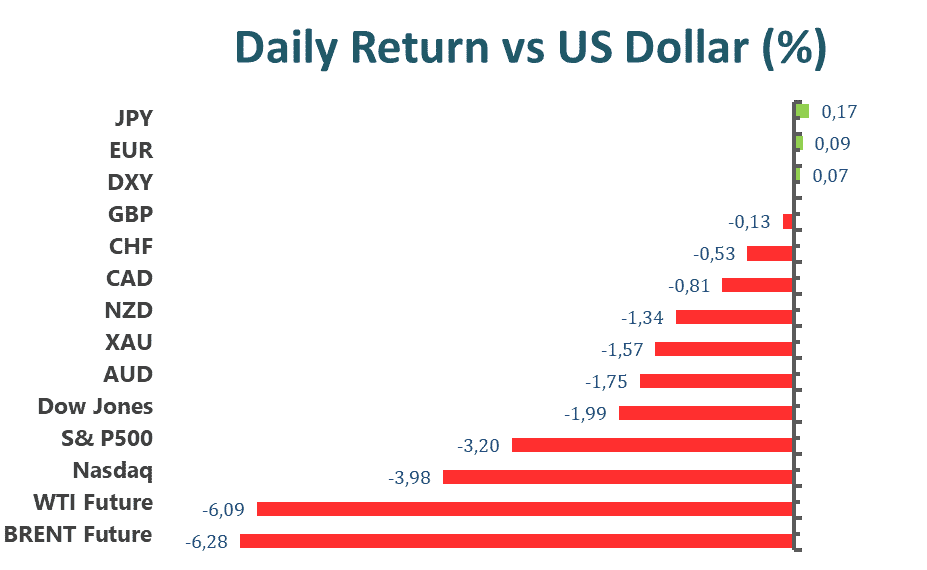
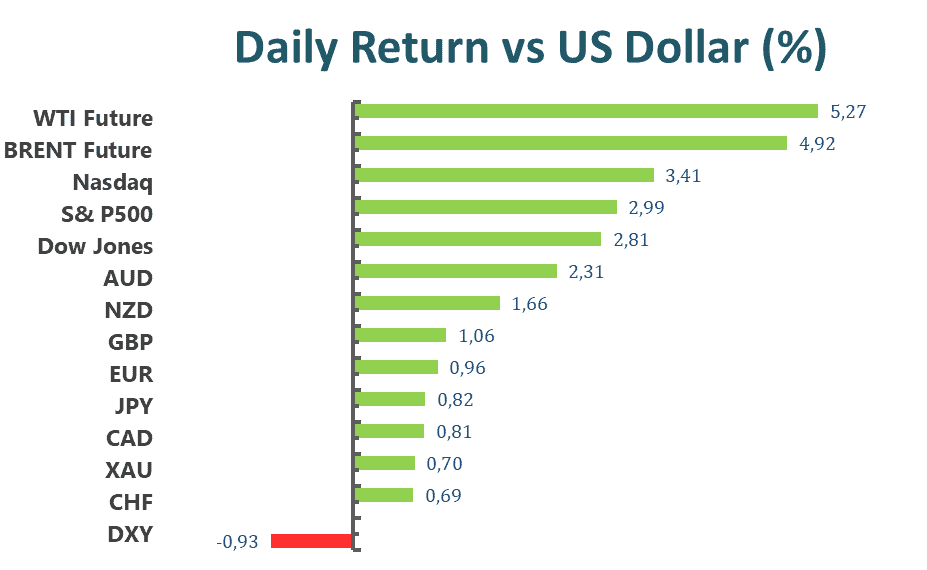
The Dollar Index climbed for the sixth straight trading session and leaped above 104 after the release of the April CPI reading. U.S. Treasury yields jumped above 3% at the initial release of the CPI report, but have gradually simmered below 3% and are currently sitting at 2.906%.

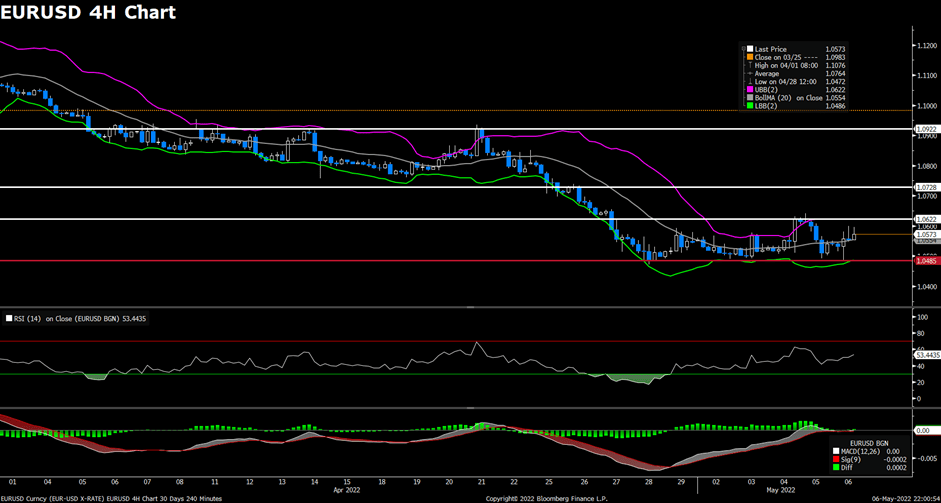
EURUSD lost 0.13% over the previous trading day. The Euro rose for the first part of the day as Euro bulls swooped in to support the currency, but after the U.S. CPI data was released, the Greenback gained back all its losses against the Euro.

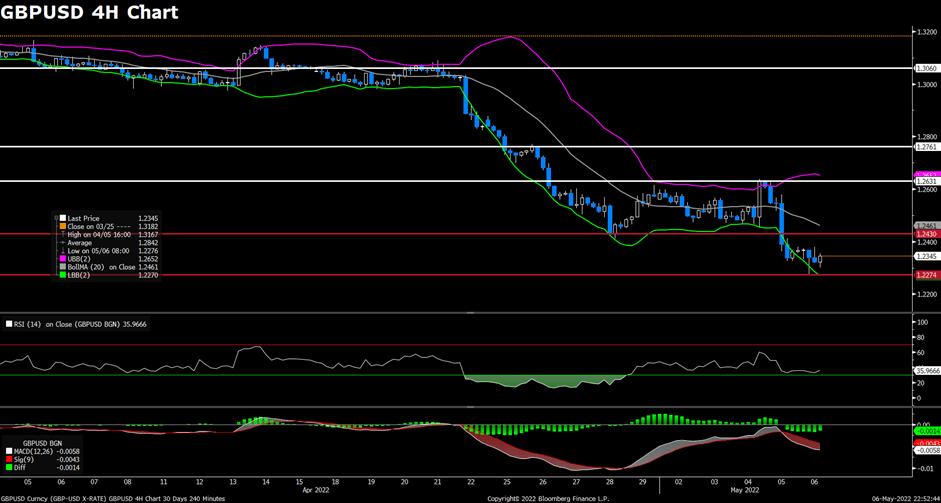
GBPUSD dropped 0.52% over the previous trading day. The British Pound gained upward momentum as the U.S. CPI data came in but soon lost all gains as U.S. Treasury yields edged higher.

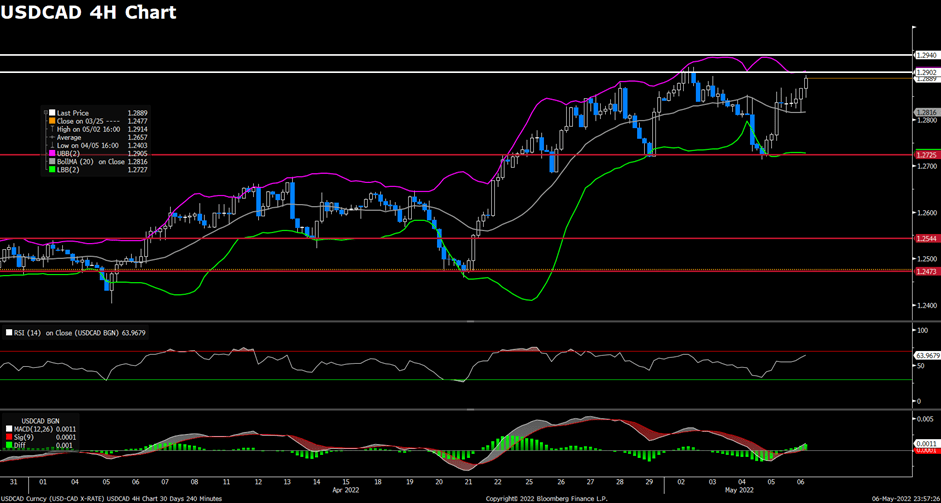
USDCAD dropped 0.29% over the previous trading day. The Canadian Loonie ended its four-day losing streak as the dollar came under pressure from the heated inflation data. The initial CPI release sparked a 0.78% drop in the USDCAD pair but was able to recover some ground.

Technical Analysis

EURUSD (4-Hour Chart)
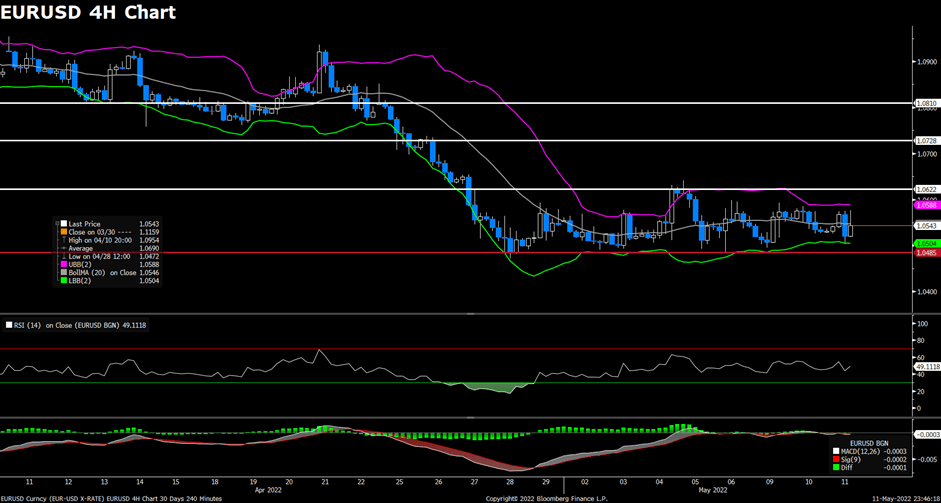
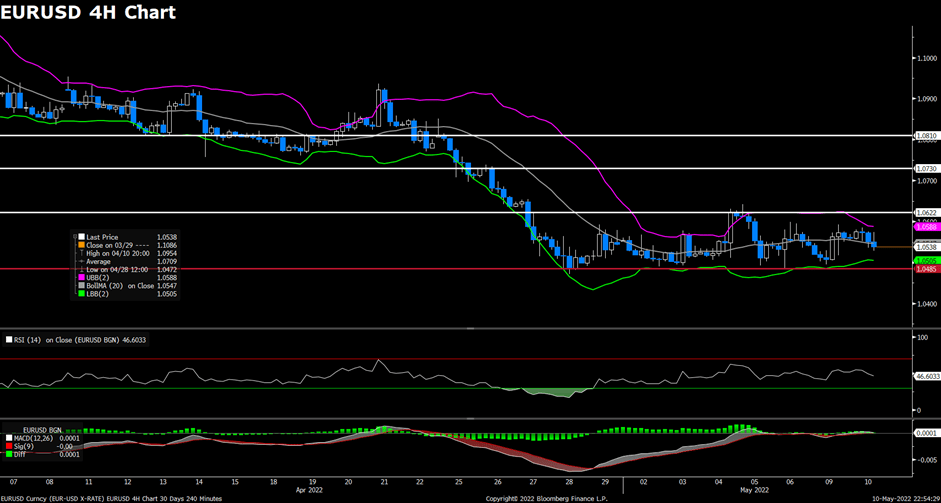
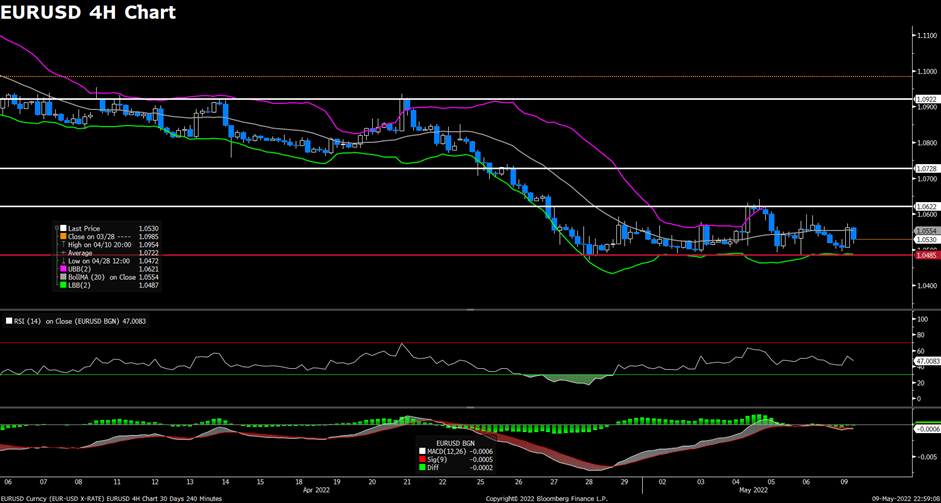
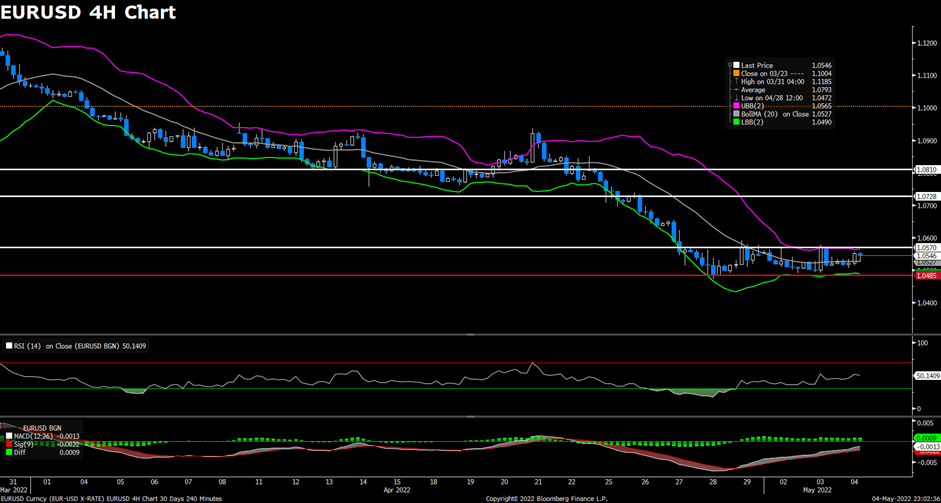
The EUR/USD pair advanced on Wednesday, recovering from a daily low below 1.051 level after the release of the US CPI data. The pair was trading higher to touch a daily high above 1.057 level during the European session, then staged a goodish rebound following US CPI-inspired decline in the US session. The pair is now trading at 1.0544, posting a 0.20% gain daily. EUR/USD stays in the positive territory amid renewed US dollar weakness, despite the stronger US CPI report reaffirming bets for a more aggressive policy tightening by the Fed. For the Euro, ECB President Christine Lagarde hinted that rate hikes could happen as soon as July as inflation continues to rise, showing that the European Central Bank has decided to follow with the rest of the major central banks. The hawkish comment provided some support to the EUR/USD pair.

For the technical aspect, RSI indicator 51 figures as of writing, suggesting that the upside is preserving strength as the RSI keeps heading north. As for the Bollinger Bands, the price regained bullish momentum and crossed above the moving average, therefore the upside traction should persist. In conclusion, we think the market will be slightly bullish as long as the 1.0622 support line holds. On the upside, the pair has room to extend its rebound toward 1.0622.

Resistance: 1.0622, 1.0728, 1.0810
Support: 1.0485

GBPUSD (4-Hour Chart)

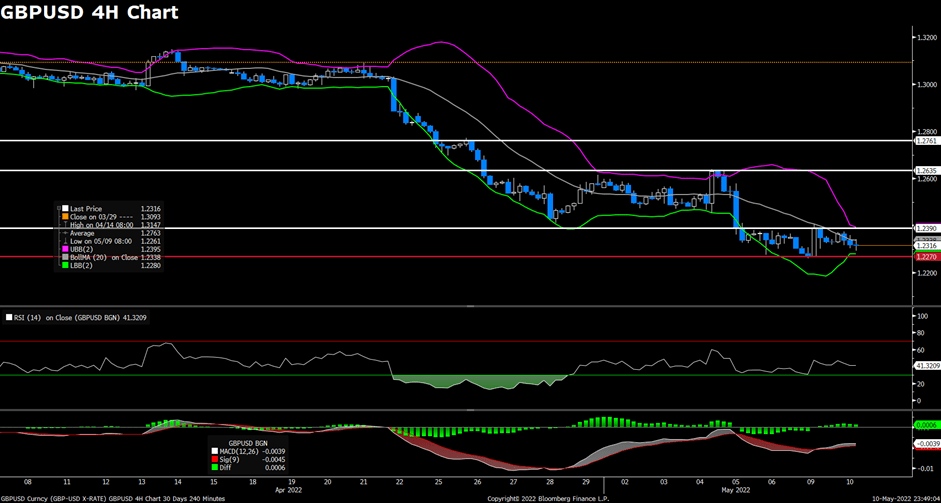
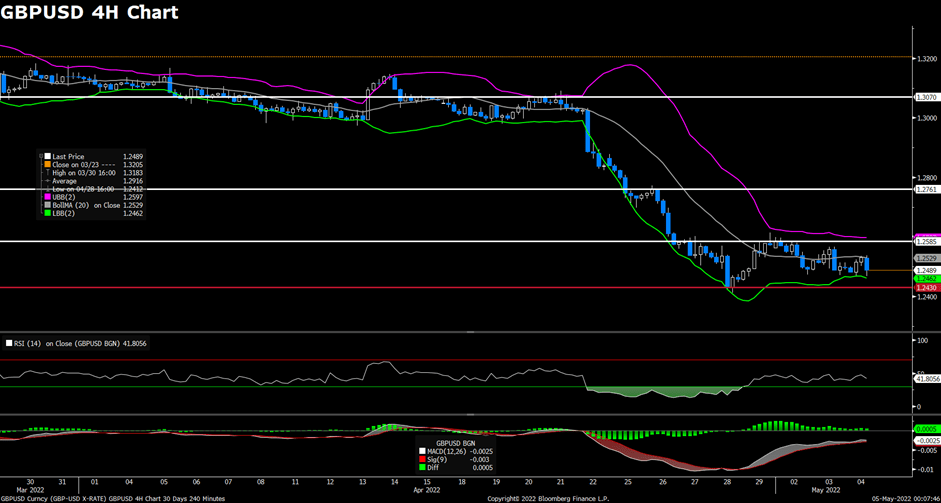
The pair GBP/USD edged higher on Wednesday, gathering recovery momentum and rebounds from the post-US CPI low. The pair regained upside traction after dropping to a daily low below the 1.229 mark, but then started to see fresh selling again and surrendered most of its daily gains in the US session. At the time of writing, the cable remains under pressure but stays in positive territory with a 0.06% gain for the day. The annual pace of the headline US CPI came in at 8.3% in April, which is higher than the market’s expectations of 8.1%. Inflationary pressures are likely to remain high in the next few months amid tight global supply chains and the war in Ukraine. For the British pound, the Bank of England’s gloomy economic outlook last week and negative Brexit-related headlines should keep acting as a headwind for the cable and capped its upside. The latest news showed that Northern Ireland Protocol talks are in a serious situation.

For the technical aspect, the RSI indicator is 42 figures as of writing, suggesting that the downside is more favored as the RSI stays below the mid-line. For the Bollinger Bands, the price retreated from the upper band, indicating some near-term bearish bias and the downside traction should remain. In conclusion, we think the market will be bearish as the pair is heading to test the 1.2270 support. On the upside, a break above the 1.2390 resistance might lead the pair to the 1.2500 area.

Resistance: 1.2390, 1.2631, 1.2761
Support: 1.2270

USDCAD (4-Hour Chart)
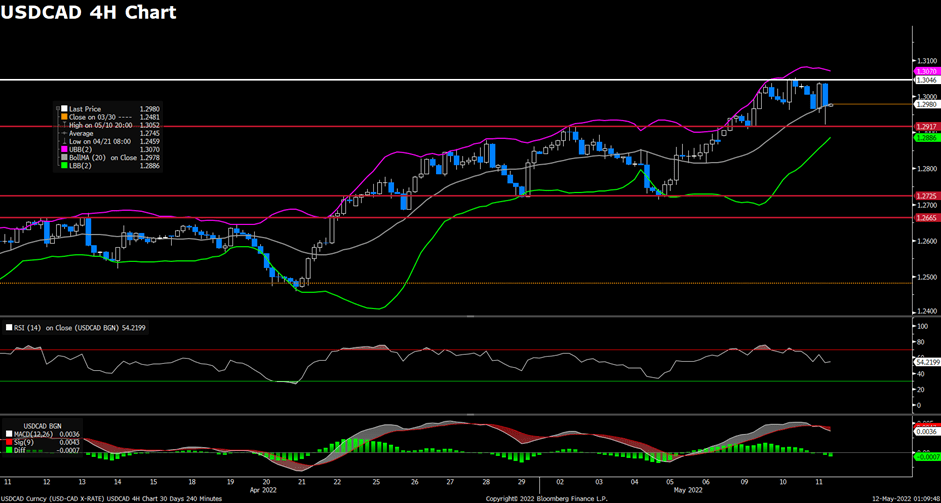
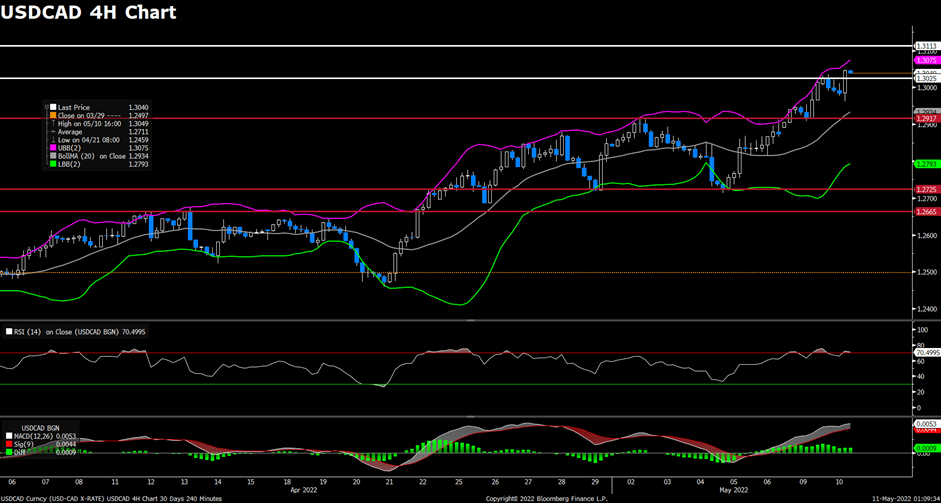
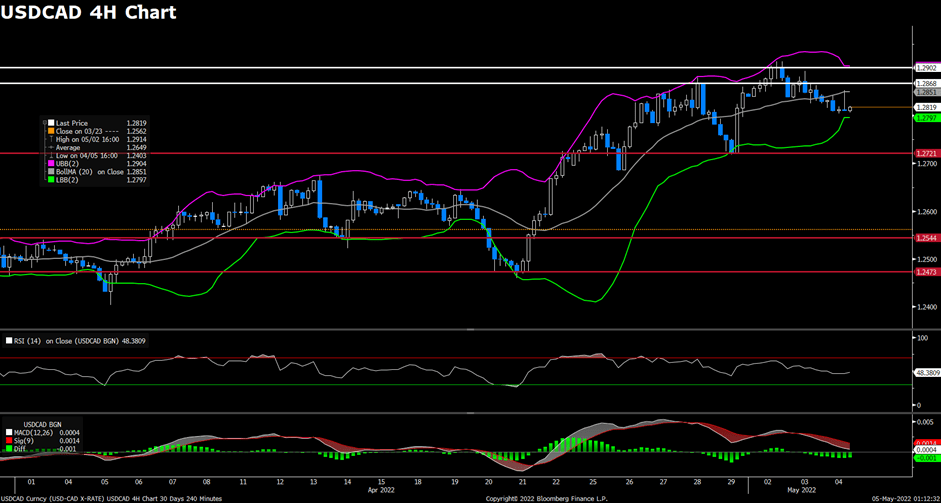
Despite the release of the hotter-than-expected US CPI data, the pair USD/CAD has been choppy in the US session and retreated from the 1.303 level amid US dollar weakness. The pair witnessed heavy selling and tumbled to a daily low near the 1.293 level at the start of the US session, then regained some bullish momentum and recovered some of its daily losses. USD/CAD is trading at 1.2980 at the time of writing, losing 0.36% daily. But the risk-sensitive loonie is under pressure once again on Wednesday as investors are concerned that the Fed will tighten its policy more aggressively this year due to higher inflation. On top of that, surging crude oil prices have provided some support to the commodity-linked loonie and dragged the USD/CAD pair lower. WTI extended its rally towards the $106 per barrel area, as the EU is closer to an agreement on a ban on all Russian oil imports.

For the technical aspect, the RSI indicator is 54 figures as of writing, suggesting that the upside is more favored as the RSI stays above the mid-line. But for the Bollinger Bands, the price failed to rise higher and dropped below the moving average, therefore the downside momentum should persist. In conclusion, we think the market will be bearish as long as the 1.3046 resistance line holds. If USD/CAD dips below the 1.2917 support level, technicians could pull the pair down toward the 1.2850 area.

Resistance: 1.3046, 1.3113
Support: 1.2917, 1.2725, 1.2665

Economic Data

CurrencyDataTime (GMT + 8)Forecast
GBPGDP (YoY) (Q1)14:009.0%
GBPGDP (QoQ) (Q1)14:001.0%
GBPGDP (MoM)14:000.0%
GBPManufacturing Production (MoM) (Mar)14:00-0.5%
GBPMonthly GDP 3M/3M Change14:001.0%
USDInitial Jobless Claims20:30195K
USDPPI (MoM) (Apr)20:300.5%

U.S. equities rebounded slightly throughout yesterday’s trading. The Dow Jones Industrial Average rallied 500 points at the start of trading, but the index could not retain its upward momentum and closed 0.26% lower at 32160.74. The S&P 500 edged 0.25% higher to close at 4001.06. The Nasdaq composite climbed 0.98% to close at 11737.67. The benchmark U.S. 10-year Treasury yield cooled off and is now sitting at 2.99%.

The highly anticipated U.S. April CPI figure will be released later today during the American trading session. Currently, analysts are estimating a lower figure than the March reading of 8.5%. Gasoline, shelter, and food accounted for the largest increased area for the March CPI reading; therefore, cooling commodity and energy prices during April could help the case of a lower CPI reading.

Cryptocurrencies recovered slightly after the panic sell-off by market participants due to worries over UST and its Bitcoin reserves. The broad market selloff was triggered by rumors of a possible Bitcoin “dump” by UST creators to prop up UST’s peg to the U.S. Dollar.

Main Pairs Movement

The Dollar index climbed 0.16% throughout yesterday’s trading, despite falling U.S. Treasury yields. The Greenback continues to be in high demand as market participants attempt to hedge interest rate and exchange rate risks.

EURUSD fell 0.3% throughout yesterday’s trading. The Euro failed to maintain any upward momentum and all gains from the two previous trading days were erased. The ongoing war between Ukraine and Russia still acts as extremely heavy pressure on the Euro.

GBPUSD fell an additional 0.16% during yesterday’s trading. Cable is now on its fourth consecutive losing day, after the large sell-off of the Pound last Thursday. The BoE’s pessimistic economic guidance continues to spook market participants.

USDCAD gained 0.14% throughout yesterday’s trading. Commodity prices continue to fall with the WTI falling below the key 100 Dollar/ Barrel mark. Technical indicators on the four-hour chart, however, do indicate a possible path reversal for the USDCAD pair.

Technical Analysis

EURUSD (4-Hour Chart)

The EUR/USD pair edged lower on Tuesday, losing its recovery momentum in the second half of the day as market participants pay close attention to comments from Fed officials. The pair was trading higher and touched a daily high above the 1.058 level in the Asian session, but then failed to preserve its upside traction heading into the US session. The pair is now trading at 1.0539, posting a 0.18% loss daily. EUR/USD stays in the negative territory despite the generally positive tone around the equity markets, as renewed US dollar strength exerted bearish pressure on the EUR/USD pair. The market focus now shifted to the release of the US CPI report on Wednesday. For the Euro, the concerns about the Russian invasion of Ukraine and the effect it brought on oil and gas supplies might both keep acting as a headwind for the EUR/USD pair, as the European Commission continues to discuss a full oil embargo on Russia.

For the technical aspect, the RSI indicator is 46 figures as of writing, suggesting that the downside is more favored as the RSI stays below the mid-line. As for the Bollinger Bands, the price failed to climb higher and dropped towards the moving average, therefore the downside traction should persist. In conclusion, we think the market will be bearish as long as the 1.0622 resistance line holds. The falling RSI also reflects bear signals.

Resistance: 1.0622, 1.0730, 1.0810
Support: 1.0485

GBPUSD (4-Hour Chart)

The pair GBP/USD declined on Tuesday, failing to preserve its upside momentum amid a negative shift witnessed in market sentiment. The pair started to see fresh selling after reaching a daily top above the 1.237 level, then extended its daily losses and dropped towards the 1.230 mark during the US session. At the time of writing, the cable stays in negative territory with a 0.14% loss for the day. The US dollar continued to be underpinned by the prospects for a more aggressive policy tightening by the Fed, as investors expect that the Fed will take more actions to curb soaring inflation. This helped the greenback to find demand and weighed on the GBP/USD pair. For the British pound, the Bank of England’s gloomy economic outlook and recession fears continued to act as a headwind for the cable. The falling 10-year UK government bond yield is also making it more difficult for the British pound to find demand.

For the technical aspect, the RSI indicator is 41 figures as of writing, suggesting that the pair is facing selling pressure as the RSI stays below the mid-line. For the Bollinger Bands, the price struggled to rise above the moving average and now sitting below it, indicating that the downside traction should remain. In conclusion, we think the market will be bearish as the pair is heading to test the 1.2270 support. The flattened RSI also indicates the lack of buyers’ interest. On the upside, 1.2390 forms the first resistance ahead of 1.2635 and 1.2761.

Resistance: 1.2390, 1.2635, 1.2761
Support: 1.2270

USDCAD (4-Hour Chart)

Despite retreating US bond yields today having limited the upside for the US dollar, the pair USD/CAD witnessed fresh buying and extended its daily gains in the US session. The pair dropped to a daily low below the 1.297 mark at the start of the US session, then regained bullish momentum and erased all of its daily losses. USD/CAD is trading at 1.3038 at the time of writing, rising 0.19% daily. Investors now await the release of US consumer inflation figures on Wednesday, which will play a key role in driving the USD demand. On top of that, sliding crude oil prices also undermined the commodity-linked loonie and provided some support to the USD/CAD pair. WTI extended its daily losses as growing recession risks and lockdowns in China have both dampened the global oil demand, now sitting below $100 per barrel.

For the technical aspect, RSI indicator 71 figures as of writing, suggesting that the pair is facing heavy buying pressure and stays in the overbought zone now, so a trend reversal could be expected. As for the Bollinger Bands, the price started to rise towards the upper band, therefore the upside momentum should persist. In conclusion, we think the market will be bullish as the pair is now testing the 1.3025 resistance. The technical readings will favor the upside if the pair could develop well above that resistance.

Resistance: 1.3025, 1.3113
Support: 1.2917, 1.2725, 1.2665

Economic Data

CurrencyDataTime (GMT + 8)Forecast
EURECB President Lagarde Speaks16:00 
USDCore CPI (MoM) (Apr)20:300.4%
USDCrude Oil Inventories22:30-0.457M

U.S. equities fell sharply on the first trading day of the week. The Dow Jones Industrial Average dropped 1.99% to close at 32245.7, the S&P 500 slid 3.2% to close at 3991.24, and the Nasdaq Composite tumbled 4.29% to close at 11623.25. The benchmark U.S. 10-year Treasury yield, on the other hand, climbed well past the 3% mark during trading. The technology sector continues to bear the brunt of this wave of equity revaluation. FAANG+ has plunged, despite beating earnings estimates. Risks of stagflation have initiated a frenzy sell-off by market participants.

Palantir Technologies, once a heavily weighted stock in Cathie Wood’s Ark Technologies ETF, reported 2 cents per share earnings and 446 million in revenue. Although the company was able to deliver better than expected earnings, the board of the company issued weak guidance than sent the share price of Palantir in a downward spiral, falling more than 21%.

The cryptocurrency market is also experiencing a major revaluation as treasury yields continue to climb. Bitcoin has dropped back to the $30,000 territory and Etherium is now trading at $2250. The drop in cryptocurrency valuation also affected cryptocurrency-linked equities, such as Nu Holdings.

This week’s U.S. CPI data is getting more crucial for market participants as markets get increasingly volatile. This CPI figure could indicate whether inflation has peaked and it could also indicate whether the Fed’s tightening has delivered on its purpose.

Main Pairs Movement

The Dollar Index continued to climb higher on the first trading day of the week. With treasury yields rising, so did the demand for the U.S. Greenback. Currently, on the FOMC dot plot, the consensus terminal interest rate for 2022 sits at around 2.67%.

EURUSD rebounded 0.11% throughout yesterday’s trading. Despite a stronger U.S. Dollar, market participants flocked to the Euro as it is now sitting near 2017 lows. Bearish signals continue to surround the EURUSD pair.

GBPUSD ended the day trading mostly sideways. The pair closed 0.01% lower than its previous close. During the American trading session, Cable was able to recover most of its intraday losses due to the plummeting U.S. equities market.

USDCAD climbed 0.77% over the previous trading day. The Dollar rallied against the Canadian Loonie as global commodity prices continue to correct from recent highs.

Technical Analysis

EURUSD (4-Hour Chart)

Due to safe-haven demand, the EUR/USD pair moved lower on Monday but was unable to sustain its recovery in the afternoon. The pair mounted a decent recovery throughout the European session after striking daily lows, but subsequently lost its bullish momentum and forfeited its daily gains. The pair is currently trading at 1.0529, representing a daily loss of 0.15 percent. EUR/USD remains in a negative territory amidst renewed US dollar gains, as a further steep decline in global equity markets offers support to the safe-haven US dollar. Concerns regarding central bank tightening and declining global growth weighed on the market mood. As the ECB is not anticipated to tighten monetary policy at a faster rate, the Fed/ECB policy divergence may continue to operate as a headwind for the EUR/USD pair.

As of this writing, the RSI indicator is 46, indicating that the downside is more likely as long as the RSI remains below the zero line. As the price is falling relative to the Bollinger Bands’ moving average, a continuation of the downward trend can be anticipated. In conclusion, we believe the market will be bearish as the pair approaches the 1.0485 support; a breach below this level might pave the way for near-term losses. The declining RSI also shows bearish indications.

Resistance:  1.0622, 1.0728, 1.0922

Support: 1.0485

GBPUSD (4-Hour Chart)

In a risk-averse market environment, the GBP/USD pair dropped on Monday, losing its upward momentum and failing to extend its recovery. Despite reaching a daily high above the 1.240 mark during the European session following a slide to daily lows, the pair began to witness heavy selling and fell towards the 1.230 area ahead of the US session. At the time of writing, the cable maintains a daily loss of 0.16 percent. Negative factors such as central bank tightening, weakening global growth, and worries of a recession helped the US dollar regain upward momentum throughout the US session. The dovish Bank of England and its gloomy economic prognosis might continue to exert bearish pressure on the cable since the outlook indicated that the UK economy was at risk of recession.

As of this writing, the RSI indicator has reached 40 digits, indicating that the pair is seeing selling pressure as the RSI continues to decline. For the Bollinger Bands, the price failed to cross above the moving average and declined towards the lower band, indicating that downside momentum should persist. In conclusion, we believe the market will be negative as the pair approaches the 1.2270 support level. A break over the 1.2430 level might be interpreted as positive and would open the door to the 1.2631 level of resistance.

Resistance: 1.2430, 1.2631, 1.2761

Support: 1.2270

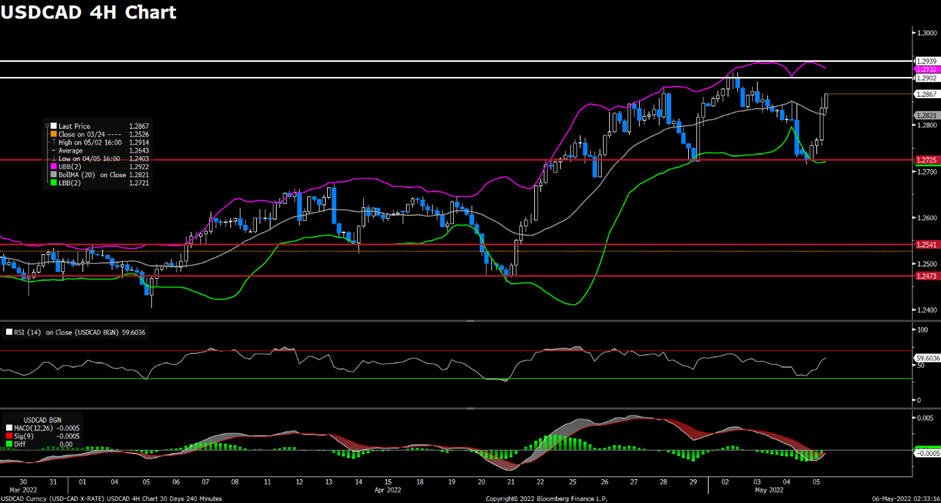
USDCAD (4-Hour Chart)

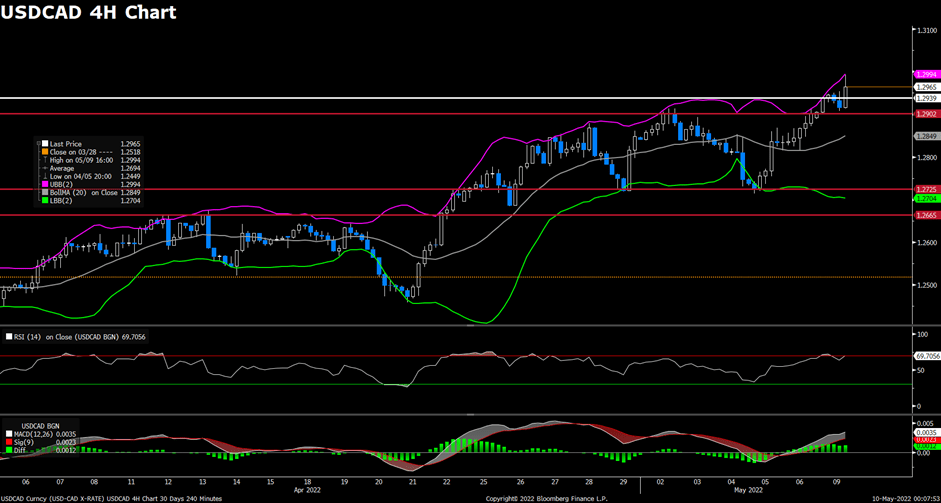
The USD/CAD pair maintained upward momentum and extended its surge that began last week as a result of the pessimistic sentiment surrounding the equity markets. The pair flirted with the 1.2931.295 range for the majority of the day and struck a daily low near 1.291, but fresh buying emerged to wipe out all of its daily losses. At the time of writing, the USD/CAD exchange rate was 1.2964, up 0.43 percent for the day. The anticipation of a more aggressive Fed policy tightening could continue the USD/bullish CAD’s momentum. In addition, declining crude oil prices weakened the commodity-linked Canadian dollar and worked as a tailwind for the USD/CAD pair. China’s authorities continue to struggle with its zero-Covid-19 goal, which is a symptom of weakening oil demand.

Technically speaking, the RSI indicator is 70 at the time of writing, indicating that the pair is facing intense buying pressure and is in the overbought zone, thus a trend reversal could be anticipated. According to the Bollinger Bands, the price continued to move alongside the upper band, hence the upward trend should stay. As the pair is currently challenging the 1.2939 resistance, we believe the market will be bullish. Consistent strength above that level would favor the bulls, and the rising RSI also indicates bullish indications.

Resistance: 1.2939

Support: 1.2902, 1.2725, 1.2665

Economic Data

CurrencyDataTime (GMT + 8)Forecast
EURGerman ZEW Economic Sentiment (May)17:00-42.0
BRLBCB Copom Meeting Minutes19:00 

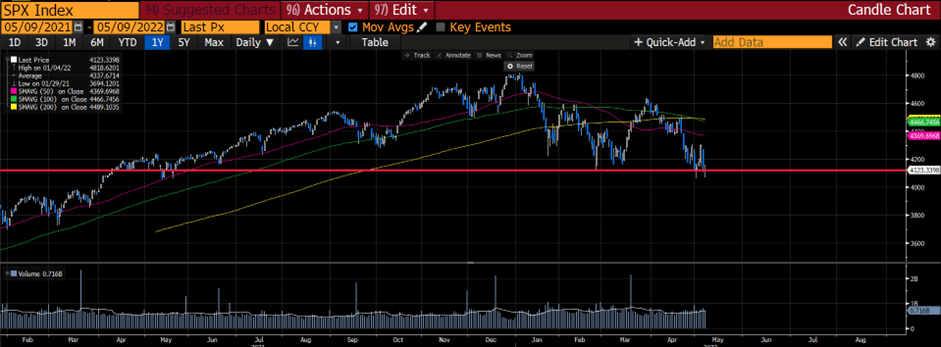
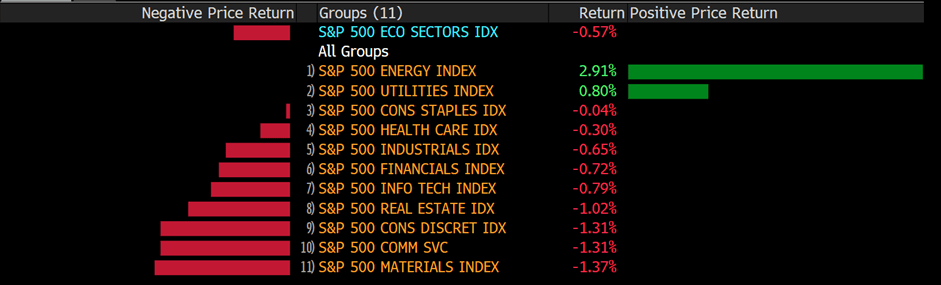
U.S. equities markets edged lower on the last trading day of the week. The Dow Jones Industrial Average lost 0.3% to close at 32899.37, the S&P 500 shed 0.57% to close at 4123.34, and the Nasdaq Composite dropped 1.4% to close at 12144.66. With the U.S. 10-year treasury yield soaring past 3%, market participants continue to sell off bonds. The energy sector was among the best performing sectors on Friday.

The S&P 500 index has arrived at a key support level near the 4123.33 price level. Analysts are predicting a potential rebound at this level, but it would depend on the key earnings reports in the week ahead. Earnings season continues this week with major companies such as Palantir Technologies, Walt Disney, Toyota, Rivian Automotive, WeWork, and Softbank all scheduled to report.

On this week’s economic docket, U.S. CPI data will be released on the 11th, U.K. GDP data on the 12th, and U.S. initial jobless claims and PPI on the 12th as well.

Main Pairs Movement
The U.S. Greenback continues to be in high demand as global central banks begin to tighten their balance sheets. The Dollar Index climbed a further 0.11% on Friday to end the week up 0.43%.

EURUSD was able to stop its free fall on the last trading day of the week. The pair traded mostly sideways throughout the day and closed 0.04% higher. Growth concerns for the European Union continue to loom over the shared currency.

GBPUSD lost 0.21% throughout Friday’s trading. With the BoE painting a less than optimistic economic outlook, the British Pound failed to attract buyers despite falling to multi-year low levels.

The Greenback surged against the Loonie on the last trading day of the week. USDCAD rose 0.59% to close out the week. The Canadian currency fared worse due to weak employment data and falling commodity prices.

Technical Analysis

EURUSD (4-Hour Chart)

The EUR/USD pair advanced on Friday, rebounding from weekly lows following Thursday’s sharp sell-off. The pair was trading lower and dropped to the 1.049 level heading into the European session, then started to see fresh buying to erase most of its daily losses. The pair is now trading at 1.0574, posting a 0.32% gain daily. EUR/USD stays in the positive territory amid renewed US dollar weakness, as the improving market mood undermined the safe-haven greenback and push EUR/USD higher. Despite the Nonfarm Payrolls data in April comes better-than-expected, it failed to provide strong support to the US dollar due to the slight downward revision of March’s reading. For the Euro, ECB’s Villeroy suggested that the bank’s policy rates could return to positive territory by the end of the year, which acted as a tailwind for the EUR/USD pair.

For the technical aspect, the RSI indicator is 55 figures as of writing, suggesting that the upside is more favored as the RSI stays above the mid-line. As for the Bollinger Bands, the price regained bullish momentum and crossed above the moving average, therefore the upside traction should persist. In conclusion, we think the market will be bullish as the pair is heading to test the 1.0622 resistance, a break above that level would target the next resistance at 1.0728. The rising RSI also reflects bull signals.

Resistance: 1.0622, 1.0728, 1.0922
Support: 1.0485

GBPUSD (4-Hour Chart)

The pair GBP/USD edged lower on Friday, remaining under heavy bearish pressure after the dovish BoE policy announcement on Thursday. Despite trying to stage a rebound during the European session after dropping to a daily low, the pair failed to preserve its upside traction and continued to lick its wounds. At the time of writing, the cable started to see some buying stays in negative territory with a 0.10% loss for the day. The US dollar keeps retreating from its highest level since late-2002 after the US April jobs report, but the prospects for a further tightening by the Fed should limit the losses for the greenback. For the British pound, the Bank of England softened its tone on the need for further tightening and warned about the risk of a recession in 2023. The concerns about the outlook for the UK economy might continue to act as a headwind for the cable.

For the technical aspect, the RSI indicator is 33 figures as of writing, suggesting that the pair is facing selling pressure and reaching the oversold zone. For the Bollinger Bands, the price continues to move alongside the lower band so a continuation of the downside momentum can be expected. In conclusion, we think the market will be bearish as the bear had held its ground below the previous support at 1.2430. The GBP/USD pair is at risk of further losses and bears are eyeing the next key support level at 1.2274.

Resistance: 1.2631, 1.2761, 1.3060
Support: 1.2274

USDCAD (4-Hour Chart)

As the mood around the equity markets started to sour and drove some flows towards the US dollar, the pair USD/CAD regained bullish momentum and refreshed its daily tops after the US/Canadian monthly jobs report. The pair flirted with the 1.282~1.285 area during the first half of the day, then attracted some buying and climbed towards the 1.290 mark in the US session. USD/CAD is trading at 1.2887 at the time of writing, rising 0.39% daily. The surging US Treasury bond yields have provided some support to the greenback, as investors expect that the Fed would need further tightening to bring inflation under control in future meetings. On top of that, falling crude oil prices failed to lift the commodity-linked loonie higher amid unimpressive Canadian employment data, which showed that the number of employed people rose only by 15.3K in April.

For the technical aspect, the RSI indicator is 63 figures as of writing, suggesting that the upside is preserving strength and the RSI is heading to the overbought zone. As for the Bollinger Bands, the price rebounds from the lower band and then crosses above the moving average, therefore the upper band becomes the profit target. In conclusion, we think the market will be bullish as the pair is ready to test the 1.2902 resistance. A break above that level would expose 1.2940 and the rising RSI also reflects bull signals.

Resistance: 1.2902, 1.2940
Support: 1.2725, 1.2544, 1.2473

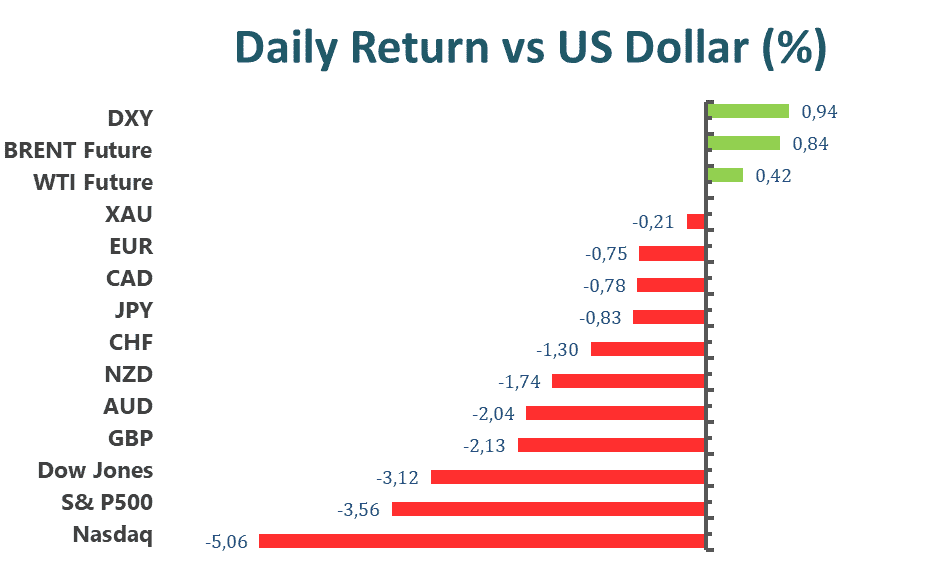
U.S. equities experienced a sharp sell-off over the course of the previous trading day. The Dow Jones Industrial Average plummeted 3.12% to close at 32997.97, the S&P 500 fell 3.57% to close at 4146.87, and the Nasdaq Composite crashed 4.99% to close at 12317.69. U.S. equities sold off while the U.S. 10-year Treasury yield soared past 3%. Bonds also sold off as the global economic outlook grows dimmer by the day. The BoE’s economic guidance issued yesterday spells trouble for dip buyers, globally, and Sterling bulls. The mention of stagflation, by the Bank of England, sent market participants into a frenzy sell-off.

Global central banks have issued warnings of possible strong equity valuation pullbacks as they begin to reverse course from easy money policies. Fed Chair Jerome Powell stated, that “some pain” would be caused as the Central Bank attempts to rein in inflation.

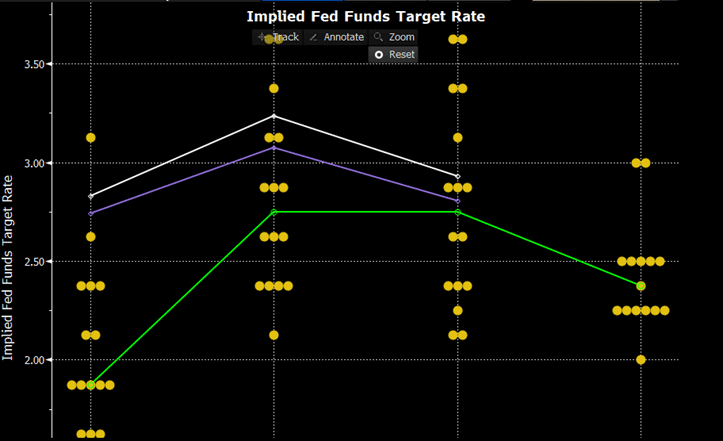
Currently, the FOMC dot plot points to a terminal interest rate of 2.83% by the end of 2022. Interest rates are projected to peak next year at 3.235% and begin to fall thereafter.

Main Pairs Movement

Over the previous trading day, the benchmark U.S. 10-year Treasury yield soared past 3% as bonds sold off sharply amid a broad-based equity market sell-off. The Dollar Index gained 1.01% as other leading currencies faltered.

The Euro fell 0.74% against the Dollar. Dollar demand soared as the global economic outlook grows dim and market participants rotate into safe-haven assets. Despite a commodity price cool down over the past couple of days, the economic pressure exerted by inflated energy and commodity prices has already dampened the economic growth of the EU.

The Pound plummeted 2.09% against the dollar as the Bank of England issued another round of interest rate hikes amid slowing economic growth. The BoE’s attempt to control inflation could exert additional pressure on the gloomy economic outlook of Britain.

The Dollar climbed 0.79% against the Canadian Loonie as the Dollar was buoyed by a broad-based demand. Soaring U.S. treasury yields and interest rate differentials between the two countries continue to favor the Dollar against the Loonie.


Technical Analysis

EURUSD (4-Hour Chart)

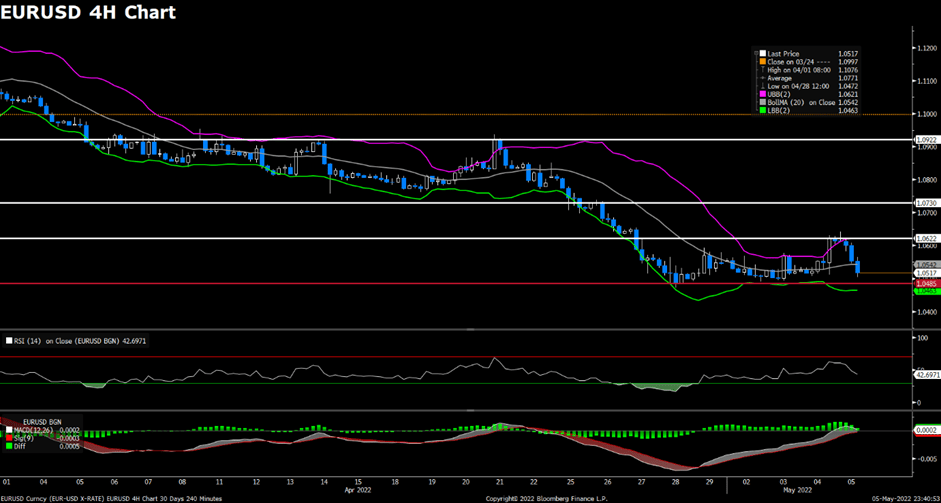
The EUR/USD pair declined on Thursday, retreating from a weekly high that was touched yesterday after the US Federal Reserve monetary policy announcement. The pair was trading sideways in the first half of the day, then started to see fresh selling and dropped towards the 1.054 area during the European session. The pair is now trading at 1.0517, posting a 0.96% loss daily. EUR/USD stays in the negative territory amid renewed US dollar strength, as the greenback staged a goodish rebound on expectations that the Fed would hike interest rates by 50 bps at the next four policy meetings. But Fed Chair Powell also said that they were not actively considering 75 bps rate hikes. For the Euro, the fact that the European Union is looking to embargo oil from Russia within six months might also act as a headwind for the EUR/USD pair.

For the technical aspect, the RSI indicator is 42 figures as of writing, suggesting that the downside is more favored as the RSI stays below the mid-line. As for the Bollinger Bands, the price fell from the upper band and then crosses below the moving average, therefore the lower band becomes the loss target. In conclusion, we think the market will be bearish as the pair is heading to re-test the 1.0485 support, a break below that level might open the road for additional losses. The falling RSI also reflects bear signals.

Resistance: 1.0622, 1.0730, 1.0922
Support: 1.0485

GBPUSD (4-Hour Chart)

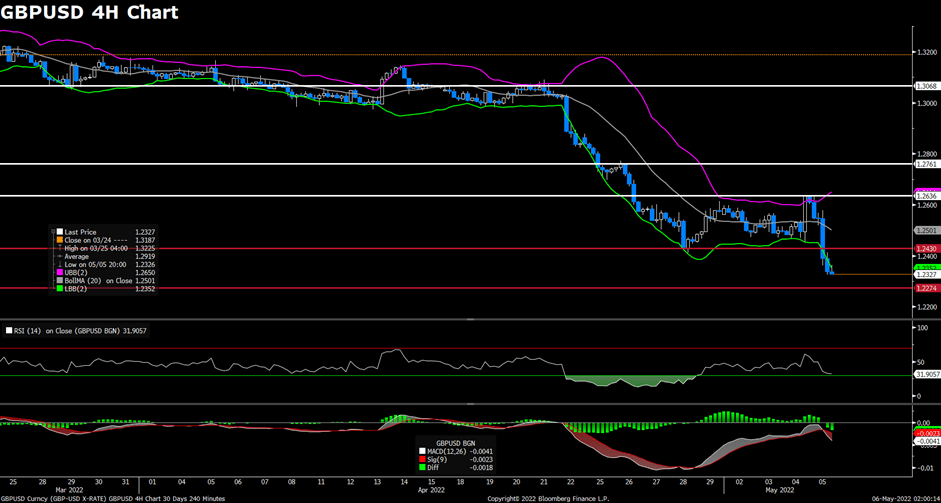
The pair GBP/USD tumbled on Thursday, suffering heavy intraday losses below the 1.238 level amid the Bank of England’s dovish outlook. The pair remained under bearish momentum for most of the day, slumping to its lowest level since July 2020 after BoE’s policy announcements. At the time of writing, the cable keeps refreshing its daily lows and stays in negative territory with a 2.06% loss for the day. The prospects for a further tightening by the Fed revived the demand for the US dollar and exerted downward pressure on the cable, as Fed policymakers were ready to approve 50 bps rate hikes at upcoming meetings. For the British pound, the Bank of England lifted its interest rate for the fourth time in the current tightening cycle as expected. However, the central bank warned about a sharp slowdown and is forecasting the UK economy to contract by 0.25% in 2023, which weighed heavily on the cable.

For the technical aspect, the RSI indicator is 32 figures as of writing, suggesting that the pair remains under heavy bearish momentum as RSI is reaching the oversold zone. For the Bollinger Bands, the price moved out of the lower band so a strong trend continuation can be expected. In conclusion, we think the market will be bearish as the pair already fell below the previous support at 1.2430. Additional near-term losses could be expected for the pair.

Resistance: 1.2585, 1.2761, 1.3070
Support: 1.2430

USDCAD (4-Hour Chart)

As the US dollar regained upside momentum amid dismal market mood today, the pair USD/CAD trimmed yesterday’s losses and rebounded from weekly lows after the Fed’s interest rates decision. The pair flirted with the 1.272~1.274 area during the Asian session, then started to see heavy buying and refreshed its daily high above the 1.285 level in the US session. USD/CAD is trading at 1.2861 at the time of writing, rising 0.98% daily. The surging US bond yields helped the US dollar to find demand and erased all losses from the Fed meeting. On top of that, concerns about the EU’s Russian oil embargo kept pushing WTI higher, which rose 0.83% for the day. The EU nears an agreement on a plan that would phase out all Russian oil imports within six months.

For the technical aspect, the RSI indicator is 58 figures as of writing, suggesting that the upside is more favored as the RSI stays above the MD-line. As for the Bollinger Bands, the price rebounds from the lower band and then crosses above the moving average, therefore the upper band becomes the profit target. In conclusion, we think the market will be bullish as the pair is heading to test the 1.2902 resistance. A break above that level would expose 1.2939 and the rising RSI also reflects bull signals.

Resistance: 1.2902, 1.2939
Support: 1.2725, 1.2541, 1.2473

Economic Data

CurrencyDataTime (GMT + 8)Forecast
GBPConstruction PMI (Apr)16:3058.0
USDNonfarm Payrolls (Apr)20:30391K
USDUnemployment Rate (Apr)20:303.5%
CADEmployment Change (Apr)20:3055.0K
CADIvey PMI (Apr)22:0060.0

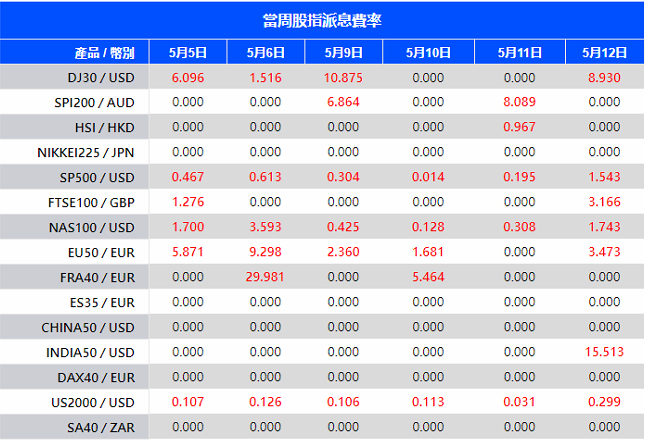
VT Markets The Adjustment Of Weekly Dividend Notification

Dear Client,

Warmly reminds you that the component stocks in the stock index spot generate dividends. When dividends are distributed, VT Markets will make dividends and deductions for the clients who hold the trading products after the close of the day before the ex-dividend date.

Indices dividends will not be paid/charged as an inclusion along with the swap component. It will be executed separately through a balance statement directly to your trading account, the comment for which will be in the following format “Div & Product Name & Net Volume ”.

Please note the specific adjustments as follows:

Note: The above data is for reference only, the actual execution date may be changed, please refer to the MT4/MT5 software for details.

If you’d like more information, please don’t hesitate to contact [email protected].

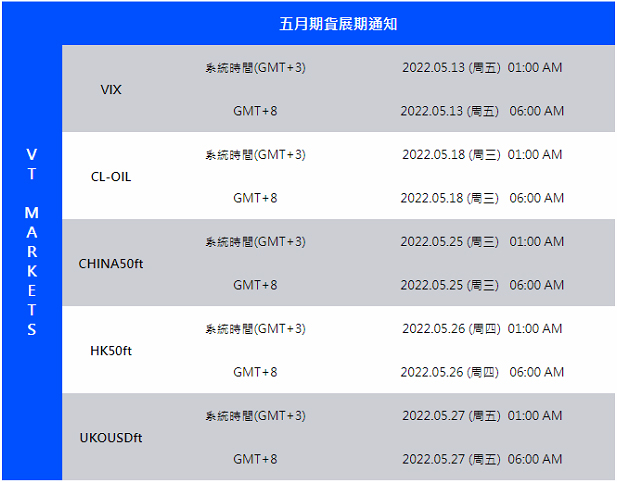
VT Markets May futures rollover announcement

Dear Client,

New contracts will automatically be rolled over as follows:

Please note:

  • • The rollover will be automatic, and any existing open positions will remain open.
  • • Positions that are open on the expiration date will be adjusted via a rollover charge or credit to reflect the price difference between the expiring and new contracts.
  • • To avoid CFD rollovers, clients can choose to close any open CFD positions prior to the expiration date.
  • • Clients should ensure that take profits and stop losses are adjusted before this rollover occurs.

If you’d like more information, please don’t hesitate to contact [email protected].

The Federal Reserve stated that quantitative tightening or the removal of assets from the central bank’s $9 trillion balance sheet will begin on June 1. The Fed will first allow up to $47.5 billion of US Treasuries and mortgage-backed securities to flow off the balance sheet in this situation. That rate would rise to $95 billion three months later.

Investors pondered the Federal Reserve’s monetary policy statement, in which the central bank announced a 50-basis-point rate hike for the first time since 2000. The increase is double what the Fed did in mid-March when it raised rates 25 basis points for the first time since 2018. The federal funds rate now has a target range of 0.75 % to 1.00 %, up from the current range of 0.25% to 0.50%.

The S&P 500, Dow Jones, and Nasdaq all raised and extended their gains Wednesday afternoon as Federal Reserve Chairman Jerome Powell signaled that a future 75 basis point rate hike is not currently being discussed. The yield on the benchmark 10-year Treasury note climbed to 2.25%.

China’s markets will resume trading Thursday after a three-day break to test whether Beijing has convinced investors that the strict Covid lockdown hasn’t hampered efforts to boost economic growth and pledges to go gentle on big technology companies.

Stocks may have come under pressure after falling earlier this week in Hong Kong, with Friday’s rally reversing after China’s leaders vowed to stimulate a faltering economy and hinted at a softer stance on the private sector. Economic pessimism means the yuan is likely to continue to struggle and bonds are likely to be supported, although the outcome of the Fed’s key meeting on Wednesday will also help determine their direction.

In addition to the widely expected rate hike at Wednesday’s meeting, investors are also awaiting a new outlook from the Fed, a key driver of Chinese assets given the widening policy divergence between Beijing and Washington.

Main Pairs Movement

The central bank raised interest rates by 50 basis points and states that it would begin shrinking its balance sheet on June 1. Following the Fed’s monetary policy announcement, the dollar plummeted. On the other hand, U.S. government bond yields eased, with the 10-year Treasury yield closing at 2.93% after peaking at 3.01%.

Meanwhile, European Commission President Ursula von der Leyen proposed the sixth wave of sanctions against Russia, which would phase out Russian crude oil and refined products by the end of the year. The news has the potential to send the European indexes down again.

The AUD/USD rate is currently around 0.7260, while USD/CAD is down to 1.2730. The EUR/USD pair trades at 1.0620, while GBP/USD advanced beyond the 1.2600 figure. Even safe-haven currencies like CHF and JPY posted gains against the greenback. Gold currently trades at $1,883 a troy ounce while crude oil price resumed their advances, with WTI now at around $107.60 a barrel.

Technical Analysis

EURUSD (4-Hour Chart)

The EUR/USD pair advanced on Wednesday, flirting around the 1.050~1.055 level ahead of the US Federal Reserve monetary policy announcement. The pair regained some upside traction and touched a daily high near 1.055 in the late European session, but then failed to preserve the bullish momentum heading into the US session. The pair is now trading at 1.0551, posting a 0.31% gain on a daily basis. EUR/USD stays in the positive territory amid a quiet market mood, as investors stopped taking any potential decisions and wait for the rate hike decision by the Fed. Fed chair Jerome Powell is expected to announce a rate hike by 50 basis points today due to overheating inflation. For the Euro, European Commission President Ursula von der Leyen said earlier today that they will phase out the Russian supply of crude oil and refined products, which is also the sixth round of sanctions against Russia.

For the technical aspect, the RSI indicator is 50 figures as of writing, suggesting that there is no obvious trend for the pair now and the market stays quite ahead of the key rate decision. As for the Bollinger Bands, the price crossed above the moving average and keep heading north, therefore the upside momentum should persist. In conclusion, we think the market will be slightly bullish as the pair is heading to re-test the 1.0570 support, a break above that level might open the road for near-term profits.

Resistance:  1.0570, 1.0728, 1.0810

Support: 1.0485

GBPUSD (4-Hour Chart)

The pair GBP/USD edged higher on Wednesday, rebounding from a weekly low that touched earlier today amid positive risk sentiment and a dismal ADP report. The pair staged a goodish rebound and refreshed its daily tops above the 1.253 level during the European session, then retreated back to surrender most of its daily gains. At the time of writing, the cable witnesses some fresh selling and stays in negative territory with a 0.04% loss for the day. The private sector employment in the US rose by 247,000 in April, which is well below the market’s expectations and dragged the US dollar lower. However, the prospects for a more aggressive policy tightening and a 50 bps rate hike by the Fed today should limit the losses for the greenback. For the British pound, traders are waiting for the Bank of England’s policy announcements on Thursday, but a hawkish Fed today might let the cable face renewed bearish pressure in the second half of the day.

For the technical aspect, the RSI indicator is 41 figures as of writing, suggesting that the downside is more favored as the RSI stays below the mid-line. For the Bollinger Bands, the price failed to cross the moving average and dropped towards the lower band, indicating that a downside trend could be expected. In conclusion, we think the market will be bearish as the pair is heading to re-test the 1.2430 support, which is the 2022 low for the cable. The falling RSI also reflects bear signals.

Resistance: 1.2585, 1.2761, 1.3070

Support: 1.2430

USDCAD (4-Hour Chart)

As the US dollar remain under bearish pressure ahead of the Federal Reserve monetary policy decision later in the session, the pair USD/CAD extended its slide that started yesterday in a choppy trading session. The pair touched a daily high above 1.285 level in the early US session, then lost its positive traction and suffered daily losses. USD/CAD is trading at 1.2817 at the time of writing, losing 0.18% on a daily basis. The pair is trading in a narrow range as investors get ready for the Fed monetary policy decision, which is expected to raise rates by 50 bps and begin its balance sheet reduction. On top of that, surging crude oil prices also provided strong support to the commodity-linked loonie and weighed on USD/CAD, as the latest news showed that European Commission is ready to phase out all imports of Russian oil within six months.

For the technical aspect, the RSI indicator is 46 figures as of writing, suggesting that the market is relatively quiet as the RSI stays flat without any directions. As for the Bollinger Bands, the price fell from the upper band and then crosses below the moving average, therefore the lower band becomes the loss target. In conclusion, we think the market will be slightly bearish as long as the 1.2868 resistance line holds. On the upside, the Fed’s policy announcement later in the session might push the pair higher above that resistance.

Resistance: 1.2868, 1.2902

Support: 1.2721, 1.2544, 1.2473

Economic Data

CurrencyDataTime (GMT + 8)Forecast
NZDEmployment Change (QoQ) (Q1)06:45 
GBPComposite PMI (Apr)16:3057.6
GBPServices PMI (Apr)16:3058.3
GBPBoE Inflation Report19:00 
GBPBoE Interest Rate Decision (May)19:001.00%
GBPBoE MPC Meeting Minutes19:00 
USDInitial Jobless Claims20:30182K
GBPBoE Gov Bailey Speaks21:15 

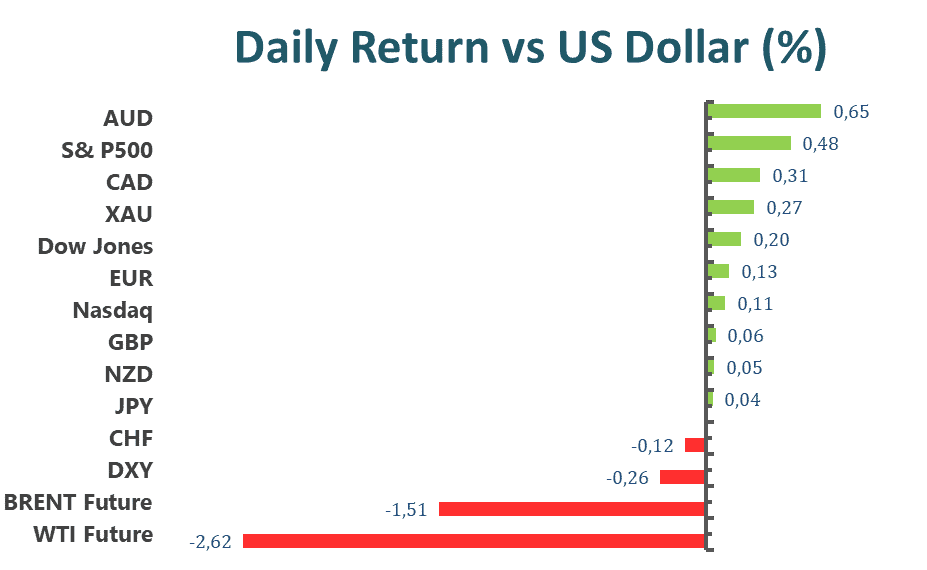
US stock advanced on Tuesday amid a better market mood, facing another volatile session as investors await the key Fed policy announcements later this week. The Fed is expected to raise rates by 50 basis points on Wednesday and traders will be closely watching for any clues on whether a 75 bps hike is possible in June. Meanwhile, the concerns about the rising inflation pressures and China’s Covid-19 spread still remained. Beijing will likely go into a strict city-wide lockdown like Shanghai if China authorities fail to contain the Covid-19 outbreak. On the economic data side, the Factory Orders and JOLTS Job Openings data from the US were better-than-expected, providing some support to the US dollar yesterday.

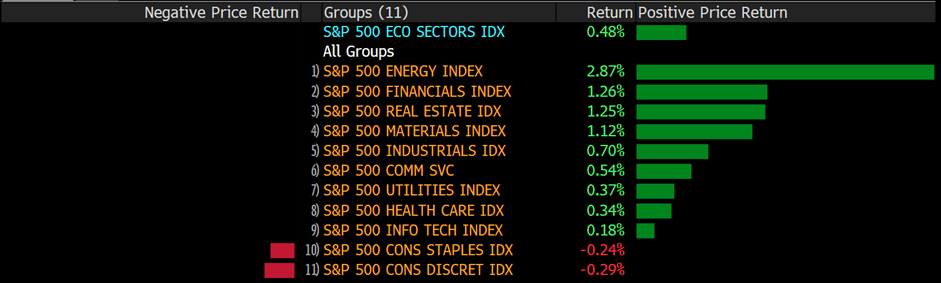
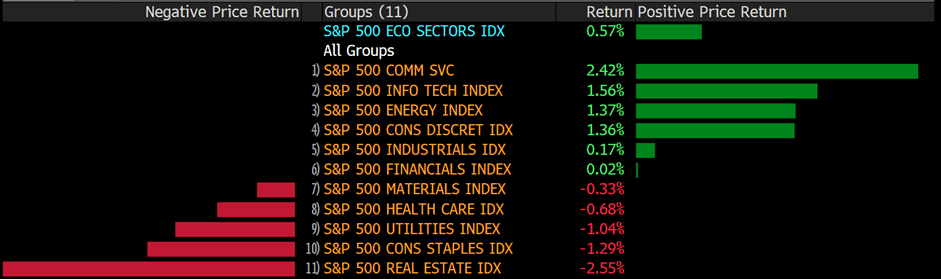
The benchmarks, S&P 500, Nasdaq 100, and the Dow Jones Industrial Average both rose on Tuesday amid uncertainty over the Fed’s policy announcement and slightly upbeat sentiment. S&P 500 was up 0.5% on a daily basis and the Dow Jones Industrial Average also advanced with a 0.2% gain for the day. Nine out of eleven sectors stayed in positive territory as the energy and financial sectors are the best performing among all groups, rising 2.87% and 1.26%, respectively. The Nasdaq 100 stayed in positive territory with a 0.2% gain on Tuesday and the MSCI World index climbed 0.4%.

Main Pairs Movement

The Reserve Bank of Australia raised its cash rate by 25 basis points. The Fed and the Bank of England will announce their decisions in the upcoming days, both could pull the trigger by 50 basis points. The 10-year U.S. Treasury yield peaked at 3% on Monday, while the German bund yield exceeded 1% for the first time since 2015.

EUR/USD hovered around 1.0510 in early Asian trade, while GBP/USD could not hold above the 1.2500 level. Commodity-linked currencies have edged higher against their US counterparts, with AUD/USD currently trading around 0.7090 and USD/CAD around 1.2840.

Gold is slightly higher, currently trading at around $1,866 per troy ounce. Crude oil prices are down, with WTI changing hands to $102.75 per barrel.

Technical Analysis

EURUSD (4-Hour Chart)

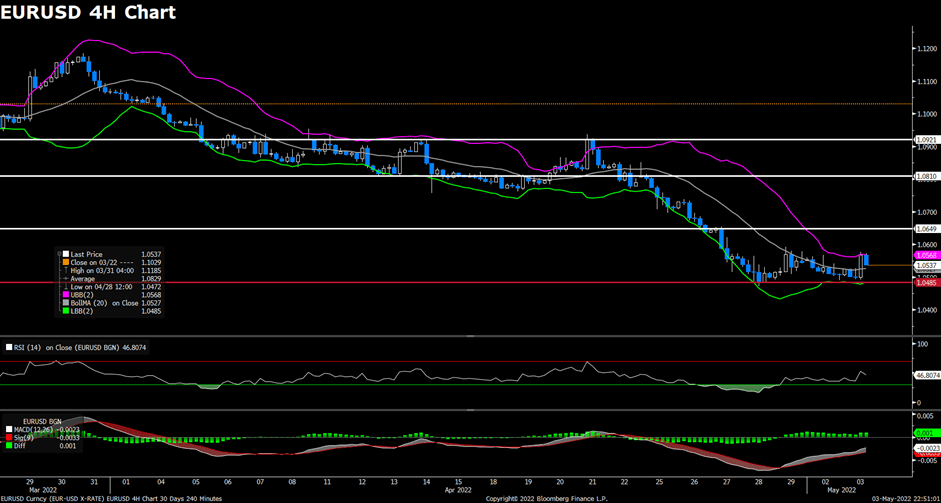
The EUR/USD pair advanced on Tuesday, recovering from new 2022 lows below the 1.050 mark that touched last week. The pair were flirting with the 1.050~ 1.052 area during the Asian session, then started to see heavy buying and rebounded towards the 1.058 level heading into the US session. The pair is now trading at 1.0536, posting a 0.33% gain on a daily basis. EUR/USD stays in the positive territory amid a weaker US dollar across the board, as the profit-taking in the US dollar and the better market mood both weighed on the greenback. However, the better-than-expected Factory Orders data should limit the losses for the dollar. For the Euro, the dovish expectations that the ECB will not tighten its monetary policy as much as the Fed in 2022 might keep capping the upside for the EUR/USD pair.

For the technical aspect, the RSI indicator is 46 figures as of writing, suggesting that the downside is more favored as the RSI stays below the mid-line. As for the Bollinger Bands, the price fell from the upper band after touching it, which showed that the downside momentum should persist. In conclusion, we think the market will be slightly bearish as the pair is heading to re-test the 1.048 support, which is the 5-year low for EUR/USD pair. The falling RSI also signals a bear trend for the pair, so the rebound today seems corrective.

Resistance: 1.0649, 1.0810, 1.0921
Support: 1.0485

GBPUSD (4-Hour Chart)

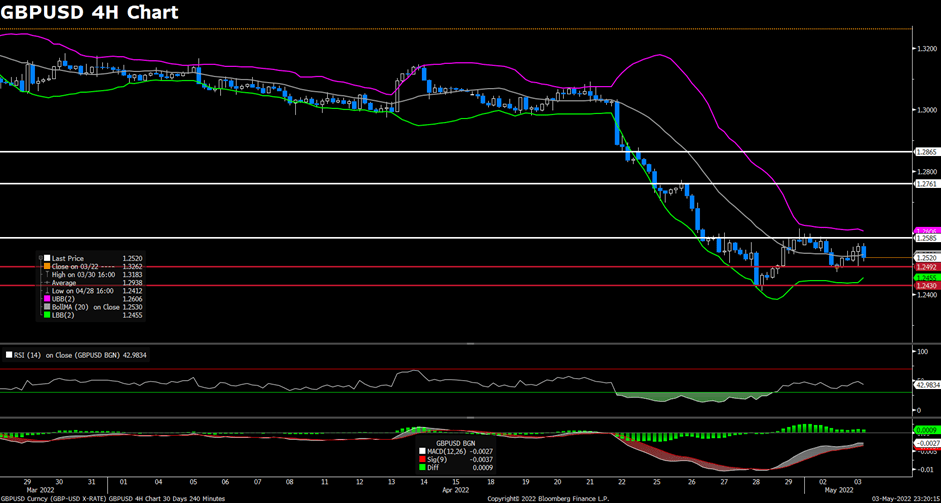
The pair GBP/USD edged higher on Tuesday, regaining some positive momentum, and ended its slide that started last Friday amid the return of UK market participants from a bank holiday. The pair was trading higher after the market opening and touched a daily high around 1.256 level, then retreated back to surrender some of its daily gains. At the time of writing, the cable stays in positive territory with a 0.23% gain for the day. The renewed US dollar strength is mainly due to the upbeat Factory Orders and JOLTS Job Openings data from the US. The market focus now shifts to the key Fed and BoE policy announcements this week. For the British pound, the Fed/BoE policy divergence might acts as a headwind for the cable, as the nation’s central bank is worried about UK economic weakness. Investors now expect a 25 bps rate hike by the BoE.

For the technical aspect, RSI indicator 43 figures as of writing, suggesting that downside is more favored as the RSI stays below the mid-line. For the Bollinger Bands, the price failed to climb higher and crossed below the moving average, indicating a continuation of the downside trend. In conclusion, we think the market will be slightly bearish as the falling RSI suggests near-term losses for the pair. A break below the 1.2492 support should lead the cable to test its 2022 lows at 1.2430.

Resistance: 1.2585, 1.2761, 1.2865
Support: 1.2492, 1.2430

USDCAD (4-Hour Chart)

As the DXY index retreated to a daily low near the 130.05 mark amid the profit-taking in the US dollar today, the pair USD/CAD stayed under bearish momentum and extended its intraday losses. The pair saw fresh selling in early trades today but witnessed a goodish rebound to daily tops in the European session, now sliding back and refreshing its daily low below the 1.283 level. USD/CAD is trading at 1.2840 at the time of writing, losing 0.30% on a daily basis. The weaker US dollar across the board is dragging the pair lower, as US dollar bulls took profits ahead of the Federal Reserve meeting. On top of that, falling crude oil prices failed to push USD/CAD higher, despite WTI now hovering around the $103.50 per barrel area due to concerns about China’s Covid-19 spread. The latest news showed that China authorities are struggling to get the Covid-19 outbreak in Beijing under control.

For the technical aspect, the RSI indicator is 52 figures as of writing, suggesting that the downside is preserving strength as the RSI keeps heading south. As for the Bollinger Bands, the price failed to touch the upper band and fell towards the moving average, therefore the downside traction should persist. In conclusion, we think the market will be bearish as long as the 1.2902 resistance line holds. The falling RSI also reflects bear signals.

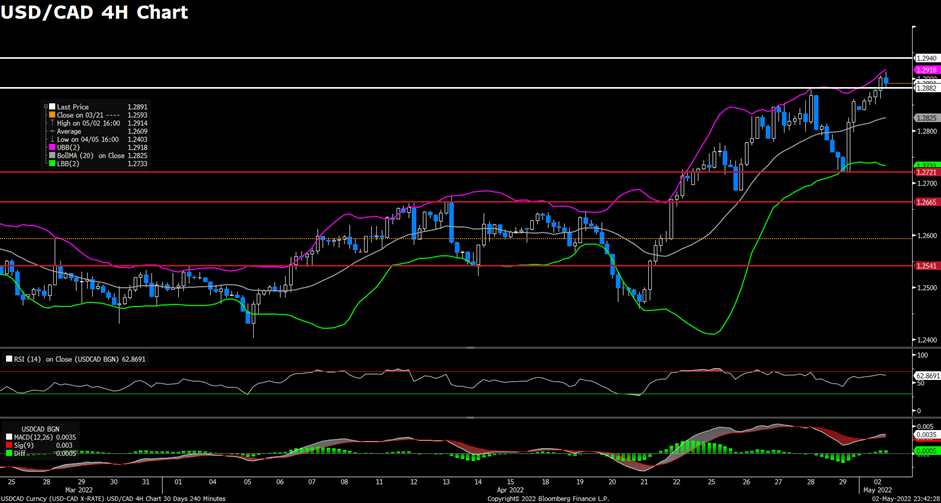
Resistance: 1.2882, 1.2940
Support: 1.2721, 1.2665, 1.2541

Economic Data

CurrencyDataTime (GMT + 8)Forecast
NZDEmployment Change (QoQ) (Q1)066:450.1%
NZDRBNZ Gov Orr Speaks07:00 
NZDRBNZ Press Conference07:00 
AUDRetail Sales (MoM) (Mar)09:300.6%
USDADP Nonfarm Employment Change (Apr)20:15395K
USDISM Non-Manufacturing PMI (Apr)22:0058.5
USDCrude Oil Inventories22:30-1.167M

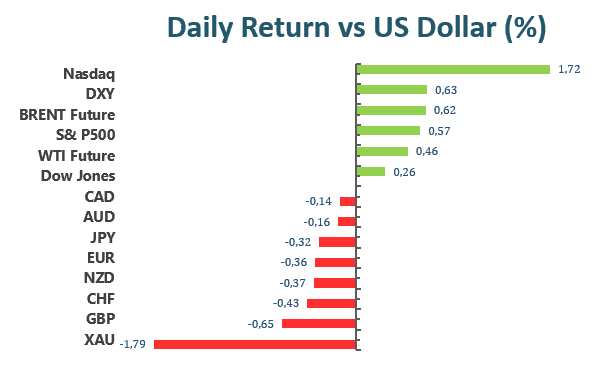
Markets experienced a mild rally on the first trading day of May. The Dow Jones Industrial Average increased 0.26 percent to 33061.5, the S&P 500 increased 0.57 percent to 4155.38, and the Nasdaq Composite increased 1.63 percent to 12536.02. The technology and telecoms sectors were instrumental in Nasdaq’s recovery. With the Federal Reserve’s interest rate decision planned for Thursday, market players should anticipate further downside in the near term as markets continue to price in a more than probable 50 basis point rate hike.

This week’s earnings season continues with Pfizer Inc, Advanced Micro Devices Inc, BP PLC, and Airbnb Inc all expected to report on the 3rd. Thus far, the FAANG companies have failed to meet analyst earnings projections, with Netflix and Amazon both falling short. Global growth concerns have discouraged market players from “buying the dip,” resulting in a prolonged period of declines in the major indices.

Main Pairs Movement

The yield on the benchmark US ten-year treasury note reached 3% during yesterday’s trading. At the moment, the benchmark yield is hovering at 2.987 percent. Market investors have gradually priced in the Fed’s 50 basis point interest rate hike, as reflected by the Dollar index’s ongoing rise.

EURUSD declined 0.36 percent in yesterday’s trading session to settle at 1.05036. Fears over the ongoing conflict between Ukraine and Russia, as well as concerns about the European Union’s economic prospects, continue to surround the shared currency.

Sterling fell 0.62 percent versus the dollar during yesterday’s trading. GBPUSD finished at 1.24901, retaining some of last Friday’s gains. In the immediate term, increased demand for the Dollar will continue to put Cable under selling pressure.

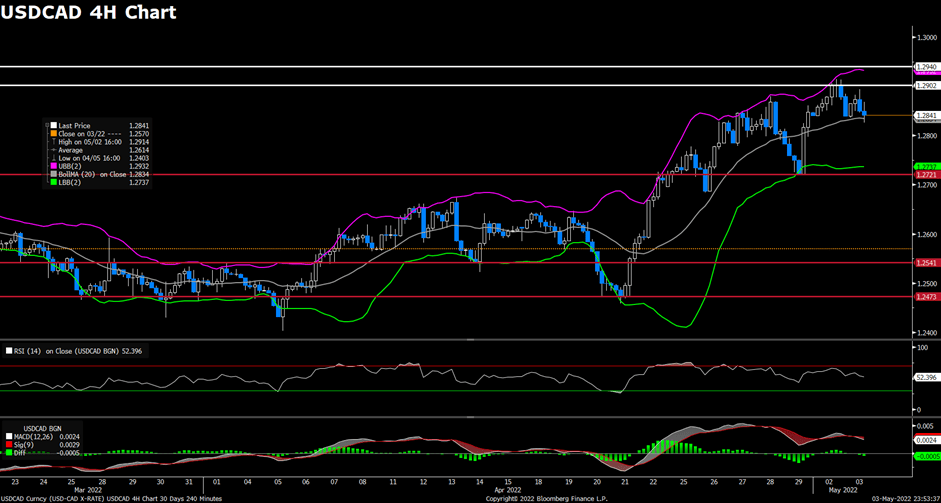
USDCAD increased 0.14 percent in yesterday’s trading. Commodity-linked currencies, such as the Canadian Dollar, suffered as global commodities prices fell; however, strong US dollar demand helped the USDCAD pair’s recovery.

Technical Analysis

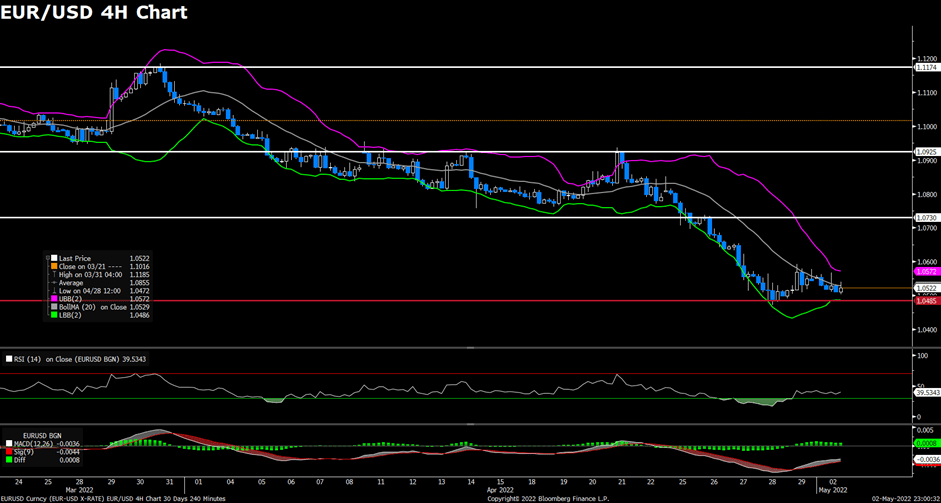
EURUSD (4-Hour Chart)

The EUR/USD pair edged lower on Monday, remaining under bearish pressure below the 1.056 level despite the disappointing US data. The pair witnessed a goodish rebound to touch a daily high in the early European session, but then failed to preserve the upside momentum and dropped towards the 1.050 area. The pair is now trading at 1.0521, posting a 0.19% loss daily. EUR/USD stays in the negative territory amid slightly US dollar strength, as the rising US bond yields and expectations for a 50 bps rate hike by the Fed both lend some support to the greenback. However, the US ISM Manufacturing PMI in April falls to 55.4, which is weaker than the market’s expectations. For the Euro, the European Central Bank vice-president said that a rate hike in July is possible but unlikely, but the comment failed to push the pair higher.

For the technical aspect, the RSI indicator is 40 figures as of writing, suggesting that the downside is more favored as the RSI stays below the mid-line. As for the Bollinger Bands, the price failed to cross above the moving average, which showed that downside momentum should persist. In conclusion, we think the market will be bearish as the pair is heading to test the 1.048 support, which is the 5-year low for EUR/USD pair. A break below that support might open the road for additional losses.

Resistance:  1.0730, 1.0925, 1.1174

Support: 1.0485

GBPUSD (4-Hour Chart)

The pair GBP/USD declined on Monday, extending its slide towards the 1.250 area that started last Friday amid growing concerns about the UK economy. The pair were surrounded by bearish pressure for most of the day despite trying to rebound in the early European session, then started to see heavy selling heading into the American session. At the time of writing, the cable stays in negative territory with a 0.50% loss for the day. The rising US bond yields continued to help the US dollar to find demand, meanwhile, the weaker-than-expected ISM Manufacturing PMI failed to act as a tailwind for the cable. For the British pound, the less hawkish BoE compared to Fed has undermined the cable, as markets expect BoE to only hike interest rates by 25 bps. The growing concerns about the UK economy might also be made the BoE to further soften its tone on the need for further rate hikes.

For the technical aspect, the RSI indicator is 38 figures as of writing, suggesting that the downside is more favored as the RSI stays below the mid-line. For the Bollinger Bands, the price fell from the upper band and crossed below the moving average, indicating a continuation of the downside trend. In conclusion, we think the market will be bearish as long as the 1.2585 resistance line holds. The falling RSI also reflects bear signals, market focus now shifts to the key policy announcements from the Fed and BoE on Wednesday and Thursday.

Resistance: 1.2585, 1.2761, 1.3071

Support: 1.2430

USDCAD (4-Hour Chart)

As the risk-off mood lends some support to the safe-haven US dollar today, the pair USD/CAD gained upside tractions and extended its rally to a 2022 top. The pair were flirting around the 1.284~1.288 area most of the day, then touched a daily high above the 1.2900 mark in the early American session. USD/CAD is trading at 1.2892 at the time of writing, rising 0.27% daily. The concerns about China’s Covid-19 spread have weighed on market sentiment and pushed the greenback higher, as Shanghai reported 58 new cases, and restrictions are threatened to be imposed once again. On top of that, retreating crude oil prices also undermined the commodity-linked loonie and acted as a tailwind for the USD/CAD pair. WTI now hovers around the $104.00 per barrel area, meanwhile, the oil demand in China is expected to decrease after the weak data.

For the technical aspect, RSI indicator 62 figures as of writing, suggesting that upside is more favored as the RSI stays above the mid-line. As for the Bollinger Bands, the price rose from the lower band and crossed above the MA line, therefore the upper band becomes the profit target. In conclusion, we think the market will be bullish as the pair is testing the 1.2882 resistance, a sustained strength above that level should favor the bulls.

Resistance: 1.2882, 1.2940

Support: 1.2721, 1.2665, 1.2541

Economic Data

CurrencyDataTime (GMT + 8)Forecast
AUDRBA Interest Rate Decision (May)12:300.25%
AUDRBA Rate Statement12:30 
EURGerman Unemployment Change (Apr)15:55-15K
GBPManufacturing PMI (Apr)16:3055.3
EURECB President Lagarde Speaks21:00 
USDJOLTs Job Openings (Mar)22:0011.000M
Back To Top
server

Hello there 👋

How can I help you?

Chat with our team instantly

Live Chat

Start a live conversation through...

  • Telegram
    hold On hold
  • Coming Soon...

Hello there 👋

How can I help you?

telegram

Scan the QR code with your smartphone to start a chat with us, or click here.

Don’t have the Telegram App or Desktop installed? Use Web Telegram instead.

QR code