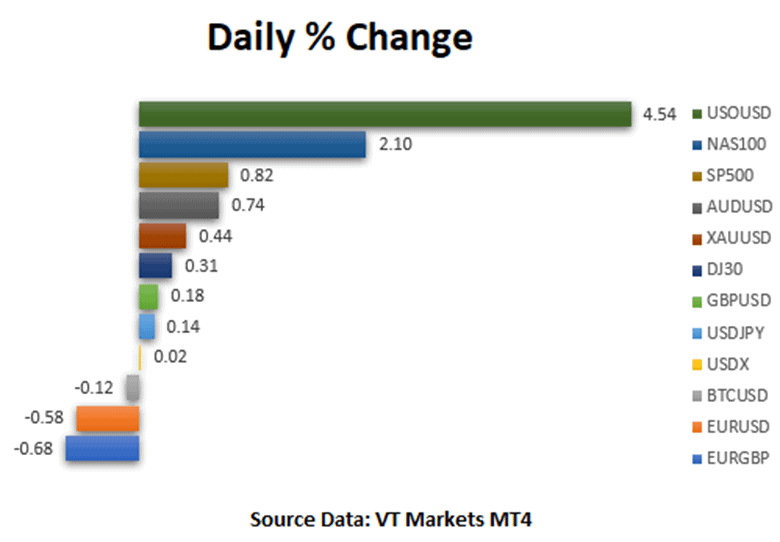
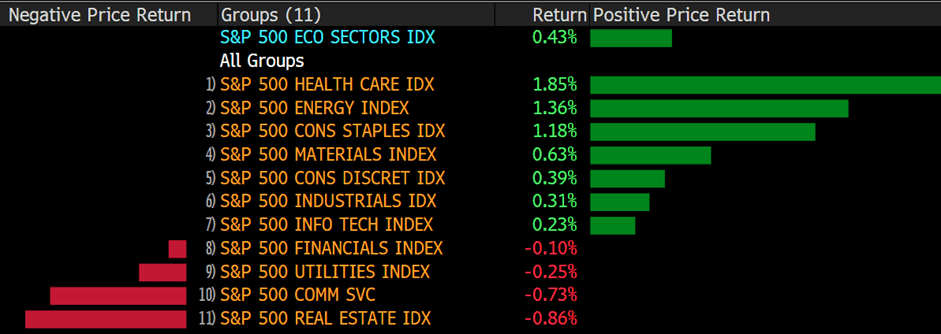
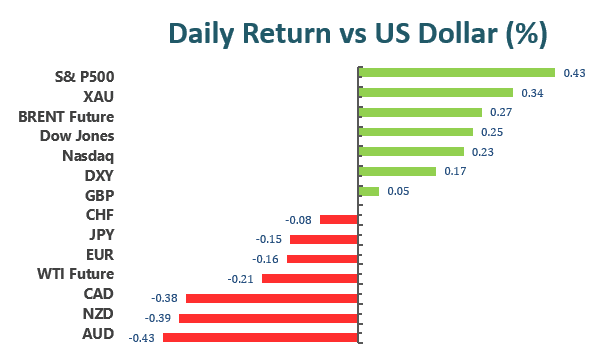
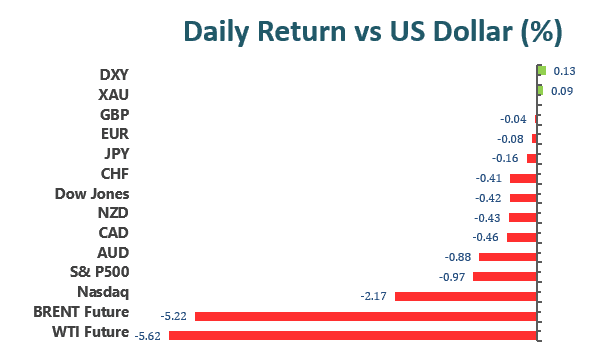
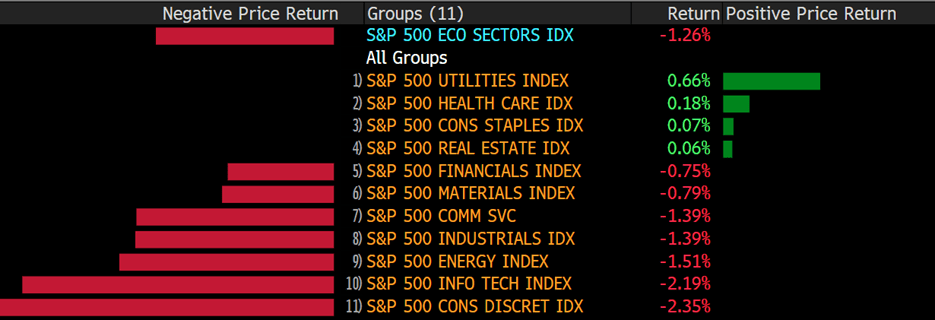
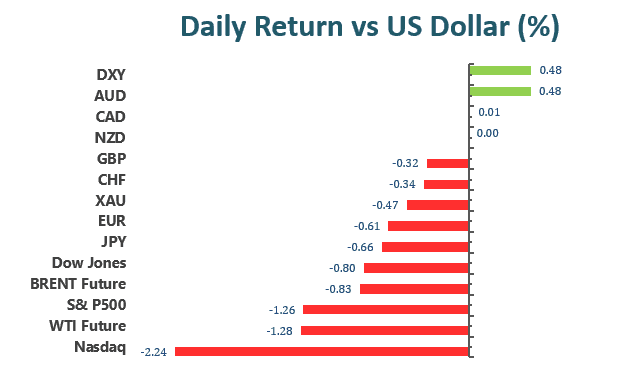
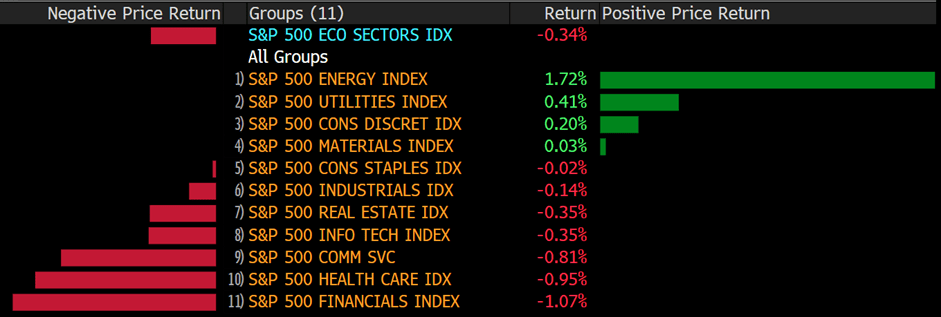
U.S. stocks reversed earlier gains in the final hour of trading Tuesday amid fresh worries about the latest US CPI print that showed inflation in March further accelerated to a new 40-year high. S&P 500 edged 0.3% lower to 4397.35, and Dow Jones gave up an intraday climb to cap trading roughly 90 points, or 0.26%, lower to 34219.89. Nasdaq Composite faltered after an earlier advance, declining 0.3% to 13371.57.
On a once-obscure corner of Wall Street, a pattern of predictive and possibly extremely lucrative trading has developed – and US authorities are suspicious. The scene is the world of special-purpose acquisition companies, or SPACs, the shell organizations that have inundated markets in recent years in order to obtain capital from investors and then look for businesses to acquire. The instrument is a stock warrant, which entitles holders to purchase shares at a fixed future price. SPACs are notorious for issuing a large number of warrants.

The unusual trading pattern begins when someone purchases large quantities of a SPAC’s warrants, boosting the daily trading volume by 10, 20, or even 60 times normal levels. Within a few weeks, word spreads that the SPAC has identified a business to acquire, frequently driving warrant prices skyward. According to a Bloomberg examination of over 300 mergers disclosed since late 2018, such warrant trading spikes occur in around one out of every four SPAC transactions.

According to persons familiar with the case, the US Securities and Exchange Commission is now investigating warrant trades that occurred prior to deals to determine whether they were made unlawfully based on inside information. The SEC may conduct additional investigations as it sifts through additional complaints of well-timed bets reported by market surveillance systems such as the Financial Industry Regulatory Authority.
Main Pairs Movement

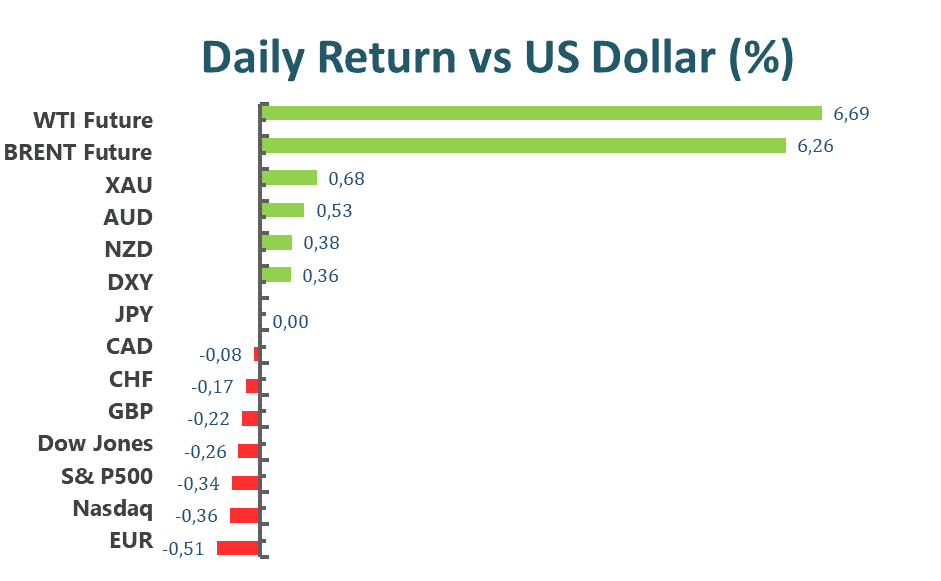
The US dollar lost strength ahead of the announcement of US inflation data but recovered considerably later in the day to close unevenly. It is stronger versus the common currency, with EUR/USD trading near 1.0830, not far from the year low of 1.0805, and GBP/USD battling to stay above 1.3000, despite positive UK job data.

Commodity-linked currencies traded side by side with their American counterparts for the majority of the day, erasing some gains before the close as Wall Street struggled to hold onto early gains. The Australian dollar is trading near 0.7450, while the USD/CAD currency pair is trading at 1.2640.

On Tuesday, gold reached a new multi-week high of $1,978.59 per troy ounce but has since fallen to approximately $1,965. Crude oil prices also increased dramatically, with WTI trading above $100.00 and Brent trading at $105.50 a barrel following OPEC’s reduction of both this year’s oil demand growth and supply estimate. Oil saw a brief reversal following Iran’s supreme leader’s statement that nuclear discussions are “doing well.” US government bond yields spiked ahead of the release of US data, before reversing course. The 10-year US Treasury note yield peaked at 2.836 percent and is currently trading at 2.72 percent.

Technical Analysis

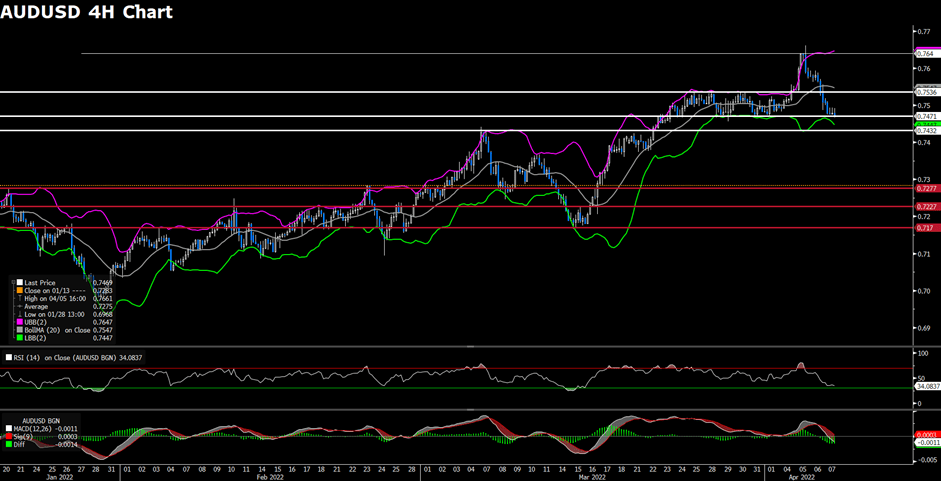
AUDUSD (4- Hour Chart)
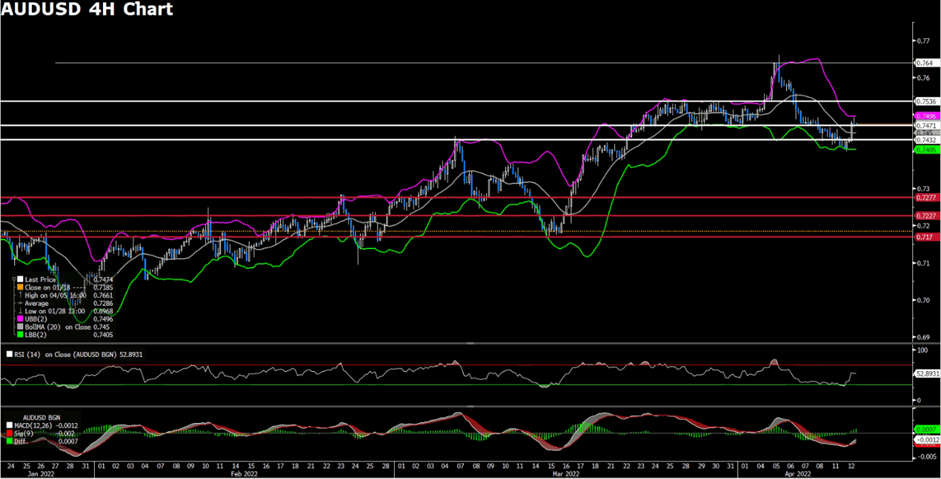
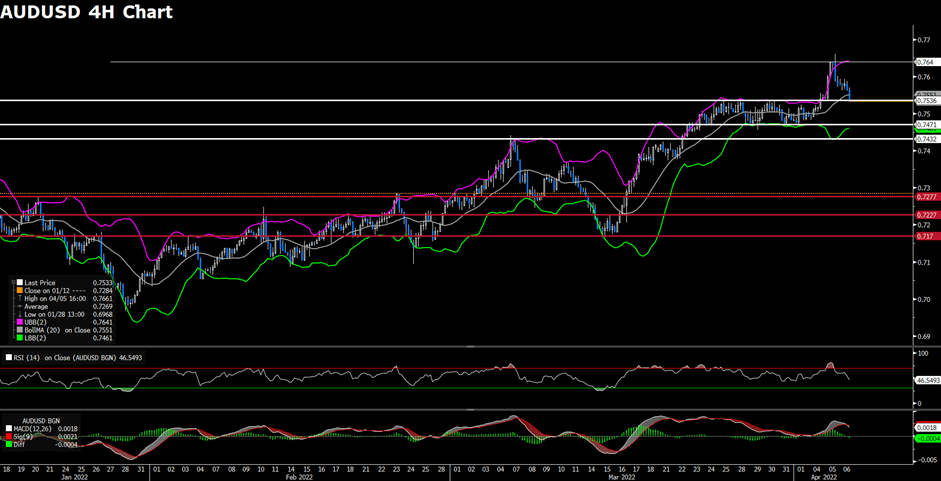
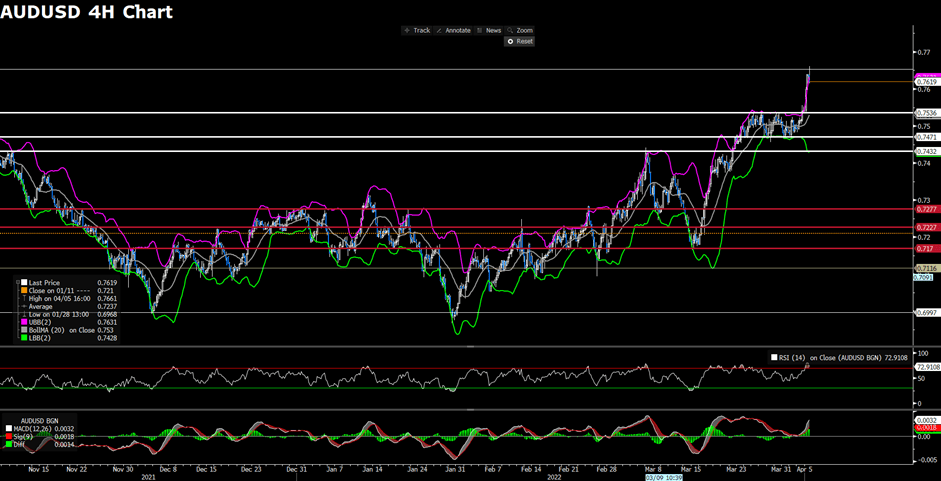
The Aussie snaps four days of consecutive losses against the US dollar, up 0.85% during the US session, following the mixed US inflation data. From the technical perspective, the overnight move-up brings AUD from a bearish to a neutral stance. The break-out of the resistance at 0.7432 and 0.7471 triggers some fresh buyings for AUDUSD. The acceptance above the next resistance at 0.7536 would boost AUDUSD to the upside. As the RSI reading is still far from overbought, AUDUSD has room to extend further north; at the same time, the MACD has turned positive, lending supports to bulls. On the flip side, if the currency pair cannot close its four-hour chart above 0.7471, then it might trigger some selling pressure.

Resistance: 0.7471, 0.7536, 0.7640, 0.7700

Support: 0.7432, 0.7300, 0.7277

XAUUSD (4- Hour Chart)
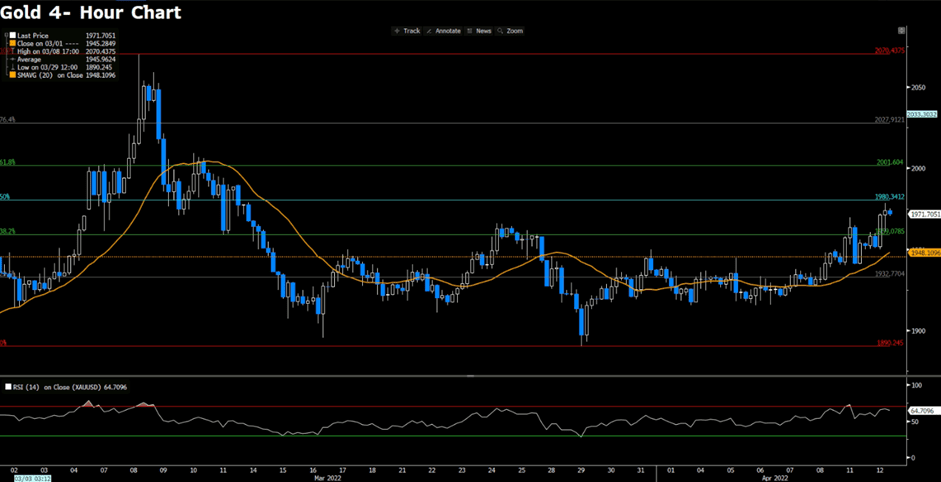
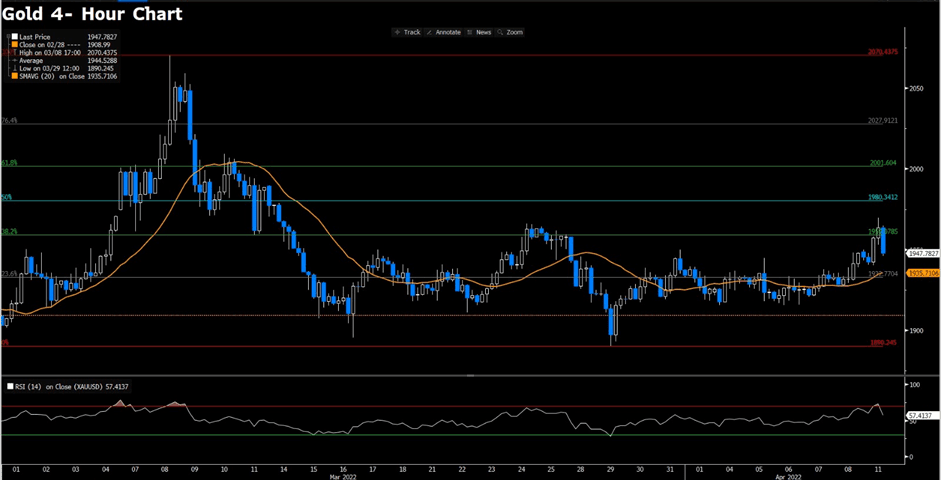
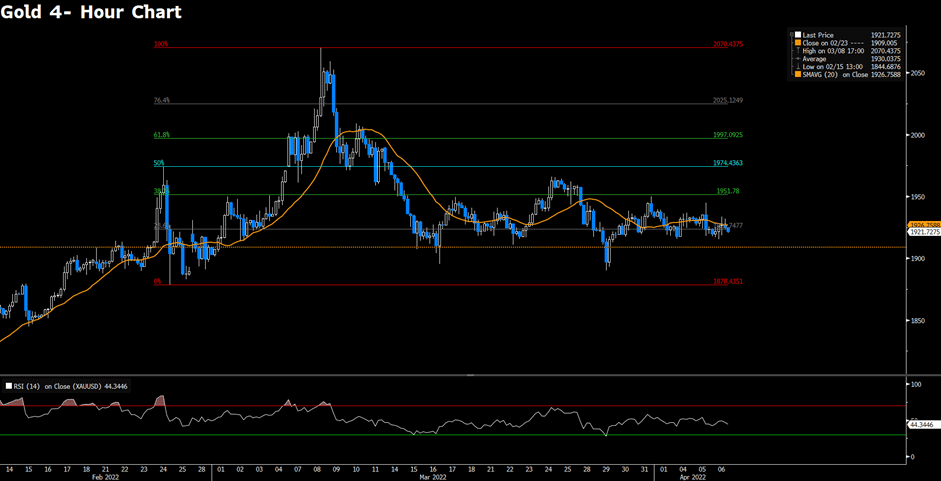
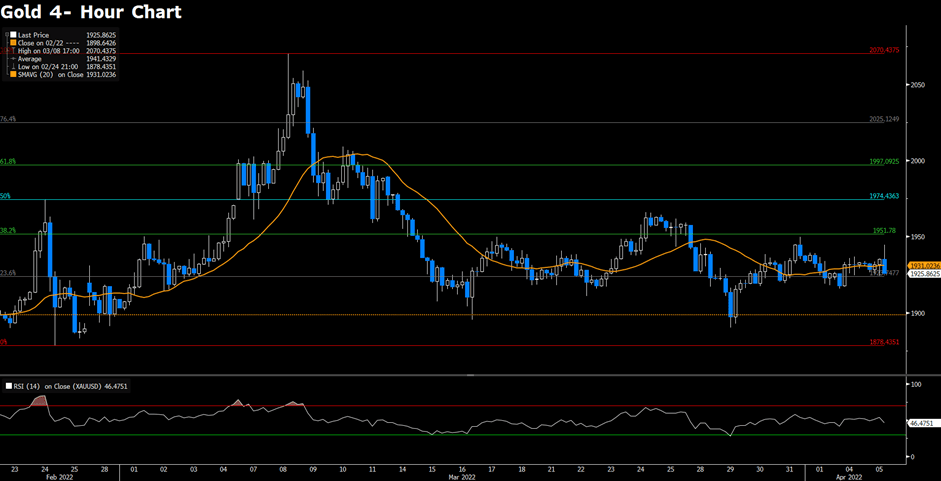
Gold spikes to a fresh multi-week high, above $1970. The bullion is boosted by the US CPI, which accelerates to 8.5%, triggering the risk sentiment that views gold as a hedge against the inflationary pressure. From the technical perspective, the four-hour outlook of gold turns upside following the breakthrough of the resistance at $1959. At the same time, the bulls are favorable as the resistance at $1959 is seen as a defensive level for bears, and gold trades well above the 20 Simple Moving Average. The RSI indicator has not yet reached the overbought territory, providing an opportunity for gold to extend further north, challenging the next hurdle at $1980, followed by $2001.

Resistance: 1980, 2001

Support: 1959, 1934, 1890

USDCAD (4- Hour Chart)
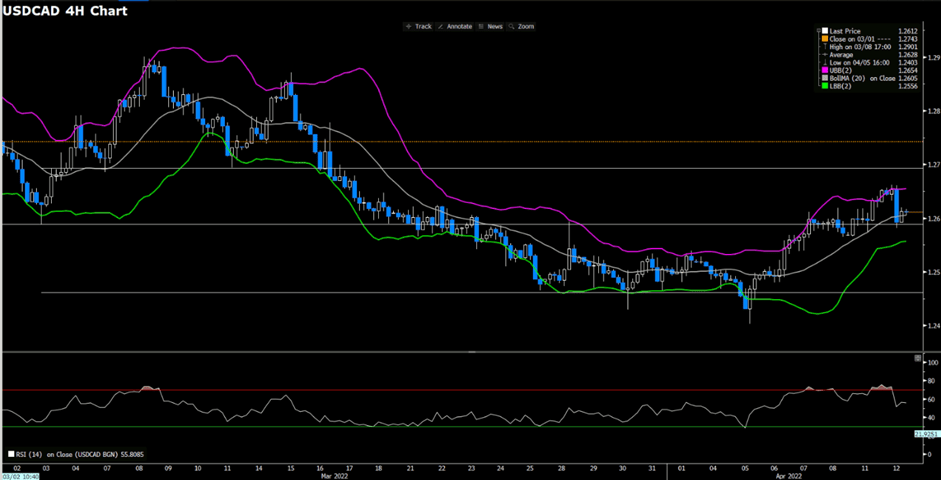
USDCAD drops sharply from three-week highs amid the US inflation data and the upsurge of crude oil prices. From the technical perspective, USDCAD remains positive bias on the four-hour chart as it continues to trade within the upper bounce of Bollinger Band. The support pivot at 1.26 becomes a defensive level for the currency pair; failure to hold above 1.26, will lead USDCAD to the negative territory. At the time of writing, the price action of the pair is directionless as the RSI sits at the midline, lacking fresh buyings or sellings. Further price action eyes on monetary decision-making from the Bank of Canada on Wednesday.

Resistance: 1.2700

Support: 1.2600, 1.2460

Economic Data

CurrencyDataTime (GMT + 8)Forecast
NZDRBNZ Interest Rate Decision10:001.25%
NZDRBNZ Rate Statement10:00N/A
GBPCPI (YoY) (Mar)14:006.7%
USDPPI (MoM) (Mar)20:301.1%
CADBoC Monetary Policy Report22:00N/A
CADBoC Interest Rate Decision22:001.00%
USDCrude Oil Inventories22:301.367M
CADBOC Press Conference23:00N/A

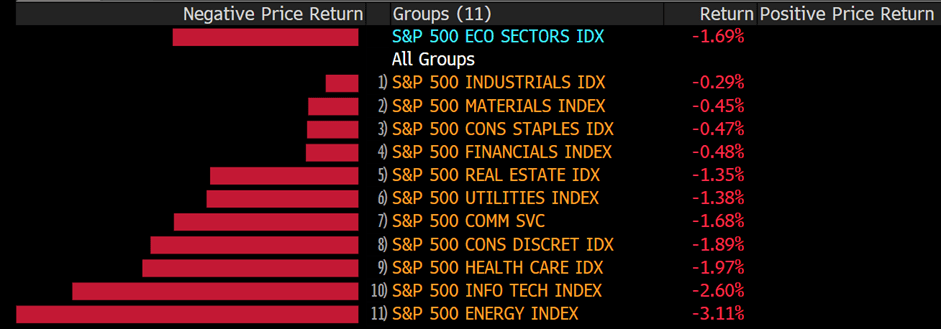
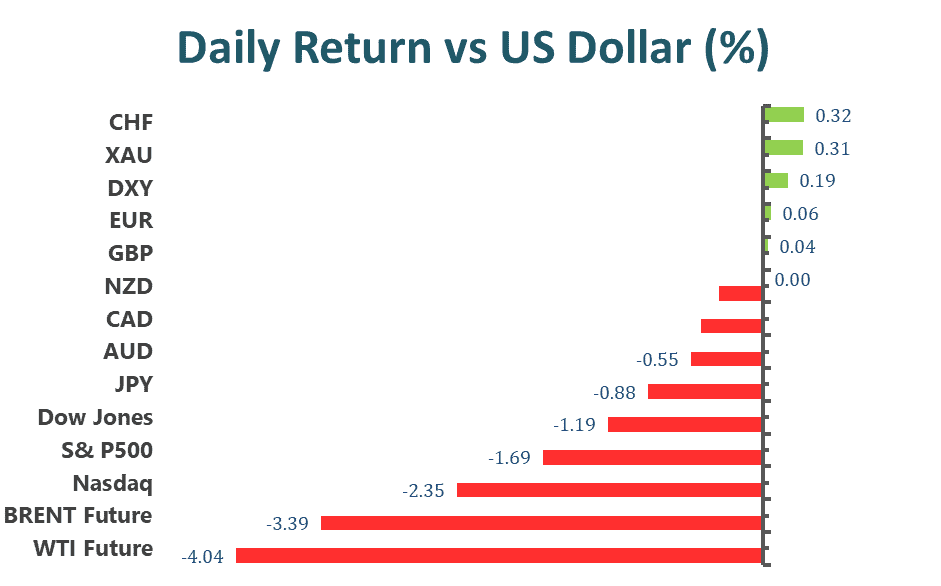
U.S. equities slipped Monday as investors shifted attention to the upcoming earnings season and a heavy economic calendar this week as the US Fed is ready to speed up its moves to fight inflation. The S&P 500 lost 1.69% on top of its last week’s losses. Nasdaq plummeted over 2% as big techs encountered fresh selling pressure. Dow Jones dropped the least, only down 11.19% thanks to its defensive industrial components.

The feel-good days for global markets at the end of March seem over. Everything from stocks to bonds is tumbling — even oil has pulled back from near records – in a concerted cross-asset selloff with shades of the rate-spurred rout of October 2018.

Blame it on a Fed focused on constraining policy to tamp down the worst inflation in four decades, even if that affects economic growth. Unlike four years ago, when Chair Jerome Powell faced market upheaval that would finally force him to change policy, investors in recent weeks have been treated to one Fed official after another guaranteeing higher and higher rates.

With monetary support swiftly diminishing and recession chances growing, investors are hunkering down. Companies resilient to an economic downturn such as health care are back in favor, as well as cash and dividend-paying companies. Meanwhile, demand for hedging is creeping up in the options market.

“The common factor in each situation is the fear of recession, which has overtaken the conventional effect of rising interest rates,” said Robert DeLucia, senior economic adviser at Empower, a retirement services company. “We are seeing a stampede into defensive companies and an aversion to economically sensitive stocks.”

Main Pairs Movement

At the start of the week, attitudes were negative, with the US dollar initially weakening but then regaining strength against its key rivals. Yields increased in reaction to concerns about soaring inflation and the Federal Reserve’s forceful response. Recession is audible, as investors are scared away by prior yield curve inversions, which are thought to be a precursor to economic recession. The 10-year Treasury note yield peaked at 2.793 percent, while the 2-year note yield reached 2.594 percent.

The EUR/USD and GBP/USD currencies concluded the day at 1.0880 and 1.3020, respectively. The weakest performances were commodity-linked currencies, with AUD/USD falling to the 0.7410 price zone and USD/CAD rising to 1.2636. Demand for safety pushed the USD/CHF pair lower, to around 0.9300. However, rising US government bond yields aided the USD/JPY to a new multi-year high of 125.76, where it is currently trading a few pips below the previous high.

In terms of commodities, gold continues to hover around $1,950 per troy ounce, clinging to Monday gains. Crude oil prices fell substantially on Monday, with WTI closing at $95.17 and Brent at $99.35. Cryptocurrencies are also declining, with the benchmark bitcoin going below the vital $40,000 threshold and Ethereum falling below the important $3,000 mark.

Technical Analysis

AUDUSD (4-Hour Chart)

AUDUSD continues to decline following a higher China CPI at 1.5%. From the technical perspective, the four-hour outlook of AUDUSD turns downside as the currency pair breaks its support pivot at 0.7432. However, as the RSI indicator has reached the oversold territory, any meaningful pullback might attract fresh buying near the 0.7400 mark. In the meantime, AUDUSD also trades in the lower band of Bollinger Band, prospecting a retreat from the bottom. Failure to find a decent pullback will bring the pair to the next psychological support at 0.7300, followed by 0.7277.

Resistance:  0.7432, 0.7471, 0.7536, 0.7640, 0.7700

Support:  0.7300, 0.7277

XAUUSD (4-Hour Chart)

Gold extends daily rally as high as $1960, boosted by the souring market mood amid recession fears and tensions between Russia and Ukraine. From the technical perspective, the four-hour outlook of gold turns upside following the breakout of the consolidated phase and the sustainably trade above the 20 Simple Moving Average. In order to sustain its bullish tone, gold needs to find an acceptable level above the immediate hurdle at $1959, 38.2% of the Fib. Retracement. On the flip side, the immediate support is pegged near $1934; failure to defend the level could negate prospects for any further near-term appreciating price action.

Resistance: 1959, 1980, 2001

Support: 1934, 1890

EURUSD (4-Hour Chart)

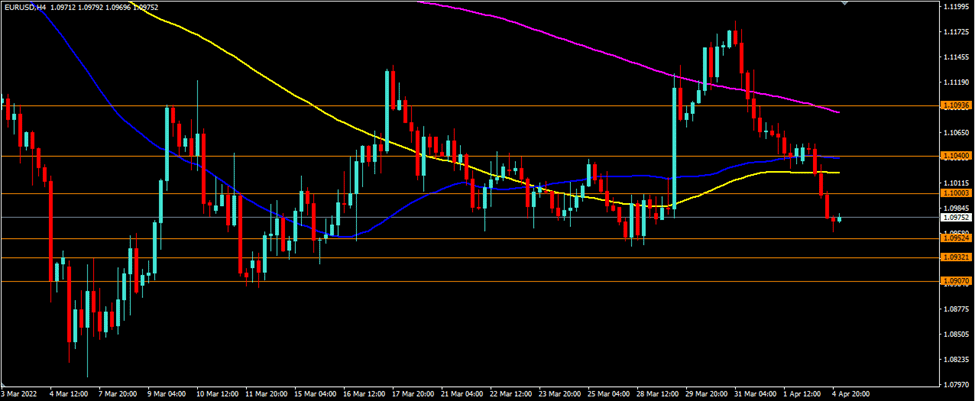
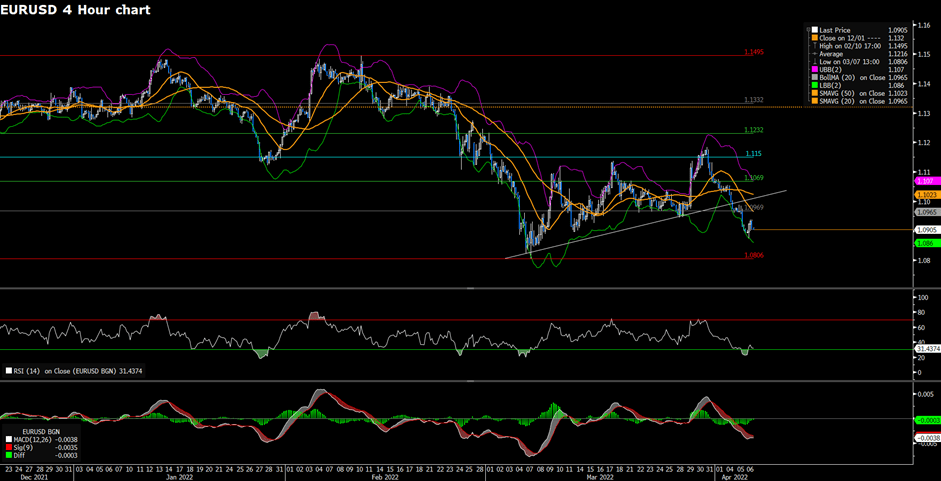
EURUSD loses traction amid the broad US dollar strength, boosted by the risk sentiment and the rising Treasury bonds. From a technical point, EURUSD is facing stiff resistance at 1.0969. EURUSD remains under selling pressure and downside as it continues to trade below the 20 Simple Moving Average and trade aligning the lower bound of the Bollinger band. At the time of writing, EURUSD consolidates in the range of 1.0969 and 1.0806 with directionless strength as the RSI reading falls on the midline. To the upside, the pair needs to find an acceptable level above the immediate resistance at 1.0969 in order to attract some fresh buying.

Resistance: 1.0969, 1.1069, 101150

Support: 1.0806

Economic Data

CurrencyDataTime (GMT + 8)Forecast
GBPAverage Earnings Index +Bonus (Feb)14:005.4%
GBPClaimant Count Change (Mar)14:00 
EURGerman ZEW Economic Sentiment (Apr)17:00-48
USDCore CPI (MoM) (Mar)20:300.5%

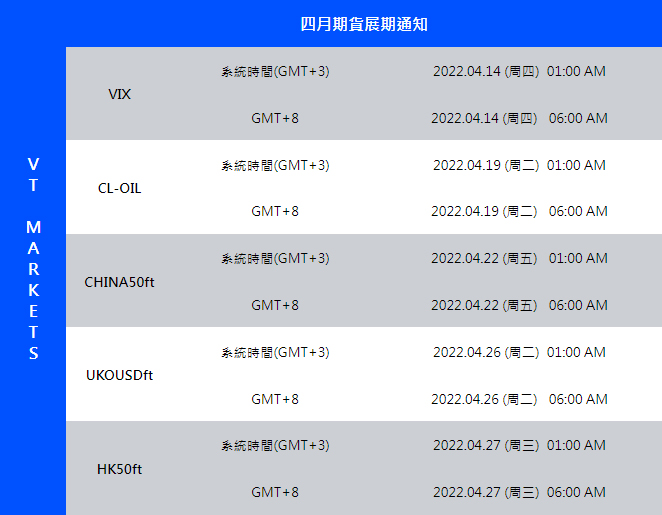
VT Markets April futures rollover announcement

Dear Client,

New contracts will automatically rolled-over as follows:

Please note:
•The rollover will be automatic, and any existing open positions will remain open.
•Positions that are open on the expiration date will be adjusted via a rollover charge or credit to reflect the price difference between the expiring and new contracts.
•To avoid CFD rollovers, clients can choose to close any open CFD positions prior to the expiration date.
•Clients should ensure that take profits and stop losses are adjusted before this rollover occurs.

If you’d like more information, please don’t hesitate to contact [email protected].

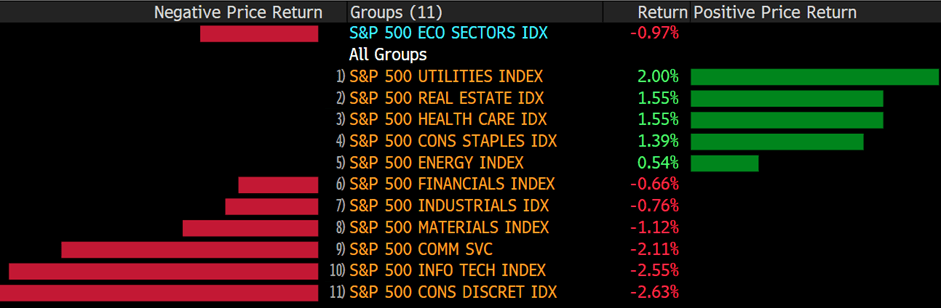
On Friday, US equities were mixed, with large technology companies posting the worst performance, while energy companies posted the best gains. Market participants are now closely monitoring the US Federal Reserve’s next moves. The S&P 500 finished roughly 0.3 percent lower after attempting a comeback to snap a three-week winning streak, while the Dow recovered from earlier losses to climb 140 points, or 0.4 percent, higher. The Nasdaq Composite Index fell 1.3 percent as underperformance in technology stocks kept the index in the red for the duration of the session.

Loretta Mester, chair of the Cleveland Fed, expressed confidence that the United States will avoid recession as the Federal Reserve tightens policy, though inflation will likely remain above 2% into next year. “I believe that bringing inflation down will take some time,” Mester said on CBS’s “Face the Nation,” referring to rising energy and commodity prices. “Thus, I believe inflation will remain above 2% this year and even next year, but on a downward trajectory.”

China’s efforts to eradicate Covid-19 also contribute, Mester, stated. “Certainly, the Chinese lockdown will exacerbate the supply chain problems we already have,” she said. “As a result, prices are being pushed upward.”

Fed officials increased interest rates by a quarter-point last month to a target range of 0.25 percent to 0.5 percent and indicated they expect rates to reach 1.9 percent by the end of 2022 and 2.8 percent by the end of next year, according to their median forecast.

Main Pairs Movement

In an otherwise calm week of data, Wednesday’s release of the FOMC minutes stirred things up as they showed committee members agreeing that elevated inflation and the tight labor market warrant balance sheet reduction start soon. With more certainty that the Fed will embark on a faster wind-down this cycle, the yield curve generally steepened, notably with the 2s/10s spread turning positive.

Greenback outperformed all its major rivals last week. The EUR/USD pair closed the week 1.50% lower at 1.0877, while GBP/USD was down 0.68% at the same period of time, last seen at 1.3025. The Japanese Yen depreciated by 1.49%, at 124.34 against the US dollar, while its Chinese peer stayed sidelined in value. Commodity-linked currencies were also limped during last week’s trading, with USD/CAD up 0.40% to 1.2572, and AUD/USD down 0.51% to 0.7458.
As to commodities, Gold climbed 1.18% to $1,947.68 a troy ounce, while crude oils closed the week in the red, with WTI closing lower by 1.61% at $97.76, and Brent at $102.32, down 1.99%.

Technical Analysis

AUDUSD (4- Hour Chart)

AUDUSD holds lower ground below the 0.7500 level despite upbeat RBA FSR as the US dollar index advances to 100 for the first time in almost two years, boosted by the prospect of a more hawkish Federal Reserve. From the technical perspective, the overnight strong move down validated a near-term bearish breakout through the support level at 0.7471. The downward break-through triggers bearish traders. At the time of writing, the next immediate support at 0.7432 seems to hold the defensive land; failure to defend 0.7432 will accelerate the downside momentum toward the psychological support at 0.7300. From the RSI indicator, the reading continues to hover within the negative territory; at the same time, a negative MACD shows that AUDUSD is in the negative stance on the four-hour chart.

Resistance: 0.7471, 0.7536, 0.7640, 0.7700
Support: 0.7432, 0.7300 


USDCAD (4- Hour Chart)

USDCAD edges lower, intending on testing its support level at 1.2600, with the latest decent Canadian employment figures. From the technical aspect, the four-hour outlook of USDCAD looks neutral at the time of writing, since the currency pair is hovering around the support level. The acceptance above 1.2600 would attract more buying interests, boosting USDCAD further north toward the next hurdle at 1.2700. On the flip side, failure to defend the 1.2600 level would support USDCAD’s bearish stance. Looking ahead, more dynamic fluctuations will be expected to happen next week as the US is going to release some key tier data.

Resistance: 1.2700
Support: 1.2600, 1.2463


EURUSD (4- Hour Chart)

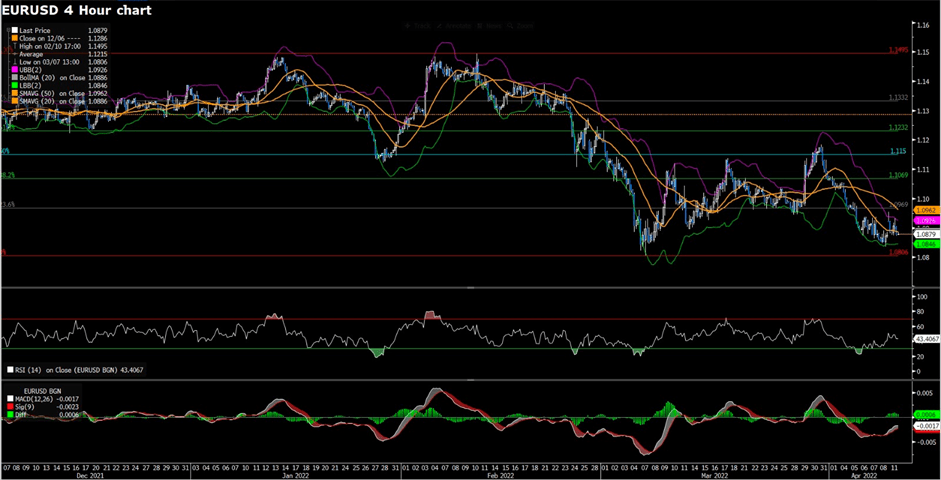
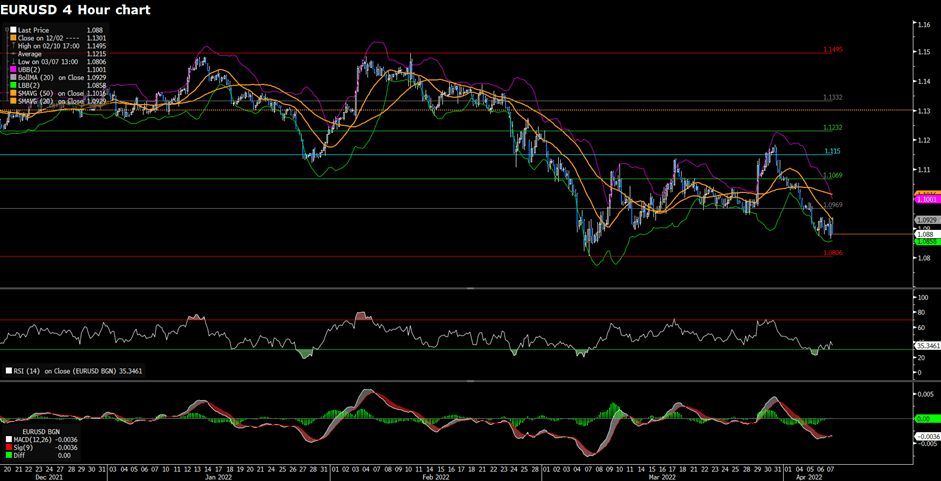
EURUSD dropped on Friday amid the strong demand for the US dollar. From the technical perspective, the outlook of the EURUSD continues to align with the bearish stance, trading within the descending trend line since late March. On the four-hour chart, the RSI stays nearly 35, having a difficult time making a steady upward correction. In the meantime, the MACD continues to fall heavily in the negative territory, suggesting a bearish outlook for EURUSD. If the US dollar keeps up its strong demand, then EURUSD is looking to challenge the next immediate resistance at 1.0806.

Resistance: 1.0969, 1.1069, 101150
Support: 1.0806

Economic Data

CurrencyDataTime (GMT + 8)Forecast
GBPGDP (YoY)14:00 
GBPGDP (MoM)14:00 
GBPManufacturing Production (MoM) (Feb)14:000.3%
GBPMonthly GDP 3M/3M Change14:00 

VT Markets Notification of Server Upgrade

Dear Client,

As part of our commitment to provide the most reliable service to our clients, there will be a server maintenance this weekend.

Maintenance Hours:
2022/04/09 16:00 – 18:00 (Server Time)

Please be reminded that:

During this weekend’s maintenance period, clients can still trade as usual.

However, the stability of quotations and market liquidity will be affected and decreased.

Thank you for your patience and understanding.

If you’d like more information, please don’t hesitate to contact [email protected]

U.S. equities recovered in the final hour of trading Thursday to cap a choppy session in the green as investors continued to digest a hawkish print of minutes from the last FOMC meeting. The S&P 500 shifted losses to rise 0.4%, and the Dow Jones climbed roughly 0.3% after plummeting over 300 points in the first half of the session. The Nasdaq Composite bounced back from a dip of more than 1% to close just above breakeven.

In most of the world, ETFs are simply tools that allow investors to track a certain set of stocks. In Japan, they’ve been tasked with everything from market support and inflation to speed economic growth, promoting corporate governance, and even fostering gender equality.

With such broad objectives, the Japanese central bank has amassed an astounding 80 percent of the country’s ETFs—equivalent to around 7% of its $6 trillion stock market—in less than a decade. This is significantly more than any other central bank in the world has gone to try to stimulate its economy through equity purchases. With $3.7 trillion in net bond purchases, the Bank of Japan has likewise surpassed its peers.

But nine years and a few hundred billion dollars worth of ETF purchases later, the most striking consequence of the world’s boldest monetary experiment may be catastrophic: The BOJ is stuck with a vast portfolio it might not be able to get rid of.

As he prepares to leave away in 2023, BOJ Chair Haruhiko Kuroda remains tight-lipped regarding his exit strategy; the difficult challenge of offloading the BOJ’s position without igniting a big stock selloff will now fall to his successor. It could take decades, if not generations, to do this. Already the largest stock market intervention in central bank history, it has drawn criticism for failing to live up to expectations.

Main Pairs Movement

The sentiments were still dismal as the attention remained on central banks’ hawkishness and tensions between Kremlin and the western world. The US has enlarged its actions against Moscow, hitting Russian Sberbank and Alfa Bank and prohibiting investment in the country by American companies. Meanwhile, the EU has supported a Russian coal embargo, though without officially announcing it. The dollar remained robust.

On Thursday, Ukraine has presented a new agreement proposal, although it includes discussing the situation of Crimea and Donbas, something that Russia considers unacceptable. The European Central Bank has published the Accounts of its most recent meeting. The memo revealed that policymakers believe the bond-buying program has now met its goal and that halting it in the summer would pave the way for a 3Q rate hike.

The Euro pair trades around 1.0870, while Cable stands at 1.3070. The dollar gained ground versus its safe-haven counterparts, with USD/CHF trading near 0.8340 and USD/JPY near 124.00. Commodity-linked currencies lost momentum, with the AUD/USD falling to 0.7470 and the USD/CAD rising to 1.2585.

Gold changed hands at $1,934 a troy ounce, up for a third consecutive day higher by 0.33%. Crude oils, on the other hand, kept their price slides at the start of Friday, with WTI trades at $96.40 at the time of writing and Brent at $100.80.

Technical Analysis

AUDUSD (4- Hour Chart)

AUDUSD continues to retreat, now nearly 200 pips lower since Tuesday’s hawkish RBA. On the four-hour chart, AUDUSD is on the last defensive point to remain in its bullish stance. Failure to defend the immediate support level at 0.7471 will bring the currency pair to the next level at 0.7432. On the upside, with the RSI is nearly oversold and the MACD is edging on the midline, the Aussie might find decent support at 0.7471, or psychological support at 0.7400. The acceptance above 0.7536 will help AUDUSD regain strength. Further price action eye on the tension between Russia and Ukraine and the sanctions from both the US and the EU.

Resistance: 0.7536, 0.7640, 0.7700
Support: 0.7471, 0.7432


Nasdaq 100 (Daily Chart)

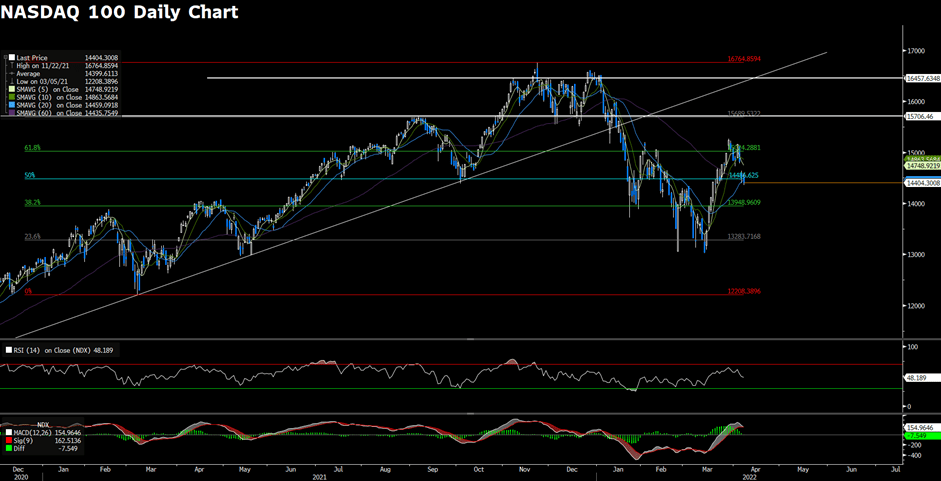
The Nasdaq 100 continues to edge lower for a third day as the time of writing following the Fed signals a speedier policy tightening plan. From the technical perspective, the outlook of the Nasdaq 100 remains upside in the near- term as the MACD remains positive. At the moment, MACD is on the edge of crossing, implying that if the Nasdaq 100 fails to defend the current support pivot at 14486, then it will accelerate further south. On the flip side, the index needs to climb above 15689 in order to reclaim its bullish trend in the longer term.

Resistance: 14486, 15024, 15689
Support: 13948, 13283


EURUSD (4- Hour Chart)

EURUSD erases early gain on Thursday as the tensions are mounting in France’s presidential election race. A Le Pen victory can potentially drag the euro down. From the technical aspect, the outlook of the EURUSD remains bearish as it continues to trade in the lower bound of the Bollinger band. In the meantime, falling below the 20 and 50 Simple Moving Averages also shows that EURUSD is adding another bearish layer. The RSI indicator and the MACD both continue to fall in the negative territory, meaning the absence of dip-buying. Overall, the risk sentiment is sour as the crisis in Ukraine sees no end, boosting the safe- heaven, the US dollar.

Resistance: 1.0969, 1.1069, 101150
Support: 1.0806

Economic Data:

CurrencyDataTime (GMT + 8)Forecast
INRInterest Rate Decision12:304.00%
CADEmployment Change (Mar)20:3080K

VT Markets The Adjustment Of Weekly Dividend Notification

Dear Client,

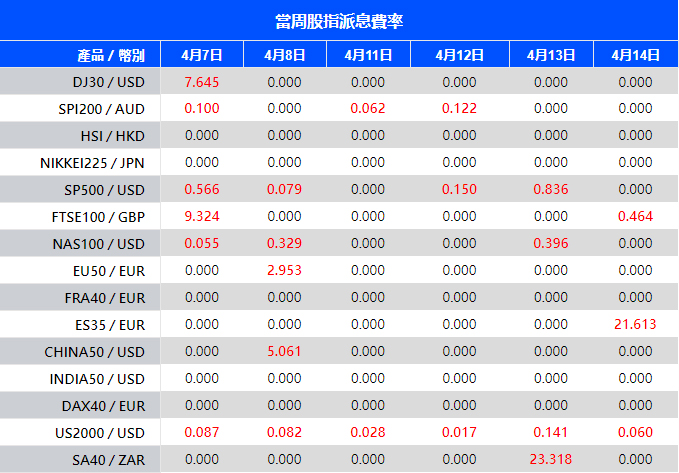
Warmly reminds you that the component stocks in the stock index spot generate dividends. When dividends are distributed, VT Markets will make dividends and deductions for the clients who hold the trading products after the close of the day before the ex-dividend date.

Indices dividends will not be paid/charged as an inclusion along with the swap component. It will be executed separately through a balance statement directly to your trading account, the comment for which will be in the following format “Div & Product Name & Net Volume ”.

Please note the specific adjustments as follows:

Note: The above data is for reference only, the actual execution date may be changed, please refer to the MT4/MT5 software for details.

If you’d like more information, please don’t hesitate to contact [email protected]

U.S. equities dropped on Wednesday as investors eyed more hawkish actions from key Fed members. It is suggested that more monetary policymakers were open to moving aggressively to raise interest rates and bring down demand and persistently escalated inflation. The S&P 500 fell, adding to losses after it ended Tuesday’s session lower by 1.3%. The Dow Jones and Nasdaq also extended declines.

Fed officials unveiled a long-awaited plan to shrink their balance sheet by more than $1 trillion annually while boosting interest rates “immediately” to combat the highest inflation in four decades. The path forward for selling the assets they acquired during the pandemic was outlined Wednesday in the minutes of their March meeting, during which policymakers boosted interest rates by a quarter-point. They considered expanding but chose caution in light of the uncertainties created by Russia’s invasion of Ukraine, according to the transcript of their discussion.

Additionally, “many” attendees at the March 15-16 FOMC meeting believed that one or more half-point rises might be warranted in the future if price pressures continue to rise. Analysts interpreted this as evidence that officials now believe they should have acted more aggressively against inflation and are rushing to bring their main rate — which is currently in a target range of 0.25 percent to 0.5 percent — up to neutral; the theoretical level at which the economy neither accelerates nor slows.

Officials proposed shrinking the Fed’s balance sheet at a maximum monthly rate of $60 billion in Treasury securities and $35 billion in mortgage-backed securities – in line with market expectations and nearly double the peak rate of $50 billion a month during the last balance sheet trim from 2017 to 2019.

Main Pairs Movement:

On Wednesday, the greenback regained momentum as attention remained focused on the Eastern Europe war and hawkish central banks. The Euro/USD pair is trading below 1.0900, while the Cable is trading near 1.3070. Commodity-linked currencies continue to face intense selling pressure, with the Australian dollar finishing at 0.7510 and the Canadian dollar at 1.2530.

President Joe Biden of the United States issued an executive order prohibiting new investments in Russia. On the other hand, European leaders have been unable to achieve an agreement on a ban on Russian coal, despite their assertion that it was due to a technical glitch and that they would discuss it again on Thursday. Meanwhile, President of the European Commission Ursula von der Leyen stated that further penalties against the Kremlin will not be the last.

Later that day, the US Federal Reserve released the Minutes of its most recent meeting, reassuring market participants of the central bank’s strong attitude. Policymakers are determined to “rapidly” bring monetary policy to a state of neutrality. Additionally, the statement states that “participants emphasized that, depending on economic and financial developments, a shift toward a tighter policy stance may be justified.”

In terms of commodities, gold prices have remained consistent, currently selling at roughly $1,924 per troy ounce. Crude oil prices fell dramatically, weighed down by Wall Street’s dovish tone, and are now hovering around $97.00 per barrel. Global indices closed lower, with US indices pulled down further by the FOMC Meeting Minutes.

Technical Analysis

AUDUSD (4- Hour Chart)

AUDUSD edges lower on Wednesday, failing to head further north from the highest since June 2021, around 0.7460. From the technical aspect, the outlook for AUDUSD remains bullish as the dip- buying should help limit losses; at the moment, 0.7500 holds the key for the bulls. If AUDUSD drops below the support level around 0.7500, then it will enter a temporarily consolidated phase in the range of 0.7471 and 0.7536. The RSI reading is currently hovering around the midline, showing the directionless of the currency pair. If the dip-buying can hold and defend the current support pivot, then AUDUSD is expected to resume its bullish trend. On the flip side, as the MACD lines are in the crossing section, any meaningful downside momentum might accelerate further south.

Resistance: 0.7640, 0.7700

Support: 0.7536, 0.7471, 0.7432

Gold (4-Hour Chart)

Gold extends consolidation above $1900, still unable to attract buyers or sellers as per trading in quite a limited intraday range. Further price action eyes on the outcome of the FOMC meeting and the new sanctions from the US and the EU. From the technical perspective, the outlook of gold has limited bullish potential, offering a neutral stance at the time of writing. The RSI continues to hover around the midline, showing the directionless. Any meaningful upside momentum above $1951 will potentially turn gold into bullish in the near- term. On the other hand, failure to defend $1923, then bears will likely attract more selling pressure.

Resistance: 1951.78, 1974.4363

Support: 1923.7477, 1878.4351

EURUSD (4- Hour Chart)

EURUSD holds tight above 1.0900 ahead of the FOMC Minutes. From the technical point of view, EURUSD remains in a bearish stance as it continues falling below the ascending trendline in the near- term. On the 4- hour chart, EURUSD has a meaningful pullback after hitting the lower band of the Bollinger band. At the same time, the RSI has reached the oversold territory but turns flat within the negative levels afterward, implying absent buying interest. The immediate support awaits at 1.0806.

Resistance: 1.0969, 1.1069, 101150

Support: 1.0806

Economic Data

CurrencyDataTime (GMT + 8)Forecast
USDFOMC Meeting Minutes02:00 
EURECB Publishes Account of Monetary Policy Meeting19:30 
USDInitial Jobless Claims20:30200K

Lesson 12: Introduction to technical analysis

You probably know by now that the financial market can be volatile and unpredictable. This is why it’s your responsibility as a trader to learn all the tools, strategies, and disciplines that will help you make intelligent decisions when trading. 

One of the key aspects you need to master is technical analysis.

man analysing trading charts on laptop

What is technical analysis?

In essence, technical analysis is a strategy or method where past data, such as indicators and price actions, help a trader make the best decision for future trading. 

This theory comes from the belief that the buying and selling actions of traders reflect the information related to a particular instrument. 

Multiple technical traders also believe that current or past price movements are the most reliable indicators of future price movements. 

What are the common mistakes made by traders?

Data accuracy is critical to the efficiency of any technical analysis in trading. So, if you want to be successful at using this strategy, here are some common mistakes that you need to avoid:

  • You go in without a plan. The technical analysis begins with a good framework that will guide you throughout the gathering and analysing of the data you have. Without one, you’ll only waste your time and resources without getting accurate results.
  • You want your charts to look good. Of course, we’d like our charts to look good. More than anything, they have to be accurate. As a trader, you don’t want to add indicators to make your chart look perfect. It’s more important to gather data you need and that can influence your trading decision positively.

Mistakes can lead to huge risks that can make or break your trading account. As much as possible, avoid these mistakes when trading to ensure earning potential.

What are the most common technical analysis indicators?

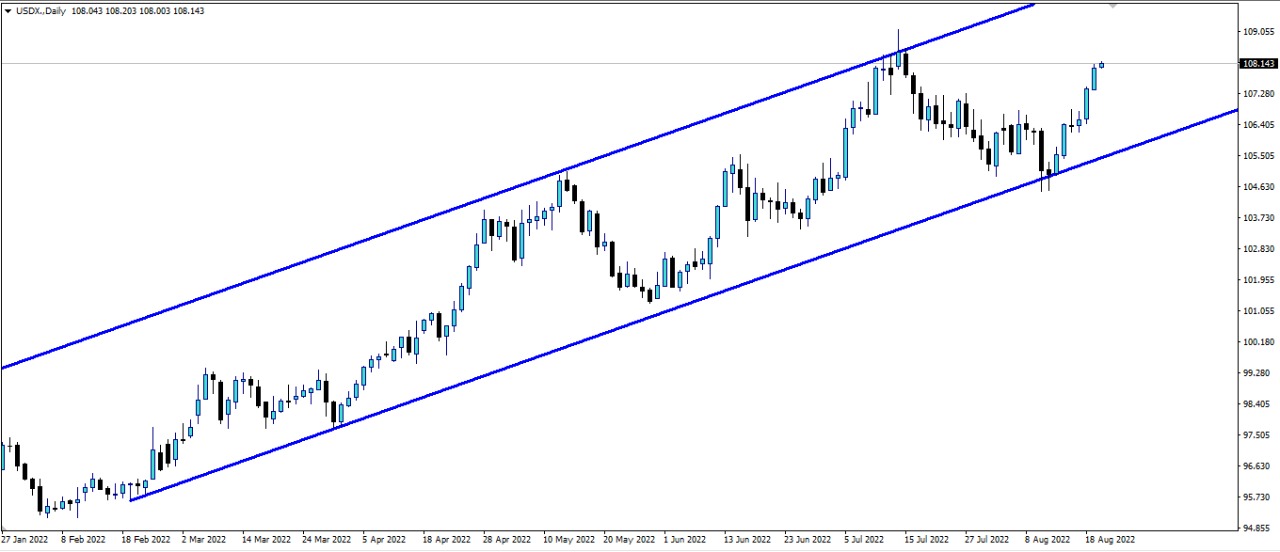
Technical analysis has evolved over the years, with analysts now using different trading systems to help them create forecasts on price movements. Depending on what you want to focus on, a technical analysis indicator can offer information on current market trends, the continuation of these trends, and support and resistance areas. 

Support and resistance level - technical analysis

In general, technical analysts use the most common indicators, including chart patterns, support and resistance levels, price trends, moving averages, and volume and momentum indicators. 

chart trend channel

Source: VT Markets MT4

What’s the difference between technical analysis and fundamental analysis?

Both technical and fundamental analyses are crucial methods in analysing the markets, although they are at opposing ends of the spectrum. 

Fundamental analysis uses methods that attempt to measure the intrinsic value of an instrument. This means analysing data related to industry conditions and the overall economy since they can influence a trade.

On the other hand, technical analysis only uses data from an instrument’s volume and price, following the belief that one can factor all fundamental indicators into pricing. For this reason, there’s no need to look at them. Instead, technical analysis focuses on charts to identify trends and patterns that can influence future trades. 

Fundamental analysis takes more time because it looks at more types of data to give a clear picture of the situation of an instrument and its trading potential. Technical analysis offers a faster way to analyse data and make future trading decisions based on them.

Conclusion

Volume indicators

As a trader, you must learn how to maximise technical analysis as a tool to build your portfolio, increase your earnings, and create a stable financial future for you and your family. In a competitive world like trading, it is essential to equip yourself with the best trading tools to succeed and protect yourself against losses.

Trade with a regulated multi-asset broker, VT Markets.

US stocks wavered on Tuesday, dragged down by losses in tech, as investors weighed remarks by Fed Governor Lael Brainard that indicated policymakers were ready to act more aggressively to rein in inflation. Investors also monitored reports indicating the US and EU are expected to unveil more sanctions against Russia on Wednesday. The S&P 500 tumbled 1.26%, and the Dow Jones shed 280 points after climbing for two straight trading sessions. The Nasdaq Composite plunged 2.3%, which is its biggest drop in three weeks, and erase gains from a tech rally that helped the index pop on Monday.

The U.S., European Union, and Group of Seven are coordinating on a fresh round of sanctions on Russia, including a U.S. ban on investment in the country and an EU ban on coal imports, following the discovery of civilian murders and other atrocities in Ukrainian towns abandoned by retreating Russian forces.

The governments plan to increase penalties on Russian financial institutions and state-owned enterprises and will sanction unspecified Russian officials and their family members, said White House Press Secretary Jen Psaki.

“You can expect that they will target Russian government officials, their family members, Russian-owned financial institutions, also state-owned enterprises. It’s a part of the continuation of our efforts to put consequences in place, hold Russian officials accountable,” Psaki told reporters Tuesday, adding that an announcement would come Wednesday.

On the news of the new penalties, the ruble seems unaffected and remained sidelined against the greenback.

Main Pairs Movement

The American dollar is the overall winner on Tuesday as it outperformed all of its major rivals. Diminishing chances of a diplomatic solution to the Russia-Ukraine conflict and central banks’ aggressiveness shifted the investors to again embrace the safe-haven greenback.

At the beginning of the day, the Reserve Bank of Australia abandoned its patient stance, announcing an unexpected boost to the local currency. Governor Philip Lowe dropped the sentence “prepared to be patient” from its usual statement and hinted at an interest rate hike in June; in the American afternoon, US Fed Governor Lael Brainard hinted at an aggressive reduction of the balance sheet and noted that combined with rate hikes would move monetary policy closer to neutral later this year. His words sent the yield on the 10-year Treasury note to 2.567%, now holding nearby. Looking ahead, the US FOMC meeting minutes will be published later today.

The Euro pair plunged to 1.0900 while Cable trades around 1.3076. Aussie managed to retain some of its post-RBA gains but pulled down from a fresh 2022 high of 0.7660.  USD/CAD nears 1.2500 as crude oil prices edged sharply lower, with WTI currently hovering around $101.50 a barrel, and Brent at $106.10. Gold traded as high as $1,944.56 a troy ounce, now struggling around $1,920, amid renewed demand for the greenback.

Technical Analysis:

AUDUSD (4- Hour Chart)

The Aussie maintains its strong bid tone against the US dollar on Tuesday as the Reserve Bank of Australia loses its patience with the inflationary pressure, signaling the interest rate hike in June. From the technical perspective, AUDUSD has now entered a bullish consolidated phase following the breach of the resistance at 0.7600. The current RSI reading has reached the overbought territory, implying that the upside strength of the currency might pause for a brief adjustment. The pullback might now seem to find a decent support level at 0.7600. Since the MACD indicator continues to support the buyers, some follow-through buying will be seen as a trigger to push AUDUSD toward the psychological resistance at 0.7700.

Resistance:  0.7700

Support: 0.7600, 0.7471, 0.7432

Gold (4-Hour Chart)

Gold turns south following a jump above $1940. On Tuesday, gold once surged above $1940, but rapidly pullback to nearly $1930 as the time of writing after the Federal Reserve Governor Lael Brainard indicates that the central bank needs to take action on inflation by shrinking the balance sheet rapidly. From the technical aspect, the four-hour outlook of gold remains neutral as gold continues to consolidate between $1950 and $1920. In the meantime, the RSI reading hovers around the midline, showing the lack of buyers and sellers. On the upside, gold needs to offer an initial hurdle above $1951.78 to reclaim a bullish stance. On the flip side, failure to defend the immediate support at $1923 will attract sellers to attack the four-day lows near $1915.

Resistance: 1951.78, 1974.4363

Support: 1923.7477, 1878.4351

EURUSD (4- Hour Chart)

EURUSD experiences a difficult time shaking off the bearish pressure since last week as the US dollar is supported by the hawkish Fed and the upbeat ISM Services PMI data. From the technical perspective, the outlook of the EURUSD remains bearish, developing below its moving averages. At the same time, the intraday downside pressure has dragged EURUSD below its immediate hurdle at 1.0969. The downside break-through, it will increase near-term selling interest. The support level awaits at 1.0806. On the upside, EURUSD needs to climb above the near-term ascending trend line, which is around 1.1018 in order to reclaim short-term upside momentum.

Resistance: 1.0969, 1.1069, 101150

Support: 1.0806

Economic Data:

CurrencyDataTime (GMT + 8)Forecast
GBPConstruction PMI (Mar)16:3057.8
CADIvey PMI (Mar)22:0060.0
USDCrude Oil Inventories22:30-3.016M
Back To Top
server

Hello there 👋

How can I help you?

Chat with our team instantly

Live Chat

Start a live conversation through...

  • Telegram
    hold On hold
  • Coming Soon...

Hello there 👋

How can I help you?

telegram

Scan the QR code with your smartphone to start a chat with us, or click here.

Don’t have the Telegram App or Desktop installed? Use Web Telegram instead.

QR code