Stock Futures Flat as Investors Await Key Economic Reports and Earnings Season

Stock futures were flat in overnight trading on Tuesday as investors turned their attention to the highly anticipated inflation report for March. Dow Jones futures remained unchanged, while S&P 500 and Nasdaq 100 futures slightly increased by 0.04% and 0.07%, respectively.

On Tuesday, the S&P 500 closed with little change, while the Dow Jones Industrial Average gained 0.29% and the Nasdaq Composite lost 0.43%. With Wall Street looking ahead to March’s consumer price index, economists predict that CPI rose by 0.2% in March, which could influence the Federal Reserve’s rate decision in May and result in the cessation of the central bank’s rate-hiking regime.

Investors and traders are keeping an eye on the CPI number, which could cause significant changes in the stock market. Additionally, minutes from the Federal Reserve’s March policy meeting are expected to be released on Wednesday, providing further insight into the central bank’s decision to raise interest rates amid the collapse of Silicon Valley Bank and the turmoil that shook the banking industry. As the first-quarter earnings season begins, investors await reports from JPMorgan Chase, Wells Fargo, Citigroup, and UnitedHealth, which will test the health of the U.S. economy and consumers.

Data by Bloomberg

In the stock market on Tuesday, most sectors remained stable without significant changes. However, the energy sector was the top gainer with an increase of 0.89%, while financials, materials, and industrials followed with gains ranging between 0.59% and 0.85%.

Conversely, the information technology sector experienced the biggest loss with a decline of 1.03%, and communication services also decreased by 0.43%. Consumer discretionary and utilities sectors showed little change, while real estate, health care, and consumer staples sectors had small but positive gains.

Data taken from MT4 VT Markets

Major Pair Movement

The US dollar index fell 0.3%, driven by gains in the EUR/USD and GBP/USD pairs, as the early risk-off sentiment that led to dollar buying retreated despite a rise in Treasury yields. The USD/JPY also rebounded after dropping to 132.97 lows, driven by a rise in Treasury yields earlier in the day. However, a call for policy prudence and patience by Chicago Fed President Austan Goolsbee and IMF’s warning about a “perilous combination of vulnerabilities” in financial markets tempered the Treasury yield rise.

The concerns about the impact of credit tightening on top of monetary tightening remain, as emergency bank borrowing from the Fed remains quite high and bank deposits have only expanded marginally following March’s sharp drop. Wednesday’s US core CPI data will be most relevant, as the expected plunge in the overall year-on-year inflation rate is a function of last March’s post-Ukraine invasion peak in oil versus March’s post-invasion trough. Additionally, the minutes from the Fed’s last meeting will also be released. The ECB and BoE are expected to hike rates at their upcoming meetings, with the BoE having roughly 50bp of hikes by September’s 4.66% implied peak, which still seems weak given the UK’s inflation at 10.4%.

Technical Analysis

EUR/USD (4 Hours)

The EUR/USD bounced back from its weekly low as Europe returned from the Easter holiday, with the pair rising above 1.0900 due to a weaker US Dollar and expectations of another rate hike from the ECB. However, Eurozone Retail Sales data released on Tuesday showed a drop of 0.8% in March, with an annual rate decline of -3%, better than expected. The next crucial report for the region will be Industrial Production on Thursday, with expectations of a 25-basis points rate hike at the May 4 ECB meeting.

Meanwhile, the Federal Reserve is evaluating the potential impact of financial stress on the real economy, and if inflation decreases, interest rates will have to be lowered. The attention is now focused on the release of March’s US Consumer Price Index on Wednesday, with the CPI expected to rise by 0.3% and the Core by 0.4%, followed by the publication of the minutes of the latest FOMC meeting later that day. Despite the rise in US yields, the US Dollar was affected by an improvement in risk sentiment.

From a technical perspective, the EUR/USD price is continuing to rise and has moved above the middle band of the Bollinger band. We have adjusted our support level to 1.0881 as the market is expected to break today with the release of US inflation data. The RSI has risen above 50 (at 57), indicating a potential for further upward movement.

Resistance levels: 1.0935, 1.0968

Support levels: 1.0881, 1.0835

XAU/USD (4 Hours)

Gold is currently struggling to extend its gains beyond the $2,000 threshold after having fallen to $1,981.66 on Monday. This is happening amidst the broader weakness of the US dollar and the better performance of stock markets while looming US inflation figures continue to be a concern. Currently, XAU/USD is trading near its daily high of $2,007.44, as most global indexes trade in the green. The Dow Jones Industrial Average in the United States is up 146 points to trade at its highest level since early January. However, the Nasdaq Composite is down 0.37%.

Market participants are dropping the Greenback ahead of the United States March Consumer Price Index (CPI) which is expected to signal core inflation has ticked higher yearly. A few weeks ago, such an outcome would have triggered speculation of a potentially aggressive rate hike from the Federal Reserve (Fed). However, that is not the case following the banking crisis that unfolded in mid-March in the United States. Following the collapse of two local banks, the central bank has adopted a more conservative stance on monetary tightening, as draining liquidity to tame inflationary pressures has multiple undesired effects.

Meanwhile, concerns about a recession continue to grow due to sluggish macroeconomic data and the unexpected decision by OPEC+ to cut oil output. These factors have fueled a dismal market mood, which seems to be temporarily on pause. However, risk-averse environments hardly benefit the Greenback these days, with Gold making the most of it.

From a technical perspective, the price of XAU/USD continues to rise and has surpassed the $2,000 level, indicating the possibility of a renewed upward trend. The market is currently waiting for the release of US inflation data, causing the Bollinger bands to tighten as the price approaches the upper band. It is crucial to monitor the key support level at $2,000, as a decline below this level may signal a potential reversal. However, as long as this level is maintained, the XAU/USD uptrend will remain intact. The RSI has increased to 59, above the 50 levels, indicating that there is potential for gold to continue to rise.

Resistance levels: $2,020, $2,031

Support levels: $1,988, $2,002

Economic Data

CurrencyDataTime (GMT + 8)Forecast
USDConsumer Price Index (Mar)20:300.20%
USDCore Consumer Price Index (Mar)20:300.40%
USDConsumer Price Index (Yearly)20:305.10%
GBPBOE Gov Bailey Speaks21:00
CADBank of Canada Rate Statement22:004.50%
CADBOC Monetary Policy Report22:00
CADBOC Press Conference23:00

US stock futures remain stable ahead of economic data and earnings season

US stock futures showed little change on Monday night as investors await the release of economic data later in the week. Dow Jones Industrial Average futures increased by 35 points, or 0.1%, while S&P 500 and Nasdaq 100 futures climbed 0.13% and 0.11%, respectively. The market is anticipating the March readings of the consumer price index on Wednesday and the producer price index on Thursday, which could provide further insight into how the Federal Reserve will proceed on its rate-hiking campaign.

In addition to the economic data releases, the US stock market is preparing for another earnings season. Several major US banks, which have not reported earnings since the bank crises in March, are scheduled to release their reports. Investors are particularly interested in the financial institutions’ perspectives on current threats and whether they will make any adjustments in an environment that seems less optimistic than three months ago. Before the market opens, the National Federation of Independent Business will also release the latest results of its small business index, and a few regional Federal Reserve presidents will be speaking on Tuesday.

by Bloomberg

On Monday, most sectors in the market saw a positive price change, with the All Sectors index increasing by 0.10%. Industrials had the highest gain of 0.90%, followed by Energy and Materials with gains of 0.65% and 0.49%, respectively. Real Estate and Consumer Discretionary also had positive gains of 0.49% and 0.43%, respectively.

On the other hand, some sectors saw a decline in prices, with Communication Services having the largest decrease of 0.69%. Information Technology and Utilities also saw a decrease in prices with declines of 0.15% and 0.20%, respectively. Health Care and Consumer Staples had the smallest price changes with a decline of only 0.04% and a decrease of 0.01%, respectively.

Major Pair Movement

Data taken from MT4 VT Markets

The US dollar saw gains on Monday as there was a renewed expectation of a Fed hike following Friday’s solid US jobs report, leading to a flight to safety. Meanwhile, the Japanese yen saw a decline as new BoJ governor Ueda dimmed near-term normalization hopes. Treasury yields and the dollar were supported by Friday’s Fed data showing bank deposits rising for the first time in roughly a month and a New York Fed survey on Monday showing higher inflation expectations and harder credit access.

The market is closely watching the upcoming CPI data on Wednesday and retail sales on Friday as they will be important for the Fed’s May 3 policy announcements. Additionally, the quarterly Senior Loan Officer Opinion Survey, presented to the Fed at that meeting but not publicly released until the following week, will be crucial in understanding the tightening of credit conditions and the impact of monetary tightening. Sterling fell 0.3% while the EUR/USD saw a recovery from Monday’s low but remained down 0.37%. The USD/JPY surged 1.1% as haven dollar gains were augmented by widespread yen selling on dimmed BoJ normalization expectations.

Technical Analysis

EUR/USD (4 Hours)

EUR/USD fell on Monday due to a stronger US dollar following Friday’s NFP report, hitting a week low of 1.0830 before rebounding to 1.0850. Investors are now focusing on Wednesday’s US Consumer Price Index data. US yields climbed, with the 2-year yield back above 4% and the 10-year yield above 3.40%, after the upbeat March jobs report. The European bond market will reopen on Tuesday, and on the same day, the Eurozone will report Retail Sales, which are predicted to decline by 0.8% in March. Market participants are still looking for the ECB to raise interest rates at their next meeting.

From a technical standpoint, the price of EUR/USD has rebounded after reaching the support level at 1.0835 and is now targeting the middle band of the Bollinger bands. The key support level to watch is at 1.0791, as a break below this level could indicate a potential reversal. As long as this level holds, the trend for EUR/USD remains in an uptrend. The RSI has risen to 45 from a lower level, indicating the potential for further upward movement.

Resistance levels: 1.0891, 1.0935

Support levels: 1.0835, 1.0791

XAU/USD (4 Hours)

Gold prices started the week lower, falling to around $1,990 per troy ounce, amid concerns over economic growth and a potential recession in the US after the Nonfarm Payrolls report on Friday. The US dollar benefited from a sour mood and thin market conditions due to the Easter Monday holiday in Europe, while investors await the release of the US Consumer Price Index (CPI) on Wednesday, which is expected to show a YoY inflation rate of 5.2% for March.

From a technical standpoint, the price of XAU/USD has rebounded from Monday’s low of $1,988 and is currently trading at $1,992. This indicates a strong attempt to reach the middle bands of the Bollinger bands from a technical perspective. It is important to keep an eye on the key support level at $1,988, as a break below this level could signal a potential reversal. However, as long as this level holds, the uptrend for XAU/USD remains intact. The RSI has risen to 45 from a lower level, suggesting a potential for further upward movement.

U.S. Equity Futures Edge Higher Ahead of Key Economic Data and Earnings Season

Investors are eyeing key inflation data and the start of the first-quarter earnings season as U.S. equity futures edge up slightly on Sunday evening. Let’s take a closer look at the latest market developments and economic data reports to determine their potential impact on the market.

Futures tied to the S&P 500 rose 0.2%, and Dow Jones Industrial Average futures edged up 62 points or 0.2%, while Nasdaq 100 futures remained flat. The market’s performance last week was volatile, with the Dow being the only index to post a weekly gain of 0.6%. On the other hand, the S&P 500 and Nasdaq Composite ended lower by 0.1% and 1.1%, respectively.

The March jobs report released on Friday showed that the nonfarm payrolls grew by 236,000 for the month, slightly lower than the Dow Jones estimate of 238,000. The unemployment rate also fell to 3.5%, as expected. However, the data revealed a weakening labor market and the potential of a slow-moving recession unfolding in the U.S. The latest economic data has not resolved the inflation concerns. As such, the odds of another quarter-point rate hike in May should increase as the data does not appear to justify a Fed pause.

Investors can expect a busy week ahead with a flurry of economic data and the start of the first-quarter earnings season. The latest consumer price index and producer price index data will be key in determining if or when the Fed will pause or put an end to its rate-hiking campaign. The first batch of companies reporting their first-quarter financial results will also be released, with Tilray Brands kicking things off on Monday, followed by the major banks – JPMorgan Chase, Wells Fargo, and Citigroup – reporting on Friday.

Today’s Early Market Pair Movement

  • The US dollar index remained stable at 102.06 on Monday morning.
  • The EUR/USD currency pair was unchanged at 1.0917.
  • The GBP/USD currency pair stabilized at 1.2439 after experiencing a three-session fall.
  • USD/JPY remained at elevated levels above 132.00.
  • AUD/USD continued to lack upward momentum, trading at 0.6672.
  • USD/CHF remained subdued at 0.9043.
  • USD/CAD continued its recent rebound and traded at 1.3505 after Canada’s jobless rate remained steady at 5.0% in March, versus the expected 5.2%.
  • Bitcoin rebounded and traded above $28,300.

Technical Analysis

EUR/USD (4 Hours)

The EUR/USD pair retreats from its intraday high to 1.0900, although the bulls remain defensive as they look for fresh clues to continue the four-week uptrend in early Monday trading. The pair is reflecting the holiday mood of Easter Monday, as well as anxiety ahead of the top-tier data/events this week. The optimism in the options market for the EUR/USD prices is due to fears surrounding the reserve currency status of the US dollar and relatively more hawkish comments from the European Central Bank (ECB) compared to the Federal Reserve (Fed).

Although the Easter Monday holiday may limit the movements of EUR/USD, the US Consumer Price Index (CPI) data, and the latest Federal Open Market Committee (FOMC) Monetary Policy Meeting Minutes will be crucial in providing clear directions for the pair.

From a technical perspective, the current movement of EUR/USD is at 1.0901, which is below the middle band in the Bollinger Band. This suggests there is still a possibility of the EUR/USD moving lower. Additionally, the RSI indicator is at 49, just below the mid-level, which also supports the potential for a lower movement. However, since there is a bank holiday in the EU today, we can expect that there won’t be much movement in the EUR/USD.

XAU/USD (4 Hours)

The price of gold (XAU/USD) initially saw a sharp decline at the opening but managed to recover due to responsive buyers at lower levels. It fell below the psychological support level of $2,000.00 as the chances for another 25-basis point rate hike increased significantly. However, it managed to climb back above the $2,000.00 resistance level. The CME Fedwatch tool shows a sudden increase in the likelihood of a 25-basis point rate hike by more than 65%.

The rock-bottom unemployment rate in the US economy has raised expectations of a consecutive 25 basis point rate hike by the Federal Reserve (Fed). The jobless rate was reported at 3.5% on Friday, which was lower than expected than the previous release of 3.6%. The US Nonfarm Payrolls (NFP) data remained subdued, with the US economy adding slightly fewer jobs in March at 236k than the consensus of 240k.

From a technical perspective, Gold experienced a decline after a strong US jobs report on Friday, which is a typical reaction. Currently, Gold is trading at $1,998, breaking below the $2,000 barrier. Today, some bank holidays may affect the movement of Gold. However, it is expected that Gold will rise today as investors may turn to Gold while waiting for tomorrow’s US inflation data.

Economic Data

CurrencyDataTime (GMT + 8)Forecast
NZDBank Holiday
AUDBank Holiday 
CHFBank Holiday
GBPBank Holiday
EURFrench Bank Holiday
EURGerman Bank Holiday
EURItalian Bank Holiday

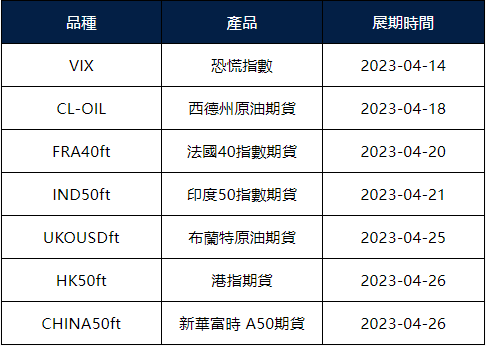
April Futures Rollover Announcement – April 10, 2023

Dear Client,

New contracts will automatically be rolled over as follows:

Please note:

• The rollover will be automatic, and any existing open positions will remain open.

• Positions that are open on the expiration date will be adjusted via a rollover charge or credit to reflect the price difference between the expiring and new contracts.

• To avoid CFD rollovers, clients can choose to close any open CFD positions prior to the expiration date.

• Please ensure that all take-profit and stop-loss settings are adjusted before the rollover occurs.

• All internal transfers for accounts under the same name will be prohibited during the first and last 30 minutes of the trading hours on the rollover dates.

If you’d like more information, please don’t hesitate to contact [email protected].

Week ahead: Markets to Focus on US CPI, PPI and Retail Sales and Bank of Canada Rate Statement

As we begin a new week, the financial world is buzzing with anticipation of some economic reports. All eyes will be on the Bank of Canada Rate Statement and FOMC Meeting Minutes, alongside the eagerly awaited CPI, PPI and Retail Sales data release in the US. These reports are crucial for traders navigating the markets and making informed decisions. 

Here are key events to watch out for:

Consumer Price Index (CPI) | US (April 12)

The CPI in the US rose 0.4% month-on-month in February 2023, after rising 0.5% in January.

For March, analysts expect the reading to increase by 0.3%

Bank of Canada Rate Statement | (April 12) 

As previously signalled, the Bank of Canada kept its overnight rate target steady at 4.5% during its March 2023 meeting.

The central bank stated that it intends to maintain the current rate if the economic conditions align with the latest Monetary Policy Report’s expectations. 

FOMC Meeting Minutes | US (April 13)

The Fed raised the fed funds rate by 25bps to 4.75%-5% in March 2023, matching the February increase, and pushing borrowing costs to new highs since 2007, as inflation remains elevated.

The decision came in line with expectations from most investors, although some believed the central bank should pause the tightening cycle to shore up financial stability.

Employment Change | Australia (April 13)

Employment in Australia created an additional 64,600 jobs to reach 13.83 million in February 2023, surpassing market predictions of 48,500, following a downward revision of 10,900 jobs in the previous month.

Analysts expect employment will add 20,000 jobs in March 2023.

Gross Domestic Product (GDP) | UK (April 13)

The British economy expanded 0.3% month-on-month in January 2023, partially bouncing back from a 0.5% contraction in December when strikes halted business activities.

For February 2023, analysts expect the UK GDP to expand further by 0.2%.

Producer Price Index (PPI) | US (April 13)

Producer prices for final demand in the US fell 0.1% month-on-month in February 2023.

For March, analysts expect the US PPI to go up by 0.1%. 

Retail Sales | US (April 14)

Retail sales in the US were down 0.4% month-on-month in February 2023, following an upwardly revised 3.2% surge in January.

For March 2023, analysts expect US Retail Sales to contract by 0.4%.

Prelim University of Michigan Consumer Sentiment (April 14)

The University of Michigan revised the US consumer sentiment downwards to 62 in March 2023 from the preliminary figure of 67. This marks the first decrease in sentiment in four months, as consumers anticipate an upcoming recession.

For April 2023, analysts the data to stand at 62.7.

Notification on System Upgrade – April 06, 2023

Dear Client,

As part of our commitment to provide the most reliable service to our clients, there will be system maintenance this weekend.

Maintenance Hours :
April 8, 2023, 01:30 to April 9, 2023, 13:00 (GMT+3)

Please note that:

1. You will not be able to login and access all features on the Client Portal and VT Markets App.

2. Please trade on MT4/5 during the upgrade.

3. Kindly keep an eye on the open positions and ensure there are sufficient funds in your accounts.

Our services will be back online once the maintenance is complete.

Thank you for your patience and understanding.

If you’d like more information, please contact [email protected].

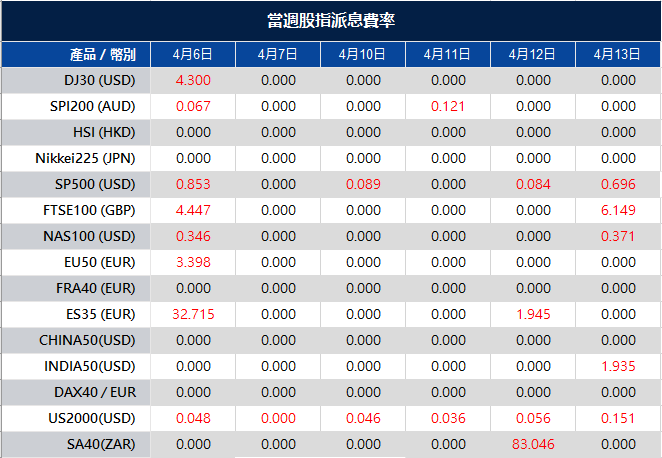
Weekly Dividend Adjustment Notice – April 06, 2023

Dear Client,

Please note that the dividends of the following products will be adjusted accordingly. Index dividends will be executed separately through a balance statement directly to your trading account, and the comment will be in the following format “Div & Product Name & Net Volume”.

Please refer to the table below for more details:

The above data is for reference only, please refer to the MT4/MT5 software for specific data.

If you’d like more information, please don’t hesitate to contact [email protected]

Renewed Rush to Safety as Economic Data Disappoints: Is a Recession Imminent?

Following the release of weaker-than-expected economic data, Wall Street experienced a renewed rush to safety, with bonds surging and equities plummeting. This has rekindled concerns that a recession may be looming, sending shockwaves across the financial markets.

The 10-year Treasury yield tumbled to its lowest point since September, now standing at around 1.5 percentage points below the three-month Treasury bill rate. This widening gap between short-term and long-term yields indicates an impending economic slowdown, which investors are now anticipating.

In response to this uncertain economic climate, investors have shifted their focus to safer investments such as the dollar and the Japanese yen. Gold prices have also soared to a 13-month high, as investors seek a safe haven asset amid the market turbulence.

Several economic indicators have fueled concerns about a potential downturn, including the recent decline in the Institute for Supply Management’s index and the ISM factory survey showing further deterioration. These reports have highlighted the tightening of credit conditions and persistently high interest rates, which could further exacerbate the economic slowdown.

The S&P500 and Nasdaq 100 have both taken a hit, with Consumer Discretionary performing the worst among all groups, dropping by 2.04%. In contrast, the Dow Jones Industrial Average edged higher, but the MSCI world index fell on Wednesday.

As we navigate through these turbulent economic times, it remains uncertain whether a recession is imminent. However, the recent market volatility and economic indicators suggest that we may be headed towards a downturn. As investors seek safe havens, it’s critical to keep a watchful eye on the markets and make informed investment decisions based on the available information.

Technical Analysis

XAUUSD (4-Hour Chart)

Gold prices surged to a new multi-month high of $2,032.03 per ounce on Wednesday before experiencing a downward correction. Despite some profit-taking among traders ahead of the long Easter holiday, the XAU/USD remains steady at around $2,020 and holding onto most of its weekly gains. The weak performance of the US Dollar persists due to lackluster economic data. Though disappointing figures typically prompt risk aversion and boost the Greenback, the focus now is on the US Federal Reserve’s plan to pause rate hikes, which makes the USD less appealing in the long run.

The US recently released the ISM Services PMI, which unexpectedly fell to 51.2 in March from 55.1 in February. The ADP survey on private job creation also revealed a modest gain of 145K in March, missing expectations of 200K and lower than the previous 261K. At the time of typing, price trading at 2020.73 and RSI sits at 67.31.

Examining the 4-hour chart, XAU/USD has lost its bullish momentum, but there are no clear indications of bearishness. Although technical indicators have rotated lower, their downward strength is limited as they are still in overbought territory. Lastly, Gold prices remain well above the bullish moving averages, with the 20 SMA serving as dynamic support at approximately $1,991.20 in the short term.

Resistance: 2,024.90 2,037.85 2,050.00

Support: 2,009.70 1,991.20 1,982.10

Stock Market Rally Ends as Banks Experience Selloff

The stock market’s four-day rally came to a halt as banks experienced a selloff, which pulled down the Dow Jones Industrial Average by 0.6% and the S&P500 by 0.58% on Tuesday. This sudden dip in the market was mainly caused by a drop in major financial institutions such as Wells Fargo & Co. and Citigroup Inc., whose gauge fell by 2%. Even regional lenders like First Republic Bank and Zions Bancorporation didn’t fare well, declining by at least 4.8%.

In contrast to the banks, Treasury prices climbed higher as softer data on job openings led to increased bets that the Federal Reserve may soon conclude its tightening campaign. According to the Labor Department’s Job Openings and Labor Turnover Survey (JOLTS), vacancies at US employers decreased to the lowest level since May 2021. This news caused yields on two-year Treasury notes to fall by 14 basis points to approximately 3.8%. Swap contracts referencing Fed meeting dates lowered the odds of a quarter-point rate hike in May to just under 50%, down from about 60%.

In his annual letter to shareholders, JPMorgan Chase & Co.’s CEO Jamie Dimon warned that the effects of the recent US banking crisis, which caused market turbulence last month, will be felt for years. This gloomy forecast could be one of the reasons why investors chose to sell off bank shares. However, this doesn’t necessarily mean that the overall market will continue to decline in the long run.

Seven out of eleven sectors in S&P500 stayed in the negative territory, as four sectors dropped more than 1% on Tuesday, and Industrials tumbled with 2.25% for the day. This could be due to the news of the banking crisis, as well as other economic uncertainties. Meanwhile, the Nasdaq 100 fell 0.4%, and MSCI world index edged lower with a 0.2% loss on Tuesday.

Main Pairs Movement

On Tuesday, the value of the U.S. dollar dropped to its lowest point in two months due to disappointing economic data. This has led to speculation that the Federal Reserve may be close to the end of its efforts to tighten the economy. Meanwhile, other central banks are expected to raise interest rates to address inflationary pressures.

The DXY index fell below 101.5 after the release of weak JOLTs (Job Openings and Labor Turnover Survey) and Factory Orders data for February. As a result, the EURUSD pair rose by 0.50% and reached a daily high of 1.0973. The GBPUSD pair also climbed to its highest level since June, closing with a 0.70% gain for the day.

Gold prices saw a significant increase, rising by 1.80% on Tuesday due to the weakness of the U.S. dollar. The XAU/USD pair continued to rise following the release of poor U.S. macroeconomic data and eased concerns about central banks resuming aggressive monetary tightening. The pair increased by almost 1.9% during the first half of the American trading session and closed at $2020 on Tuesday.

Technical Analysis

EURUSD (4-Hour Chart)

Recent data from the United States has raised concerns about the labor market, as job openings reported in the JOLTs report dropped by 32,000 in February. This, along with the second consecutive month of declining Factory Orders, may indicate a cooling labor market. More data will be revealed later in the week with ADP Employment figures, Initial Jobless Claims, and the US Nonfarm Payrolls report. Investors are now expecting a possible pause in the tightening cycle of the US Fed at its May 2-3 meeting, with a 57% probability of a Fed pause.

Chart EURUSD by TradingView

The EUR/USD pair has risen above 1.0900 for the second consecutive day, reaching a daily high of 1.0973, supported by broad US Dollar weakness. The pair shows a triple bottom pattern on the daily chart, indicating a potential upward trend with a target of 1.1000. The next resistance levels to watch are 1.0973, 1.1000, and the year-to-date high at 1.1033. On the downside, support levels are at 1.0900 and the 20-day EMA at 1.0788. The EUR/USD pair remains bullish with further upside potential.

Resistance levels: 1.1000, 1.1034

Support levels: 1.0900, 1.0788

XAUUSD (4-Hour Chart)

As of Tuesday’s European session, the price of gold is experiencing slight losses at around $1,980, consolidating the losses from the beginning of the week. The precious metal has been negatively affected by the recent strengthening of the US Dollar and a pessimistic geopolitical headline during a sluggish Asian session. However, the price rallied earlier in the day and touched its highest level in over a year above $2,025 after the release of disappointing US Factory Orders and US JOLTS Job Openings in February. The US Dollar Index is experiencing slight gains around 102.20 after a significant fall on Monday, the largest since March 22. Looking ahead, Gold traders may be interested in the US Factory Orders for February, which are expected to be -0.5% compared to -1.6% previously.

Chart XAUUSD by TradingView

The recent drop in Gold prices from a descending resistance line, hovering around $1,990, could result in further decline towards the $1,968 level. If the price falls below this level, it could reach $1,930 and $1,900. However, a rise above $1,990 is necessary to confirm the buyers’ control. Although the $2,000 level and an upward-sloping resistance line at $2,027 could be a significant challenge for the Gold bulls. Nonetheless, Gold prices are expected to stay stable in the long run, but a short-term pullback cannot be dismissed. The RSI sits at 67.

Resistance: 1996, 2027, 2050

Support: 1960, 1950, 1937

Economic Data

CurrencyDataTime (GMT + 8)Forecast
NZDRBNZ Interest Rate Decision10:005.00%
NZDRBNZ Rate Statement10:00 
GBPComposite PMI (Mar)16:3052.2
GBPServices PMI (Mar)16:3052.8
USDADP Nonfarm Employment Change (Mar)20:15200K
USDISM Non-Manufacturing PMI (Mar)22:0054.5
USDCrude Oil Inventories22:30-1.800M

VT Markets announces charting partnership with TradingView

Sydney, Australia, April 3, 2023 – VT Markets, a global multi-asset broker, has announced its partnership with TradingView, the world’s leading provider of charting and analytical tools with over 50 million users.

The combination of VT Markets’ expertise in the financial industry along with TradingView‘s cutting-edge technological tools ensures that traders have access to the best resources available when making crucial trading decisions. Through this partnership, VT Markets’ clients will be able to benefit from TradingView’s comprehensive market research data and advanced financial visualisation tools. Additionally, TradingView provides a multitude of expert tools for traders, such as multiple chart types, customisable technical indicators, drawing tools, and live market updates.

A wide range of assets, such as Forex, Stocks and CFDs, now can be seamlessly traded on TradingView charts without leaving the VT Markets platform. This integration will allow users to conduct top technical analysis for better investment strategies and enjoy an enhanced trading experience.

A representative of VT Markets said, “We’re delighted to be partnering with TradingView. As a technology-driven broker, we’re always looking for ways to simplify our clients’ trading experience while maximising their trading results. This collaboration further strengthens our commitment towards providing them with access to innovative technologies and premium services that enable them to stay ahead of the market”.

About the Company:

VT Markets is a regulated multi-asset broker with a presence in over 160 countries. The broker has won many international accolades including Best Customer Service and Fastest Growing Broker. Their mission is to make trading an easy, accessible, and seamless experience for everyone.

Website: www.vtmarkets.com    

For more information, please contact [email protected] 

Follow them at 

Follow TradingView on social:

Twitter: https://twitter.com/tradingview

Instagram: https://www.instagram.com/tradingview/

Back To Top
server

Hello there 👋

How can I help you?

Chat with our team instantly

Live Chat

Start a live conversation through...

  • Telegram
    hold On hold
  • Coming Soon...

Hello there 👋

How can I help you?

telegram

Scan the QR code with your smartphone to start a chat with us, or click here.

Don’t have the Telegram App or Desktop installed? Use Web Telegram instead.

QR code