June Futures Rollover Announcement – May 30, 2023

Dear Client,

New contracts will automatically be rolled over as follows:

Please note:

• The rollover will be automatic, and any existing open positions will remain open.

• Positions that are open on the expiration date will be adjusted via a rollover charge or credit to reflect the price difference between the expiring and new contracts.

• To avoid CFD rollovers, clients can choose to close any open CFD positions prior to the expiration date.

• Please ensure that all take-profit and stop-loss settings are adjusted before the rollover occurs.

• All internal transfers for accounts under the same name will be prohibited during the first and last 30 minutes of the trading hours on the rollover dates

If you’d like more information, please don’t hesitate to contact [email protected].

What is CFD trading and how does it work

Increasingly popular amongst traders, contracts for difference are a way to speculate on a variety of asset classes without actually owning these assets.  

In this article, we’ll break down what CFDs are, how they can offer traders opportunities, the risks associated with them and the CFD trading strategies you can use to manage CFD positions. 

What is the meaning of CFDs?

CFD stands for contract for difference, and the ‘difference’ it refers to is the difference in an asset’s current price and its price at the nominated contract date. The difference can also be referred to as a ‘spread’. Whether the difference occurs through a rise or fall in prices is less important to a trader when using contracts for difference, as it is the movement itself that you are speculating on. Whether the underlying asset incurs a profit or a loss, you can still profit from holding a CFD position, either by holding onto that position for the long term or unloading it through short day trading.   

What are CFDs?

CFDs are a financial derivative product, meaning they derive their value from another underlying asset or index. They can be used to both go short (i.e. sell) or go long (i.e. buy) in a position, and they can be used to hedge an existing physical portfolio, in order to shield you from potential losses. 

They are generally considered to be a less costly and more flexible way to give traders access to a number of asset classes they wouldn’t otherwise be able to get exposure to. Traders will choose to hold long or short positions with CFDs, depending on where they think the market is headed.  

How do CFDs work?

CFDs work by establishing a contract in which both buyer and seller agree to a date in the future, with the buyer being obligated to pay the seller the difference in the current price of the asset and its price at contract time. 

Contracts for difference do not involve anyone taking possession of the underlying asset. Instead, they speculate whether the value of that asset will rise or fall, with options for traders to profit from both upward and downward movements in this price. Because of this, CFDs are an attractive trading option, allowing for profitable gains even when an asset is not performing well within the market.  

What is CFD trading?

There are numerous ways a trader can approach taking positions within live markets. You may choose to learn about the foreign exchange and trade forex, or you may opt to trade indices and trade soft commodities and hard commodities. In all these cases, you probably think of trading and dealing directly with the asset, either through spot price or futures trading. However, CFD trading offers a different way to gain exposure to certain markets. 

Rather than directly trading precious metals, for example, CFD trading lets traders speculate on the price movements in these markets, aiming to correctly predict these movements and take a long or short position accordingly. 

In general, there are three principles of CFD trading you need to understand: 

  • You choose to go long or short Going long indicates you think the price of an asset will rise, and so you choose to buy it. Inversely, going short requires you to sell CFDs, on the basis of a prediction that the price will fall.
     
  • You deal with leverage and margin CFDs are leveraged financial products. This means that they only require traders to put down a percentage margin of the asset’s true value, but that this marginal buy-in will grant you exposure to the asset’s full value. That means the full value of any loss or profit needs to be calculated according to the total asset value, not your initial deposit.
  • CFDs move with the market Contracts for difference are designed to move in line with the price movements of an underlying asset on open markets. This isn’t an exact mirror of the market itself, but it is a good mimic. 

Examples of CFD trades

In any CFD trade, there are two broad possible outcomes: a profitable trade or a losing trade. Let’s look at one example of these two outcomes, based on taking a long position. Remember, going long means buying in with the expectation that the asset’s price will rise. 

Imagine commodity A is expected to increase in price, according to your analysis. You decide to buy 1,000 CFDs, also known as units, at $10 apiece. You may also need to pay a separate commission charge on these units, calculated as a fractional percentage of their price. The total value of the position is $10,000, plus any commission paid. 

However, as CFDs are leveraged, the amount you will outlay in your deposit is based on the company or commodity’s margin rate. In our example, we’ll say that the rate is 20%, so rather than paying $10,000, your trade position margin that you will pay is $2,000. Whether you profit or lose from your position, the full value of the trade will be used to determine the difference. 

  • Outcome 1: a profitable trade

    In this scenario, you correctly predicted the price of commodity A would rise, and it is now selling at $11 a unit. You decide to sell your units at this price, and each unit you sell is now $1 higher in your favour. You may also be charged an exit commission at this point, so your profit will be $1,000, minus the entry and exit commission fees from the trade.
  • Outcome 2: a losing trade

    You made a bet, and it didn’t go off — commodity A’s stock dropped to $9.30. Wanting to minimise your losses, you sell off your CFDs at this price. In this scenario, the unit price has moved 70 cents against you, so although your initial buy-in was $2,000, your loss in real terms is $700. Again, entry and exit commission fees need to be added to this to determine the full amount. 

Deciding if CFD trading is right for you

In order to decide whether you want to start trading CFDs, you need to understand the reasons why people choose to do so. Some of these include: 

  • More flexibility Unlike some financial products, contracts for difference allow you to both buy and sell, so you still trade no matter which direction the market is headed in.
     
  • Less initial outlay The capital required to buy into a CFD is less than other financial instruments, giving you a cost-efficient way to trade a wide variety of different asset classes.
  • Longer hours In some markets, CFD trading continues for longer than the trading times of asset markets. For some traders, this gives them a tactical advantage, although it can also affect prices during out-of-hours trading.
  • Less potential loss While CFDs can magnify both profit and loss because of leveraging, they are also useful for hedging your existing portfolio against loss. For example, a trader might open a position based on the expected loss on an underlying asset they are also invested in, in order to mitigate any loss that might occur from a fall in the market price.  

You’ve probably noticed that all of these reasons involve putting much of the decision-making squarely in the hands of the investor. CFDs offer a lot of freedom to traders, but with increased options come increased risk and complexity with any decision. In deciding whether CFD trading is right for you, you need to consider how this complexity will affect your ability to make strategic trades and whether you feel experienced enough to jump into this financial instrument.  

VT Markets — your broker partner for CFD trading and more

AT VT Markets, we aim to provide a transparent trading environment and a plethora of trading tools and insights to help you manage your trading portfolio, no matter what your exposure or strategy. 

Whether you want to develop your skills and knowledge as a trader by using contracts for difference, learn more about trading energies or hone your ability to read market trends, our team can help you get started with a powerful platform and the tools you require. Contact us today to learn more. 

FAQs

Is trading CFDs safe?

Trading using any kind of financial product or instrument involves a degree of risk and requires research and knowledge in order to read the market and make the right strategic moves. No trade is completely ‘safe’, and there is always a chance that you may lose money rather than make a profit. 

Unlike share dealing, trading CFDs involves trading financial derivative products that require leverage. This means traders require less capital to gain full exposure to the product than they might with other assets. Leverage can amplify the amount of profit you make, but it can also magnify the loss. For this reason, it’s important to establish appropriate risk management tools to control potential losses.

If you want to practise opening and closing positions, watching for market trends and coming to grips with the complex financial instrument that is contracts for difference, a great way to do this is with a VT Markets demo account. This account will give you access to all the trading tools and insights you need to start practising trades in a no-risk and obligation-free 90-day trial. You can also become familiar with VT Markets’ powerful trading platforms and live trading environment before you start trading with your own money.  

Are CFDs traded in all international markets? 

Currently, CFD trading is not permitted within the US market, because they are a type of over-the-counter product (or OTC) that bypasses regulated exchanges. CFDs are legal to trade in the UK; however, they do attract taxation, unlike spread betting.  

How can I get started trading CFDs?

AT VT Markets, it only takes a few minutes to get started with a live account and begin trading CFDs. Along with powerful platforms MetaTrader 4 and MetaTrader 5, we offer all of our clients access to state-of-the-art trading tools, expert advice, market analysis and investor insights. Create your account today and start operating in a secure trade environment. 

What are corporate bonds

Corporate bonds are an alternative to company stocks that offer your portfolio diversity, enable you to receive income and earn higher yields than government bonds. 

If you’ve been wondering how to trade corporate bonds, what they are or how they work, learn all about this financial instrument in this in-depth guide. 

What are corporate bonds?

Corporate bonds are a simple debt instrument; a way for corporate entities to raise capital. By purchasing a bond, you become a creditor of that company, or bondholder. The company, or bond issuer, agrees to make interest payments to the bondholder, known as coupons. The coupon rate is calculated as a percentage rate of the loan amount. This coupon rate is paid on specific dates nominated within the bond documents, on coupon dates. At the expiration of the bond, known as maturity, the issuer agrees to repay the full loan amount. This amount is called the principal, or face value. 

How do corporate bonds work?

Corporate bonds, unlike government bonds, are issued by private institutions, and they are generally known to offer a slightly higher risk/reward threshold than government issued debt bonds. Company bonds can be secured, which means that corporations will put up certain assets as collateral for the bond. In some cases, the coupon rates of company bonds are fixed, and in other cases, they may be floating and tied to market interest rates.  

Corporate bonds are considered a negotiable security, which means they can be bought and sold on a secondary market. Within this market, company bonds are sold for an issue price, which is a value related to, but not the same as, the principal. Reselling company bonds offers chances for traders to take on a bond with a better yield. This means that the sale price of the bond is less than the principal, and in turn the coupon rates give the new buyer a better overall yield on their investment than the original bond’s terms. 

For example, say a £10,000 corporate bond is issued with annual coupon rates of £500. The yield of this bond is 5%. If that corporate bond was to be sold for £9,500, the coupon rates would remain £500 per annum, but the yield for the new bondholder will have increased.  

As well as buying and selling company bonds on secondary markets, another way to gain from this debt instrument is by learning how to trade bonds through OTCs.   

How to trade corporate bonds

Investing in corporate bonds can take the form of buying company bonds when they are issued by the corporate institution, or buying and selling them on a secondary market. Both of these methods are good ways to gain exposure to company bonds. Another way is by trading on company bonds.  

For traders who want to gain exposure to corporate bonds but not take possession of the underlying asset, one option is to hedge an existing position you have in the market, mitigating against potential losses. Bond CFD trading is one way to short sell the bond futures market. CFD trading works through leverage, and it’s important that you understand the risks associated with this type of trading.   

Leverage is a type of trading which means an initial deposit, calculated as a percentage margin of the full asset face value, is all you need to put down to gain full exposure to the total value of the company bond. This means that if you make a profit, the win will be magnified. However, losses can also be increased, and may exceed your initial deposit amount. 

No matter what kind of trading strategy you use to trade corporate bonds, you’ll also need a powerful platform to help you monitor your open positions and watch the market to identify trends and relevant developments. At VT Markets, we offer our clients MetaTrader 4 and its newest generation successor, MetaTrader 5, to trade in open markets.  

Why do people buy corporate bonds?

Investing in corporate bonds is an attractive option for a number of reasons:

  • They can help you diversify your portfolio
  • They allow you to speculate on the movement of interest rates
  • They provide income through coupon rates
  • They can earn you higher yields than government bonds if you’re willing to take on more risk
  • They’re a highly liquid asset, able to be sold at any time on a secondary market that tends to have a healthy appetite for reselling 

What are the risks?

As we’ve mentioned, corporate bonds are considered less risky than other kinds of financial assets and instruments, but no trading is completely risk-free. Here are some of the risks you’ll need to be aware of when learning how to trade corporate bonds.   

  • Credit risk — This is the term used to describe the risk of a corporate issuer defaulting on either the coupons or principal of a bond. Credit ratings help traders assess this risk through investment rating grades. The best rating corporate bonds can receive AAA rating, with riskier bonds falling into BB grades and lower.

    It’s important to be aware that a company bond’s credit rating can change over the active life span of the bond. In particular, adverse business conditions could affect a corporation’s risk of default. 
  • Interest rate risk — All bonds have a close relationship to interest rates, because how attractive a corporate bond is to investors depends on how its coupon rates compare to current interest rates.

    When interest rates rise, investors may lose interest in company bonds, favouring investments that may produce a better yield for them. In times of depressed interest rates, demand for corporate bonds can be expected to increase.
  • Inflation risk — Inflation will also impact the value of corporate bonds. In times of high inflation, these bonds will command less purchasing power, making the coupon rates less attractive.

    Interest rate increases are also used as a financial tool for controlling inflation, which means that inflation rates could cause an interest rate rise that makes your corporate bonds less attractive. If the inflation rate increases above the coupon rate of a bond, it could also lose money in real terms. 
  • Liquidity risk — Liquidity risk refers to situations where there may not be enough buyers in the market to quickly offload your company bonds. This lack of demand means that traders may have to sell their bonds for a lower issue price than its coupon price and face value. 
  • Currency risk — This risk refers specifically to company bonds which were issued in and paid out in a different currency to your reference currency. In a situation like this, currency exchange rates can become an issue that affects the overall value of your investment. 
  • Call risk — A call risk is produced when a company has the right, but not the obligation, to repay the principal before the maturity date of a corporate bond. This is undesirable for investors because it means you’ll miss out on coupon rates that you would have otherwise been paid during the active lifespan of the bond. 

Start trading corporate bonds with VT Markets today

If you want to start trading corporate bonds, VT Markets makes it easy to gain access to open markets, learn how to implement trading strategies, open positions and monitor them using our state-of-the-art trading tools, daily market analysis, expert advice and investor insights.

You can practise your corporate bond trading strategies using a demo account, which gives you access to a live trading environment with a risk-free, no obligation 90 day trial period. Then, when you’re ready to go live in an open market, create a live account and start opening and monitoring positions. Wondering how to set up your online trading platform? Ask our team for help to get started.

FAQs

How risky are corporate bonds?

All trading and investment comes with a certain degree of risk, however, the bond market is considered to be lower risk than other types of trading. Both government and corporate bonds are rated by external agencies like Standard & Poor’s, Fitch and Moody’s, who provide an investment grade that indicates how risky any given corporate bond is considered to be. 

Are corporate bonds safer than stocks?

Corporate bonds offer investors a very different product to stocks. Stocks are shares in a company; owning them entitles you to certain voting rights and makes you a stakeholder in the company. Owning corporate stocks allows you to benefit from increased share prices, but it also means that you could lose money if the value of the company takes a dive. 

In contrast, company bonds establish you as a bondholder, or creditor of a corporation. You loan that company an amount of money for the duration of the loan, until the maturation date. During this period, the corporation will make interest payments in the form of coupons, and then repay the principal at the expiration date of the bond.

Unlike with shareholders, bondholders won’t gain voting rights or a slice of the company’s profits, but they also expose themselves to less risk. Corporate bonds can be guaranteed by company assets as collateral, and if the company becomes insolvent, bondholders will be paid out their principal before shareholders, a concept known as liquidation preference.

How do I start trading corporate bonds?

One of the options for starting to trade bonds is to deal with over the counter products, also known as OTCs, which are traded through institutional broker-dealers. Bond CFDs are one such product. Contracts for difference, or CFDs, allow traders to speculate on the price movement of corporate bonds, rather than the value of the underlying asset itself. This means that traders have an opportunity to benefit from both profits and losses within the market, because they are speculating on where the price will move, rather than betting on a price increase only.

Bond CFDs are complex financial instruments, and they require traders to thoroughly research the market and understand different CFD trading strategies. They are leveraged financial products, which means that you gain full exposure to the asset based on just a marginal deposit. Your profits can be amplified with CFDs, but you can also potentially lose more than your initial deposit amount. For these reasons, learning how to trade CFDs requires time, education and appropriate risk management tools.

What are government bonds

Since they’re considered a low-risk investment, government bonds are an attractive option for traders to diversify their portfolios by taking a position on this government-backed debt instrument. 

If you’ve ever wondered about buying government bonds, how they can be traded or what the risks associated with them are, here’s our in-depth guide on everything you need to know about them. 

What are government bonds?

Government bonds, like all bonds, are straightforward debt instruments. They are used by federal, state, municipal and local governments to raise capital in the form of a loan from an individual, known as the bondholder. The government issues a bond for the amount of the loan, which details both the maturation point of the loan — that is, when the full repayment of the original amount is due — as well as interest repayments that will take place. These interest rates are known as coupon rates, and the bond will detail how much these repayments will be and when they are due — on a monthly, quarterly, semi-annual or annual basis. 

Both the US and UK governments offer bonds. In the US, they are known as Treasuries, and in the UK, they are known as gilts. Both governments offer a debt instrument that works in very similar ways.  

How do government bonds work?

When a government issues a bond for a fixed amount, you loan them this amount for an agreed period of time. The amount is known as the principal or face value of the bond. During the agreed period, the government will give you a return on your loan by making scheduled interest payments known as coupons. This means that government bonds are a fixed-income asset. 

When the bond reaches maturation and expires, the government will return the full principal amount back to you. The maturation period could be anywhere from a year to 30 years, and the maturation length of a bond can affect its value on secondary markets. 

Bonds can be traded and sold before their maturation date to other investors at an amount that’s known as the issue price or bond price. In theory, a bond’s price is equal to its face value, and this is usually true at the point of issue and right before a government bond expires. However, various factors can cause the issue price of a bond to fluctuate dramatically during its active period. 

The interest payments on a government bond are its coupon rates, and the agreed dates on which these payments are made are called coupon dates. The coupon rate is always calculated as a percentage of the bond’s principal — for example, 5% per annum.  

Types of government bonds

Although there might be a lot of specific, seemingly complex terminology around trading and investing in government bonds, they are actually simple. Once you’ve mastered the terminology associated with government bonds, you can learn the distinctions between the different types of bonds offered by a country’s government. 

  • In the UK Bonds issued by the UK government are known as gilts, and they all contain their maturation date in the title. So, a bond that will expire in three years is simply called a three-year gilt.
  • In the US The US has three distinct types of government bonds they will issue: Treasury bills, Treasury notes and Treasury Bonds. They are often shortened to simply T-bills, T-notes and T-bonds. T-bills expire within one year, T-notes expire between one and 10 years and T-bonds expire in more than 10 years, often within 30 years. 

Other countries’ governments also issue bonds that have their own distinct types and naming conventions. If you’re interested in government bonds issued by another country, it’s worth taking the time to understand how their government bonds are structured before you make an investment.  

Index-linked bonds

As well as traditional fixed-income asset bonds, it’s possible to buy bonds that don’t have a fixed coupon price and instead offer repayments that are calculated in line with inflation rates. 

  • In the UK Index-linked bonds issued by the UK government are known as index-linked gilts.
  • In the US The US government calls index-linked bonds ​​Treasury Inflation-Protected Securities or TIPS for short.

Buying government bonds

It’s possible to become involved in both trading and investing in government bonds. The first way to invest is to buy bonds directly from the government when they are being newly issued, in an auction. Usually, it’s large financial institutions and banks that will purchase bonds in these auctions. It’s also common for these institutions to onsell government bonds to other banks, pension and retirement funds, and individual investors. 

Buying government bonds is also possible on the stock exchange, where many types of bonds are listed. However, the most common way of investing in government bonds is through OTCs (over-the-counter products) that are traded with institutional broker-dealers. 

One such way of doing this is with speculation on the bond futures market through bond CFDs or contracts for difference. Because government bond issue prices are closely related to interest rates and inflation, the choice to trade bonds CFDs can be a good way to hedge against risks associated with these factors. 

To take a position with bond CFDs, a trader puts down a deposit known as a margin in order to open a larger position. This is a method known as leveraged trading, and it’s how all CFD trading works. All leverage financial products are inherently risky because they are so complex, which means they require a careful approach. While your profits will be maximised by successfully speculating on a bond CFD, the inverse is also true. Your losses will be calculated on the total asset value, not the percentage margin you used as capital for a deposit. Accordingly, your losses could outstrip your initial investment amount significantly.

To help you manage this increased risk, it’s important to understand what can affect the price of government bonds. 

What moves the prices of government bonds?

Government bonds can be affected by several factors and are often a reflection of larger trends within a country’s economy. 

  • Supply and demand Just like any asset, supply and demand will affect the price of government bonds on open markets. The government controls a large portion of this supply, as it chooses when it will offer bonds at auction.

    Governments may choose to curb this supply in order to better balance out demand, which is less when government bonds are seen as less attractive investments. 
  • Interest rates One of the big reasons government bonds may lose their attractiveness is because interest rates are up. If interest rates are higher than the coupon rate for a bond, it’s likely investors will look for a more rewarding asset. However, if interest rates drop below the coupon rate, bond demand can go up.
  • The distance to bond maturity When a government bond is first issued, it’s simply a reflection of current interest rates, and so its price is at or close to a 1:1 ratio with its principal. The closer a bond is to its maturation, the more aligned its issue price will be with its principal or face value. This is because the bond’s price adjusts to reflect that it is now essentially just a payout of the principal.

    In between these two points though, the price may fluctuate especially when taking into account the amount of interest rate payments it has to pay out. 
  • Credit ratings Third-party ratings agencies determine the investment grade of all corporate bonds and government bonds, giving them a rating from AAA downwards. This rating aims to assess risk, and while the default rate for established economies’ government bonds is low, there’s still an element of risk involved. If bonds have a similar interest rate, the lower-rated one will likely trade at a lower price.
     
  • Inflation Increased inflation rates are usually not a good sign for bondholders — they signal that a bond’s fixed coupon price may become a lot less attractive, and they often occur in line with interest rate increases.

    Because national reserve banks will often use an interest rate rise as a tool for curbing inflation, a rise in the inflation rate could see your government bond coupon rate drop below current interest rates, therefore making trading bonds less attractive.  

Why do people trade government bonds?

Government bonds, despite having some associated risks, represent a strong, stable way to diversify your portfolio. They can help traders hedge against interest rate fluctuations, and they can also offer regular income via coupon payments. 

If you’re ready to start trading government bonds, the team at VT Markets is here to help. Download the powerful MT4 or MT5 trading platform today and create an account to begin building up your portfolio.
 

FAQs

How risky are government bonds?

All investments and trades are associated with some level of risk. However, when it comes to government bonds from stable countries with powerful economies like the US and the UK, these assets are considered relatively low risk and a good way of calming volatility within your portfolio. 

Government bonds are technically classed as ‘unsecured’ by the US treasury — i.e. government assets are not offered as collateral to guarantee the principal of the bond. However, bonds have been a historically very safe asset, with a low risk of the government defaulting and not returning the full face value of the bond.

Government bonds do carry with them some credit risk. That is, the risk that the issuer — in this case the federal, local or municipal government — will not be able to make their repayments in full and on time. Credit agency ratings for bonds help traders to assess the level of this risk. AAA-rated loans are considered to be the safest and the most likely to be repaid in full. At the other end of the spectrum, a BB+ loan may offer higher rewards, because it also carries a higher risk of defaulting. 

If a national economy faces very high interest rate hikes for prolonged periods, this will also affect the value of a government bond and could make it harder to offload the asset, as investors seek more attractive options within the inflated interest rate market.  

What are the ways to trade government bonds?

When it comes to trading, government bonds can be bought and sold directly, or traders can get exposure to this low-risk asset via the secondary market through the use of over-the-counter products (OTCs) like bond CFDs. To trade bond CFDs, traders speculate about the movement of a bond’s issue price on the market, profiting from both price spikes and drops. 

By trading government bonds in this way, traders are essentially using an instrument that allows them to speculate on a country’s interest rates. The value of a government-issued bond is inversely related to interest rates — when rates rise, the price of bonds fall. To successfully trade bond CFDs on the secondary market, you’ll need to correctly predict the rise or fall of interest rates and back the price of government bonds to do the opposite. 

It’s important to remember that managing CFDs requires a lot of research on and familiarity with these complex financial instruments. Before deciding if trading government bond CFDs is right for you, it’s recommended you thoroughly understand how to trade CFDs and the various CFD trading strategies you can practise in order to maximise your chances of making a profit.

How to trade bonds

Bonds are one of the most popular financial assets, but if you’ve never explored what they are and how bonds work, you may have been put off by their reputation for being complex or a low-reward asset. 

In reality, bonds are a widely traded asset that can strengthen your portfolio’s risk return profile and add diversification without exposing yourself to excessive volatility. Their supposed low reward is balanced by being a low-risk, safe option for investors, and their inverse relationship to interest rates also offers some profitable opportunities for trading bond CFDs

In this article, we’ll break down what bonds are, what kinds are available for trading and how you can add this asset to your own portfolio, diversifying it beyond just stocks. 

What are bonds?

Bonds are, in the most simple terms, a type of debt instrument. Whereas individuals might approach a bank or credit union for a loan, companies and governments can raise capital by going to investors, who become bondholders in the organisation. Bondholders pay interest on the asset, known as a coupon rate, until the maturation of the bond — ‘maturity’ here being the due date when the initial loan amount (known as the principal) is repaid. 

Bonds are considered lower risk than other more volatile assets, but they do carry some risks associated with interest (coupon) rates, credits, defaults and prepayments. There are different types of stocks depending on what organisation, company or institution has issued it, but all are rated for their investment grade. 

What type of bonds are there?

Bonds can be both secured or unsecured. A secured bond protects the bondholder from the issuer defaulting on the loan, by pledging assets as collateral. Mortgage-backed securities are one example of a secured bond. 

Unsecured bonds, on the other hand, are not backed by any collateral. They are also known as debentures and are considered riskier assets because both the interest paid and principal are only guaranteed by the issuing company or organisation.

There are four kinds of bonds: 

  • Government bonds While some government-issued bonds are unsecured, they are considered to be some of the lowest-risk investments on the market, when the bonds are from stable governments that have never defaulted on a bond debt. In the US, government bonds are known as Treasuries, while in the UK, they are called gilts.

    Government bonds can be made available on both a fixed interest rate and with a variable coupon repayment that is tied to inflation. In the UK, inflation-linked bonds are called index-linked gilts, while in the US, they are called Treasury Inflation-Protected Securities or TIPS.
  • Corporate bonds Corporate bonds, as their name suggests, are issued by corporations. They’re used to raise funding for companies and, depending on the size and established nature of the company, they may be considered higher or lower risk.

    Corporate bonds are always higher risk than government bonds, but as a bondholder, you are afforded more protection from loss than an ordinary shareholder. For example, if the company goes bankrupt, liquidated assets are used to pay bondholders ahead of shareholders (this is known as a liquidation preference). Corporate bonds may be secured, and they are rated by agencies like Standard & Poor’s, Moody’s and Fitch Ratings, which assess their overall investment grade.
  • Municipal bonds Similar to government bonds, municipal bonds, or munis, are issued by municipalities, councils, cities and other local governments. They often have a lower interest rate and are considered less risky than certain other types of bonds.

    Municipal bonds may also be appealing to investors because they do not attract tax in the US.
  • Agency bonds Agency bonds are defined as securities, which are issued by government-backed enterprises or other federal government departments than the US Treasury. Largely a US phenomenon, they may be backed by the US government, as with the case of government department issued bonds, or not, as with those issued by government-sponsored enterprises (known as GSEs).

    Both the Fannie Mae National Mortgage Association and the Freddie Mac Federal Home Loan Mortgage bonds are examples of GSE bonds.

How do bonds work?

Bonds are simple debt instruments. They govern the process by which a bondholder loans money (known as the principal or face value) to a public or private institution (known as the issuer), and the issuer then repays this on an annual, semi-annual or monthly basis, as outlined in the terms of the bond. When the bond reaches maturation — its expiration date — the principal is returned to the bondholder. 

Because bonds are what’s known as negotiable securities, they can be bought and sold in a secondary market, in much the same way stocks are (although it should be noted that stocks and bonds function quite differently). Some bonds are listed on the stock exchange; however, most bond trading occurs through the use of OTCs (over-the-counter products) like CFDs (contracts for differences), which are traded through brokers. 

Like all debt instruments, bonds are heavily dependent on interest rates to determine their price. In general, interest rate hikes reduce the demand for bonds, as investors seek better interest rates elsewhere. In periods of decreased interest rates, the demand for bonds inversely increases, and their prices will rise. 

Bond characteristics

There are certain characteristics that set bonds apart from other assets and debt instruments. These are: maturation and duration, credit rating, face value and issue price and coupon rates and dates. 

  • Maturity and duration These two terms might sound interchangeable, but maturity and duration are actually different. The maturity of a bond refers to its active term, i.e. the length of time until it expires and its final payment is made.

    Duration, on the other hand, refers to both a period of time and a measure of a bond’s price sensitivity to changes in the interest rate. The Macaulay duration of a bond is the actual amount of time it takes to repay its principal, expressed as a number of years. The Macaulay duration is used to calculate a bond’s modified duration, because the longer a bond takes to pay off, the more vulnerable it will be to fluctuations in interest rates. The modified duration is the expression of that bond’s vulnerability.
  • Credit rating A credit rating essentially ‘grades’ all bonds on a scale of creditworthiness. As mentioned, ratings agencies are the bodies that produce these ratings — Standard & Poor’s and Fitch Ratings, for example.

    Credit ratings are useful to issuers because they can help to advertise a bond’s attractiveness to investors. Likewise, they are a valuable tool for assessing the risk of a bond for potential bondholders. Low-risk long-term bonds are given the highest possible AAA rating, while bonds assessed to be below investment grade are rated from BB+ (these are also known as junk bonds).
  • Face value The face value, or principal, is the amount an issuer agrees to pay to the bondholder, less any coupon (or interest) rate payments. Usually, the face value is paid at a lump sum at the expiration of the bond and doesn’t fluctuate in price from when it is initially set. There are some exceptions to this, such as TIPS (Treasury Inflation-Protected Securities), which are adjusted in line with inflation figures.

    Issue price should theoretically be the same as a bond’s face value, because both represent the full value of the loan. Where the issue price can differ, however, is on the secondary market, where the issue price of a bond can fluctuate significantly.
  • Coupon rates and dates The coupon rate, or interest rate, of a bond is the interest paid to bondholders, usually on an annual or semi-annual basis. It is also known as the nominal yield. The coupon rate is calculated by dividing the annual repayments of the bond by its full face value.

    Coupon dates govern the intervals at which these coupon payments occur. They can be monthly, semi-annually, annually or quarterly, but will be specified by the bond. 

What affects the prices of bonds?

The prices of bonds are subject to demand and supply, inflation rates, their credit rating and how close a given bond is to maturity. As we’ve discussed, bonds and interest rates have an inverse relationship to each other — when the price of one is high, the price of the other will be lowered. Demand for bonds is therefore dependent on interest rates and whether bonds represent an attractive investment because they are low or whether higher interest rates will tempt investors with better opportunities. If interest rates become too high, issuers may reduce the number of bonds on offer, in order to curb supply in line with demand. 

Credit ratings remain a strong indicator of a bond’s overall risk, and cheaper bonds will usually carry with them more risk of defaulting. It’s up to a trader how they decide to manage this risk, but credit ratings agencies remain a good guide for which bonds represent good investments. 

As a bond matures, its price will naturally return back to its face value, as the value of the bond reaches its initial loan amount. The number of coupon payments remaining on a bond will also affect its price. 

How do you trade bonds

Now that you know the ins and outs of what bonds are and how they work, it’s time to cover how to trade bonds. 

1. Choose the kind of bonds you want to trade. 

Both government bonds and corporate bonds are viewed as important elements of a diversified portfolio. Whichever of these bond types you choose to trade, a popular way to do so is with bond CFDs. CFDs are financial derivatives that work by deriving their value from speculation on the movement of a bond’s value, rather than relying on taking possession of the bond itself.

2. Pick your bond trading strategy. 

Bond CFDs, like all CFDs, are complex financial instruments. There are two broad approaches to bond trading strategies that you can take, but you can also do more research on other CFD trading strategies

The first strategy for trading bond CFDs is known as hedging. This is a loss mitigation tactic that involves trading in such a way that your gains and losses offset one another.

The second strategy is interest rate speculation. By correctly predicting the movements of interest rates, you can take a position on government bond futures via bond CFDs.

3. Open a bond trading account. 

You’ve decided on a bond CFD and a strategy; now you’re ready to get trading. To do so, you’ll need to create a live trading account. At VT Markets, you can do so in just a few minutes. If you want to practise your strategy before jumping into the live market, you can also create a risk-free demo account to put your approach through its paces.

4. Take your first position. 

Finally, you’re now ready to open and monitor your first position. Make sure you have the best trading platform at your fingertips. At VT Markets, we use the powerful MetaTrader 4 and its next-gen counterpart, MT5
Looking for more trading advice and tools? Feel free to contact our team today.

Week Ahead: Markets to Focus on US Jobs Report and Canada Gross Domestic Product

""

This week’s key economic indicators, including the US Jobs Report and Canada’s Gross Domestic Product, are in the spotlight for the financial sector. These fundamental reports are crucial for traders to navigate the markets and make informed decisions. Stay tuned for the latest updates.

Australia Consumer Price Index (31 May 2023)

The monthly Consumer Price Index in Australia increased 6.3% in the year to March 2023, slowing from a 6.8% rise in the year to February 2023.

The data for April 2023 will be released on 31 May, with analysts expecting a further slowdown, dropping to 6%.

Canada Gross Domestic Product (31 May 2023)

The Canadian economic activity in February edged up by 0.1%, following a 0.6% expansion in January.

For March 2023 data, set to be released on 31 May, analysts expect a 0.1% decline.

US JOLTS Job Openings (31 May 2023)

The number of job openings in the US dropped by 384,000 to 9.6 million in March 2023, the lowest level since April 2021.

Data for April 2023 will be released on 31 May, with analysts expecting another drop to 9.2 million.

US ADP Non-Farm Employment Change (1 June 2023)

Private businesses in the US created 296,000 jobs in April 2023, a significant increase compared to the downwardly revised figure of 142,000 in March 2023.

May 2023 data will be released on 1 June, with analysts anticipating a job creation figure of around 200,000.

US ISM Manufacturing PMI (1 June 2023)

The ISM Manufacturing PMI in the US rose to 47.1 in April 2023, up from a three-year low of 46.3 in the previous month.

Analysts predict that the index for May 2023, scheduled for release on 1 June, will be at 48.

US Jobs Report (2 June 2023)

The US Non-Farm Employment Change unexpectedly increased by 253,000 jobs in April 2023, outperforming the expected 180,000 and coming after a downwardly revised 165,000 in March. Concurrently, the unemployment rate in April 2023 dropped to 3.4%, matching a 50-year low previously seen in January.

For May 2023 data, scheduled for release on 2 June, analysts anticipate that Non-Farm Employment will see an addition of 180,000 jobs, with the unemployment rate projected at 3.5%.

What are indices and how do you trade them

Stock indices are one of the most important elements of the global financial system. They represent the overall performance and trends within a specific country’s economy, and can also give a strong indication as to the state of the global economy as well. 

If you’ve ever wondered how indices trading works, what these indices represent in particular or how to understand what moves their price, read on to discover more in our in-depth guide.

What are indices

Indices are numbers which represent the top performing shares from a particular stock exchange. It’s a financial instrument which essentially gives a snapshot of an exchange’s major players, averaging out individual stock movements and distilling a huge amount of financial activity into just one figure.

Some of the largest indices in the world are:

  • Dow Jones (in the US)
  • Nasdaq (US)
  • S&P 500 (US)
  • DAX (in Germany)
  • CAC (in France)
  • FTSE (in the UK)
  • Hang Seng (in Hong Kong)
  • Nikkei (in Japan), and;
  • ASX (in Australia) 

Indices can be calculated in two different ways; some take the performance of their  largest companies into account, a method known as a market capitalisation-weighted average. This is the case for the S&P 500, the FTSE and the ASX; the stock movement of companies worth the most on these exchanges have more sway over the index as a whole. Most stock indices use this method, however some are calculated using a price-weighted average. Both the Dow Jones and the Nikkei use this method, where shares that command higher prices also command more influence. 

Because indices represent the bundled overall stock value of the best performing company stocks or highest value stocks on a given exchange, rather than just the performance of one particular share, they can be more volatile than a single company’s stock. This volatility provides traders with both more opportunity, but also an increased risk. 

What is index trading?

Because an index is simply a number representing the performance of a group of shares on a particular exchange, you can’t buy and sell (i.e. trade) them directly. Instead, you need to choose to trade a product which mirrors their performance. 

Index trading therefore is trading products that do this, which include: 

  • Index funds
  • Exchange traded funds (ETFs)
  • Futures
  • Options, and;
  • Contracts for differences (CFDs)

All of these products track the price of the underlying index, but not all require you taking ownership of that underlying asset directly. Instead, as a trader, you’ll speculate on whether you think the price of indices will rise or fall in any given period, and open or close positions accordingly. 

What moves the price of indices? 

There are a number of factors which can lead an index to rise or fall in price. In order to learn how to trade indices, you’ll need to be aware of and monitor these factors. 

  • General economic news Because price indices summarise the performance of multiple companies’ stocks, they are often seen as an indicator of an economy more generally. Likewise, economic news will affect their performance.

    Announcements by major banks, changes to investor sentiment, economic events, trade agreements, changes to employment figures and more can all cause a price index to rise or fall.
  • Global news Even within local price indexes, multinational corporations will be affected by global news events. Unexpected events like pandemics or natural disasters will create movement within an index, as can increased commodities prices, supply chain disruptions, global economic turmoil and conflicts.
  • Company financial results The performance of individual companies within an index will have a knock-on effect within the index as a whole. This is particularly true if the company is more highly valued or if its stock price is trading at a higher amount. In these cases, posting a major profit or loss will also have serious ramifications for the index price.
     
  • Company announcements — Company announcements have big potential consequences for the future of that corporation. From leadership changes to mergers, updates to manufacturing or employment practices and restructures, the internal workings of individual companies will have broader implications for their stock price and therefore the index price.
  • Index composition changes Which companies make up an index will obviously make a difference to its overall price. The addition or removal of a company from an index will require traders to re-examine their positions.
  • Commodity price fluctuations Some indexes are made up of both company and commodity stocks, for example the London Stock Exchange’s FTSE. Any fluctuations in these markets can potentially shift the index price accordingly. 

How do you trade indices

When trading stock indices, it’s important to do your research, gain a good understanding of the product you’ve chosen to trade and to put into place the right risk management strategies. Of all the index trading products, one of the most popular is index CFDs. As we’ve mentioned, some financial instruments (like futures), require you to eventually take possession of the underlying asset, while others are purely speculative. Index CFDs are an example of a speculative financial instrument; they give you opportunities to profit from both rises and falls in a price index, by correctly predicting in which direction the overall price will move.

In general, there are two ways you can approach trading indices via CFDs: going long and going short. Going long refers to buying index trading products, because you think the price will rise. Going short means selling or closing your positions, because you expect the market to fall in price. 

Whether you decide to go long or short, your overall profit or loss when trading index CFDs will be determined by how accurate your prediction was and the overall size of the market’s movement. 

Leverage and index CFDs

The way CFD trading works is through leverage. If you’ve never used leveraged trading before, it’s important to understand how this differs from other types of trading. Leveraged products only require a small initial deposit in order to open a position – an amount known as a margin – which is calculated as a percentage of the overall actual value. 

Leveraged financial products may require less capital to give you exposure to a larger market, but it’s vital to remember that both losses and profits from index CFDs are calculated on the total value, not the percentage value of the margin. In practice, this means that it’s possible to incur a loss greater than your initial deposit. 

There are many strategies and approaches when it comes to how to trade CFDs, so you should carefully examine the particular CFD you’re interested in trading, and decide which strategy is best suited to your portfolio.

How to start trading indices

Once you’ve decided to trade indices, you’ll need to follow a few steps to get started operating in live markets. 

  1. Decide what trade method you want to use — VT Markets offers traders the chance to trade indices CFDs, which allows you to identify opportunities to profit from both rising and falling prices.
  2. Choose between cash indices and index futures — Generally, cash indices are favoured by day traders for their tighter spreads and on the spot trade pricing, while index futures take a longer term view, and incur less overnight funding chargers for traders looking to hold a position for a longer time span.
  3. Create an account and log in — When you’re ready to go live, creating a live account with VT Markets only takes a few minutes.
  4. Select the index you want to trade — Choose from the most popular global indices based on the available analysis and market insights.
  5. Decide whether to go long or short — Remember, taking a short position means speculating on a decreasing index value, and going long predicts rising values for the index. Both can be the right call to make, depending on the overall outlook for a given economic sector or domestic market.
  6. Set up risk management strategies — VT Markets offers our clients various automatic tools to prevent you from incurring losses you can’t afford. Stop-loss orders and limit orders are risk management tools you can use to ensure your position isn’t compromised by more or less favourable market prices.
  7. Open your first position — See an opportunity? Seize it by opening and monitoring your first position. With trading tools and expert analysis from VT Markets, you can closely follow the market, closing out your position at the right time to maximise your profit or cut a loss. 

Diversify your portfolio and hedge your risk with VT Markets

As a full service online trading broker, VT Markets can connect you with the tools and powerful platforms you need to manage your trade positions, diversify your portfolio and manage your risk. Looking to trade Forex, or wondering which trading strategy is right for you to get started with? Get in touch with us today, or make a deposit and start trading your positions with expert market insights. 

FAQs

What are the best indices to trade for beginners?

A good rule of thumb for all trading is that more volatility equals both more opportunity and more risk. If you are a beginner to the world of trading indices, you may want to avoid more volatile markets and trading hours, in order to simplify the amount of decisions you’ll need to make and information you’ll have to make sure you’re across before opening or closing a position. 

Novice traders will therefore want to choose indices which have lower intraday trading volatility. The major national price indexes are good options for this; for example the ASX 200, S&P 500 or the DAX 40. These indices are generally considered to have easy to spot trends and are popular markets. 

Another way to increase your skill at trading indices is to practise with a demo account. At VT Markets, we offer a risk-free 90-day trial period with no obligations, so you can practise opening and closing positions with your chosen index CFD in a live trading environment.

What time are the stock market indices available to trade?

Unlike Forex trading on the foreign exchange which remains open 24 hours a day, 5 days a week, stock market indices operate on local time schedules. By using a powerful trading platform like MetaTrader 4 or MetaTrader 5, you can easily monitor the opening and closing times of local prices, and make your move during their volatile opening hours, or play it safer with a strategy of opening and closing positions later in their specific trading day.

What’s the difference between index trading and stock trading?
Index trading relies on speculation about indices, which are baskets of many stock prices of companies which are listed on the same exchange. Stock trading, by comparison, is the buying and selling of a company’s stocks at their market price. The advantage of index trading is that the amount of stocks bundled together into that index can make it less volatile than trading the stock of a single company.

Index trading is a good option if you want to gain exposure to a growing economy, while stock trading can be useful for traders’ portfolios during periods of slow or subdued growth.

Soft commodities trading

Soft commodities are the essential assets that underpin much of the global economy and are crucial to human sustenance and survival. They are also some of the oldest materials to be bought, sold and traded for, dating back centuries. 

Today, the soft commodities market is more sophisticated than the marketplaces and merchant bartering that once existed, and their high liquidity and the importance of their availability offer traders many opportunities to make profitable trades in global markets. 

In this article, we’ll define exactly what soft commodities are and how you can trade soft commodities both directly and through the use of financial derivative products. We’ll also discuss what factors can affect the price of a soft commodity and how to manage a portfolio that includes soft commodities.   

What are soft commodities?

Soft commodities are natural products that we cultivate and use for food sources, in construction, for the production of consumable goods and for other human activities. They are products of the earth but require human labour to produce them as goods that can be bought and sold. They are also known simply as ‘softs’.

Examples of soft commodities

Soft commodities vary greatly and are produced in different geographic regions all across the world, depending on the conditions that are most favourable for their production. However, they’re grouped together because they are required for human survival and are all natural materials that can then be refined or processed to produce other goods. 

Some examples of soft commodities are:

  • Coffee beans
  • Wheat 
  • Cocoa 
  • Sugar
  • Rough rice
  • Palm and kernel oil
  • Cotton
  • Hogs
  • Soybeans
  • Live cattle
  • Oat
  • Corn
  • Lumber

Because soft commodities may be sourced from all across the world, issues like weather, supply chain disruptions and economic instability can all affect their price, creating opportunities for traders to speculate on their price movements in the short and long term. 

What are hard commodities?

In order to understand what commodities are, it’s helpful to know the distinction between hard and soft commodities. Unlike soft commodities, which are natural products but must be planted, grown, raised or otherwise cultivated, hard commodities are drilled or mined from the earth and are used in their raw extracted form. They are finite natural resources like crude oil and natural gas, as well as renewable energies like solar, hydro, wind and geothermal power. 

What affects the price of soft commodities?

Because soft commodities are products of the natural world, they are affected by both natural and man-made factors. Some of these include:

  • Weather Weather is, of course, a large determining factor in the price of any soft commodity. Good weather conditions are required for harvests and yields to meet their expected levels to meet supply, but extremely favourable weather conditions can actually lead to a problem of oversupply, which can cause a soft commodity’s price to drop significantly.
  • Consumer demand  At the other end of the spectrum is the issue of demand. As consumer habits change, soft commodities can fall in or out of favour, affecting their price. For example, a rise in foodie culture has made consumers more aware of the types of cocoa beans: Forastero, Criollo and Trinitario and their different flavour profiles. As consumers become more invested in the subtle taste differences between chocolate produced with different cocoa beans, this can affect price.
  • Political instability Political instability and the threat of conflict can disrupt both the production of soft commodities and the ease with which they can be traded to meet demand. The recent war in Ukraine, for example, has impacted the price of grains like wheat.
  • Supply chain disruptions Increased transport costs, instability in developing nations and other supply chain issues can affect the flow of soft commodities into markets and thus drive their price up because of scarcity.
  • Climate change Unsurprisingly, commodities that are planted, grown and harvested or cultivated on the land are particularly vulnerable to issues of climate change. This could include issues of poor soil quality, natural disasters, changes to traditionally tropical or temperate climate zones and flood or drought periods.
  • Labour issues  Labour issues in supply countries can also have a major impact on the price of certain soft commodities. If a sudden development in legislation leads to higher or lower wages for workers, this will have a knock-on effect on the price of the raw material they harvest or raise.
  • Government regulations — National governments may impose quotas on the amount of commodities they produce that can be made available to certain markets. If government regulations or even sanctions prevent one country’s supply from meeting demand in a certain market, this will have consequences for the value of assets produced elsewhere.
  • Seasonality All soft commodities are governed by seasonality, and depending on where in the world they are harvested and how long the season is, prices will rise and fall according to this seasonal cycle.
  • Global development As parts of the world rapidly develop and experience population growth, new markets emerge that demand soft commodities to meet their needs. Especially in the long term, this global development has the potential to dramatically reshape balances of supply and demands. 

Why trade soft commodity markets?

Because soft commodities are needed by human beings all over the world, their fluctuations in availability offer some serious opportunities for traders to make a profit. Agricultural products are by their nature vulnerable to many forces and unpredictable, which offers both increased risk and increased rewards. Not all traders want to take on that risk, but for those who relish the challenge of a volatile market, trading soft commodities is a good way to maximise lucrative opportunities.

In the more sophisticated markets of the present, much of the soft commodities trade isn’t conducted by buying and selling the actual assets at on the spot prices but is instead by being traded on a futures market. Futures are legally binding contracts that set a fixed price for soft commodities, to be paid on a later date agreed to by both buyer and seller. Originally a method to help farmers and the agricultural industry to lock in favourable prices during non-peak periods, futures are today part of a larger, more complex trading ecosystem.

While futures entail an eventual delivery of assets, many traders offset futures prior to delivery, using the instrument as a way to speculate on predicted price movements, rather than the value of the underlying asset itself.

How do you trade soft commodities?

Trading soft commodities through futures is a high-risk endeavour. Futures contracts are traded on leverage, which means that traders only put up a percentage margin of the asset’s full value, but that both profits and losses are calculated on the total price. If you make a successful prediction on prices movements, you could offset your soft commodities future having taken magnified profits, but if an unpredictable factor causes the commodity to suddenly move in price, your losses, once calculated on the full position price, could far outpace your initial outlay.

For this reason, it’s important to have risk management strategies in place before you start trading soft commodities. Tools like stop-loss orders can help you to mitigate risk by automatically closing out positions that reach an amount you can’t afford. Deciding whether you want to go long or short when trading soft commodities is also important when choosing a strategy that you’ll implement. 

You can test out the waters first with a demo account. Then, when you’re ready to start trading soft commodities for real, you’ll need to set up a live trading account in order to open your first position. VT Markets makes this process easy and instantly connects you with over a thousand financial instruments in an institutional-grade environment.

Every soft commodity is slightly different in terms of production methods, geographical sources of supply, potential vulnerabilities and consumer behaviour. If you have an interest in a particular soft commodity — for example, if you want to learn how to trade coffee — it’s worth taking a look at our in-depth guides that examine these specific markets more closely. 

Start trading soft commodities today with VT Markets

At VT Markets, we make the process of trading soft commodities easy and lightning fast. Not only does our powerful trading platform give you the option to trade soft commodities of all types, but we also give clients trading tools, expert advisor access, daily market analysis and excellent support to help you manage and grow your portfolio. Talk to us today about opening your live account and seizing the right opportunities in soft commodities markets. 

FAQs

How do I start trading soft commodities?

In order to start trading soft commodities, you’ll need to decide which asset you’re interested in trading and how you would like to carry out those trades.

Once you’ve selected an asset you’re interested in, the next step is to choose which financial product you’d like to trade with and on which exchange. Soft commodities can be traded on the Intercontinental Exchange, the Chicago Board of Trade and the Kansas Board of Trade. However, traders can also choose to trade soft commodities through over-the-counter products (OTCs) through a broker like VT Markets. 

At VT Markets, you can gain exposure to soft commodities markets through leveraged trading while taking advantage of our powerful trading platform MetaTrader4 and its newest iteration, MetaTrader 5. We also provide all of our clients with access to trading tools, expert analysis, transparent pricing charts and forex signals, so you can monitor the market and seize the right opportunity when it comes. 

What’s the difference between hard commodities and soft commodities?

All commodities are physical materials and resources that are required for the production of food, energy, construction, technology, heating and transportation — just about every human activity. These are the raw materials that underpin the global economy, and they are the oldest forms of assets that were traded by human civilisations, going back hundreds of years.
Commodities are divided into two categories; hard and soft. Hard commodities are natural resources that are mined or otherwise extracted from the earth. They include precious metals like gold and silver, base metals like copper, nickel and cobalt, energies like crude oil and natural gas and renewables like solar power. Hard commodities are traded in their raw material form and come directly from the earth, while soft commodities require labour in order to grow or raise them. Soft commodities are in general less valuable per unit than hard commodities, but the role they play in everyday sustenance makes them very liquid and therefore profitable markets to trade in.

How to trade copper

The reddish-brown metal we call copper has a wide range of use for the global economy, making it a highly traded commodity. Like many major commodities, the market for copper can be volatile and offer both profitable opportunities as well as a degree of risk for traders. 

Seen as an indicator of global economic health, copper remains a popular option for traders. In order to successfully learn how to trade copper, you’ll need to understand the forces that move this market and adopt a trading strategy that supports your goals. 

What is copper?

Copper is one of the hard commodities that hold many uses in the technology sector, as well as in heating, construction, plumbing, wiring, the heat regulation of machinery and more. While it is less expensive than other precious metals you can trade and not used for currencies in the way silver and gold are, copper’s properties make it an excellent conductor of both heat and electricity — thus its popularity as a tradeable asset. 

Copper is mainly mined in South America — Chile and Peru produce most of the world’s 19 million tonne volume that is traded every year. China also mines significant volumes of the metal and is the world’s leading producer of refined copper. 

Because of copper’s varied geographic origins and the fact that many of the world’s main suppliers of this metal are developing countries, the supply of copper can be easily disrupted or affected by a range of external factors. This vulnerability, coupled with high demand for the asset across a number of industries, makes for a highly liquid and volatile market. 

What is copper trading?

Copper trading seizes on the volatile, liquid nature of the global copper market, using speculation and wild fluctuations in price to create opportunities for profit. With volatility, however, comes heightened risk. Traders should be aware of the largest reasons the asset may rise or fall in price. 

Learn what moves the price of copper

Because copper is so heavily tied to infrastructure, it is seen as a particularly good indicator of overall global economic health. When the economy is in a growth period, money is invested into major infrastructure, making copper in high demand. However, during economic downturns, its price will often plummet as major construction and public infrastructure projects are put on hold.

Beyond these large global trends, here are some of the other factors affecting copper trading prices:

  • Supply disruptions — With most of the world’s copper coming from the developing world, political, social and economic upheaval in these countries of origin can quickly disrupt global supply chains. A change in labour laws, for example, could quickly see major price changes that would affect the supply chain. This was observed in Bolivia in 2006 when former president Evo Morales announced the country’s copper mining industry would be partially nationalised.
  • Emerging markets — As we’ve mentioned, infrastructure is a key driver of copper consumption, and the emergence of new markets that are invested in major development will lead to increased demand for copper. As new housing, electrical infrastructure, plumbing and transport are needed, copper markets can be expected to trend. Likewise, as growth in these emerging markets slows, copper prices can also predictably drop.
  • Material substitutions — Rarely will the global market tolerate an asset rising in price indefinitely. As the cost of an asset like copper starts to climb consistently, manufacturers and investors alike will seek cheaper alternatives to keep costs down.

    When copper becomes too expensive for too long a period, metals like aluminium, nickel and lead will be used as substitutes until prices recede to more affordable levels. If your copper trades are sitting at unusually high prices, this is a method of flattening out the asset’s value, which could catch traders unaware.
  • The US housing market — The sheer volume of the US housing market makes it a major driver of demand for copper. Housing construction uses copper for electrical wiring and plumbing, so when the housing market in the States is in a period of growth, copper can be expected to follow. 

Why trade copper? 

There are many reasons why traders choose to invest in copper.

  • It’s a ‘safe haven’ investment: Copper is a physical commodity, meaning it holds its value even in times of economic strife. For this reason, it’s viewed as a safe haven investment, a popular reason why many investors choose to trade copper or trade gold.
  • It can help diversify your portfolio: If you have an equity-only portfolio, adding a commodity like copper can help you to diversify your holdings and reduce volatility.
  • It’s a way to hedge against inflation: Because copper is not tied to the value of any currency or currencies, it can hold its value even as inflation climbs. For this reason, many traders choose to invest in copper as a way of hedging against inflation.
  • It drives high speculation: The liquidity and potential volatility of copper offer traders an opportunity to profit via copper CFDs. High speculation means potentially high rewards but can also carry with it risk. 

How do you trade copper? 4 easy steps to getting started 

If you want to get started with copper trading, VT Markets offer several ways to gain exposure to this market and begin trading. To start using our live trading environment, you’ll first need to create a trading account. This step only takes a few minutes, after which you can choose the asset and trading method you want to use. 

1. Select the copper asset you want to trade

Copper bullion and coins can be traded, but most copper trading takes the form of speculation on copper futures and with copper CFDs and ETFs, rather than copper bullion. 

There are various copper futures markets that you can trade in, including COMEX copper on the New York Mercantile Exchange and LME copper, which is the copper futures market on the London Metal Exchange. Different exchanges have different trading hours according to where they’re located. You may want to take this into account when considering how you will monitor your open copper trading positions.

2. Choose the way you want to trade copper

Although most copper trading speculates on copper futures rather than the spot price of the asset itself, these copper futures do usually entail physical delivery of the asset, which may not suit traders.

Instead of trading copper futures directly, traders can use derivative products in order to gain exposure and take advantage of market volatility without taking possession of the underlying asset. One way to do this is to trade the difference with copper CFDs. 

With a copper CFD or contract for difference, you are trading on the difference in price between the opening and closing positions of the underlying asset. Using fundamental and technical analysis of the market, you’ll make a prediction of the movement of the price. If you predict correctly, you’ll make a profit. If your prediction isn’t right, you’ll take on a loss. 

Copper CFDs are leveraged products, which means you trade on a percentage margin of the value’s total asset. You’ll only need to put down a fraction of the price to still receive full market exposure. This system magnifies losses but also maximises your potential profit.

3. Set up a risk management strategy 

In order to manage this potential for magnified loss, it’s recommended to have a risk management strategy in place when trading copper. This might be in the form of a stop-loss order or a limit close order — tools that can automatically close your position once it falls below your established threshold for acceptable losses. Limits can also help you lock in profits.

4. Open your first copper trade

Now, you’re ready to open your first position. You’ll need to download a powerful trading platform like MetaTrader 4 or its most recent upgrade, MT5, that allows you to execute orders quickly and gives you a transparent view of the market. 

Understanding different copper markets 

The strategy you choose to implement when trading copper will depend on what kind of market you’re dealing with. In general, there are strategies for two different types of markets: trending markets and consolidating markets. 

  • Trending markets are also volatile markets — they are defined by soaring highs and swooping lows. Trending copper markets often align with the beginning and end of copper market cycles: periods of increased demand for production will drive up prices, while the end of large infrastructure products can lead to slumps across the market.
  • Consolidating markets are more stable than trending markets — they signal that there is a balance between demand and supply side demands, and they tend to restrict prices within support and resistance lines. However, consolidating markets can still offer traders opportunities for profits via trading that takes advantage of shorter-term movements.

Ready to start trading copper?

With VT Markets, you can open and close your copper trading positions, backed by the full power of our trading tools, in-depth analysis, expert advisors and technical signals. If you need an online trading broker with exceptional client services and over a thousand instruments across all asset classes, VT Markets can help you to build up your portfolio and support you as you start trading.

FAQs

Where does copper come from?

Copper is a naturally occurring mineral, a metal that must be mined from the earth. Most of the world’s copper is currently mined in South America, with Chile and Peru producing around 5.7 tonnes and 2.2 tonnes of the metal respectively. After South America, China, The Democratic Republic of Congo and the US all produce relatively significant amounts of copper through mining. However, China is by far the most prolific producer of refined copper. 

How do you start trading copper?

To start trading copper, you’ll first need to decide on an asset you’d like to trade. Once this is established, you can choose between buying and selling copper bullion and coins or using different financial instruments like copper futures and copper CFDs to make trades with. 

After you’ve made these decisions, you can start looking at the copper market to find the right opportunity, which will depend on what kind of trading strategy you’re using. When the right option comes along, you’ll open your position and monitor it using trading tools, expert advice and daily market analysis and examining price charts to identify trends. 

Trading copper strategies can be complex, which is why many of our clients choose to first open a demo account. This demo offers a 90-day obligation-free trial period, where you can practise watching the market and opening and closing positions without any risk in an environment that closely mimics that of a live trading platform.

Tech Stocks Surge as Nvidia’s Strong Results Ignite Investor Enthusiasm Amid U.S. Debt Ceiling Talks

On Thursday, the S&P 500 and Nasdaq Composite experienced gains driven by positive quarterly results from Nvidia, leading to a surge in technology stocks. The Nasdaq rose by 1.71% to close at 12,698.09, while the S&P 500 increased by 0.88% to finish at 4,151.28. However, the Dow Jones Industrial Average declined slightly by 0.11% to close below its 200-day moving average at 32,764.65.

Nvidia’s shares soared by 24.4% after the company reported better-than-expected revenue guidance and strong performance in the previous quarter. The increasing demand for Nvidia’s chips in artificial intelligence applications contributed to its success. Following these results, several analysts raised their price targets for Nvidia, bringing the company’s market capitalization close to $1 trillion. Other semiconductor and artificial intelligence stocks, such as Advanced Micro Devices, Taiwan Semiconductor, Alphabet, and Microsoft, also experienced notable gains.

Despite the positive market performance, concerns about market breadth persisted, with some companies and sectors driving the market higher while others struggled. Additionally, negotiations to raise the U.S. debt ceiling continued, causing some uncertainty in the market. Talks between congressional leaders and President Joe Biden showed progress, but concerns remained as the default deadline approached. Fitch Ratings put the U.S.’ AAA long-term foreign-currency issuer default rating on a negative watch, citing the risk of missed payments on government obligations.

All sectors performance as a result of the surge in tech stocks

Data by Bloomberg

On Thursday, the overall market experienced a positive price change of 0.88%. The Information Technology sector performed exceptionally well, with a significant increase of 4.45%. Communication Services also saw a modest gain of 0.43%, followed by Industrials and Real Estate sectors, which both experienced slight increases of 0.30% and 0.28%, respectively. The Financials sector showed minimal growth with a 0.03% increase.

However, several sectors experienced declines on Thursday. The Materials sector saw a decrease of 0.38%, while the Consumer Discretionary sector suffered a larger decline of 0.52%. The Consumer Staples sector had a notable drop of 0.77%. The Health Care sector experienced a significant decrease of 1.04%, and Utilities and Energy sectors had the largest declines, with decreases of 1.38% and 1.89%, respectively.

Major Pair Movement

On Thursday, the dollar index performed strongly, supported by haven buying due to ongoing uncertainties surrounding U.S. debt ceiling negotiations. Additionally, positive U.S. economic data, including tight initial jobless claims, upbeat GDP, and core PCE data, have raised expectations of a Federal Reserve interest rate hike in July. This has diminished the previously anticipated rate cuts for the end of the year. While a resolution to the debt ceiling issue was expected by Friday afternoon, U.S. Treasury Bill rates remained elevated.

In the currency markets, the euro lost 0.2% against the dollar, primarily driven by the strength of the dollar due to rising interest rate expectations. The dollar’s safe-haven status remained intact as credit agencies warned of a possible downgrade of the U.S. sovereign rating.

USD/JPY broke above a key Fibonacci resistance level, reaching a high of 139.96, benefiting from widening U.S.-Japan rate differentials. The Bank of Japan’s Governor commented on potential adjustments to the Yield Curve Control (YCC) program, focusing on shorter maturities, but it had limited impact on the rising USD/JPY trend.

Meanwhile, GBP/USD experienced a slight decline of 0.33% as weak UK CBI data and concerns over fading UK economic performance overshadowed rising UK rates. Gold prices fell by 0.75% to $1,942 as speculators lightened their gold hedges in anticipation of a potential debt ceiling deal and took advantage of higher yields.

Bitcoin remained relatively flat at $26.4k, finding support near the lower 30-day Bolli band around $25.7k, while a close below the 50% Fibonacci level at $25.3k could potentially lead to a further decline towards the 200-day moving average at $22.7k.

Picks of the Day Analysis

EUR/USD (4 Hours)

EUR/USD Hits Two-Month Low as US Debt Ceiling Uncertainty Fuels Dollar Strength

The EUR/USD pair reached a two-month low on Thursday, trading around 1.0720 as the US dollar continued to exhibit strength due to concerns over the unresolved US debt ceiling negotiations. The absence of a deal on extending the debt ceiling created a negative sentiment, and House Speaker Kevin McCarthy’s update during the day indicated that a deal had not yet been reached.

The US data released on Thursday, including an upward revision of Q1 GDP growth to 1.3% and better-than-expected Initial Jobless Claims, further boosted the USD ahead of the Wall Street opening. Meanwhile, the Euro faced additional pressure as Germany reported a downward revision of Q1 GDP to -0.3% quarter-on-quarter. On Friday, the US is scheduled to release relevant figures, such as April Durable Goods Orders and the Personal Consumption Expenditures Price Index. No significant macroeconomic data is expected from the EU.

Chart EURUSD as a result of the surge of tech stocks

Chart EURUSD by TradingView

According to technical analysis, the EUR/USD pair is continuing to move slowly lower and has reached our support level, which is also exerting pressure on the lower band of the Bollinger Bands. It is expected that the EUR/USD will attempt a slight upward movement today and reach the middle band of the Bollinger Bands. The Relative Strength Index (RSI) is currently at 33, back above the oversold area, indicating that the bearish sentiment for the EUR/USD may be easing for today.

Resistance: 1.0788, 1.0848

Support: 1.0715, 1.0655

XAU/USD (4 Hours)

Gold (XAU/USD) Breaks Key Retracement Level as US Dollar Gains Support from Upbeat Economic Data and Debt Ceiling Concerns Persist

Gold prices (XAU/USD) broke below the 50% retracement level of the March/May rally, reaching a low of $1,930.20 during European trading hours. Although it bounced from that level, it is struggling to recover above it. The US Dollar found support due to a negative market sentiment and positive macroeconomic figures in the United States. The country revised its Q1 economic growth upward to 1.3% according to the GDP report, indicating a potential avoidance of recession but also raising the possibility of rate hikes to control inflation.
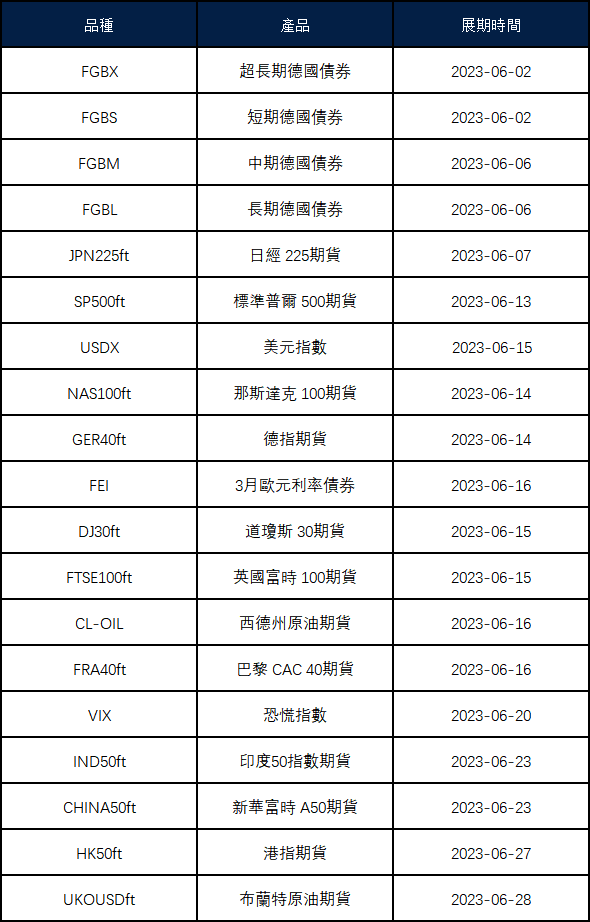
The strength of the US currency led to stock markets remaining subdued, as concerns about the US debt-ceiling limit persisted. Negotiations between President Joe Biden and top Republicans continue, with the opposition demanding spending cuts for an extension of the debt ceiling. Progress has been made, but a deal is unlikely to be reached today, according to House Speaker Kevin McCarthy.

Chart XAUUSD as a result of the surge in tech stocks.

Chart XAUUSD by TradingView

According to technical analysis, the XAU/USD is moving lower on Thursday and exerting pressure on the lower band of the Bollinger Bands. There is a possibility that the XAU/USD will attempt to move higher and reach the middle band of the Bollinger Bands today. Currently, the Relative Strength Index (RSI) stands at 34, indicating that the XAU/USD is in a neutral but still bearish stance.

Resistance: $1,962, $1,991

Support: $1,934, $1,913

Economic Data

CurrencyDataTime (GMT + 8)Forecast
USDCore PCE Price Index m/m20:300.3%
Back To Top
server

Hello there 👋

How can I help you?

Chat with our team instantly

Live Chat

Start a live conversation through...

  • Telegram
    hold On hold
  • Coming Soon...

Hello there 👋

How can I help you?

telegram

Scan the QR code with your smartphone to start a chat with us, or click here.

Don’t have the Telegram App or Desktop installed? Use Web Telegram instead.

QR code