Back

Key metrics show Verizon’s Q1 revenue rose 2.9% to $34.44bn, while EPS increased to $1.28

Verizon Communications reported revenue of $34.44 billion for the quarter ended March 2026, up 2.9% year on year. EPS was $1.28, compared with $1.19 a year earlier.

Revenue was 1.7% below the Zacks Consensus Estimate of $35.03 billion. EPS was 5.2% above the consensus estimate of $1.22.

Consumer operating revenues were $26.45 billion versus a five-analyst average estimate of $26.75 billion, rising 3.3% year on year. Business operating revenues were $7.42 billion versus a $7.33 billion estimate, up 1.8%.

Consumer wireless equipment revenue was $4.82 billion versus a $4.79 billion estimate, up 6.4% year on year. Consumer “other” revenue was $2.45 billion versus a $1.04 billion estimate, up 140.1%.

Service revenues and other totalled $28.76 billion versus a $29.26 billion estimate, up 2.4% year on year. Wireless equipment revenues were $5.68 billion versus a $5.93 billion estimate, up 5.2%.

Business operating income was $884 million versus an estimate of $753.86 million. Consumer operating income was $7.71 billion versus an estimate of $7.65 billion.

We are seeing a mixed picture from Verizon’s latest quarterly results as of today, April 28, 2026. While the company missed revenue forecasts by 1.7%, it surprised with a 5.2% beat on earnings per share. This suggests stronger-than-expected profitability or cost controls despite softer top-line sales.

Digging deeper, the miss in total revenue seems driven by weakness in the core consumer segment, which fell short of analyst estimates. Specifically, the crucial service revenues category also missed expectations, raising questions about subscriber growth or average revenue per user. These are the key metrics we monitor for the long-term health of the business.

This performance aligns with recent industry data showing T-Mobile gained 50,000 more postpaid phone subscribers than projected in the first quarter of 2026, intensifying market share pressure. Looking back at the competitive landscape in 2025, we saw both T-Mobile and AT&T ramp up aggressive device promotions, a trend that appears to be impacting Verizon’s ability to grow its service revenue base. This pressure on the core business is a significant concern for us.

On the other hand, the company is clearly managing its bottom line well, as shown by the outperformance in both consumer and business operating income. The massive 140.1% year-over-year jump in ‘Consumer-Other’ revenue, beating estimates by over $1.4 billion, is a significant anomaly that likely drove the EPS beat. We need to determine if this is a sustainable new revenue stream or a one-time event before it can be fully priced in.

For the coming weeks, this conflicting data suggests implied volatility may remain elevated as the market digests the news. A trader might consider strategies that benefit from a significant price move in either direction, such as a long straddle, capitalizing on the uncertainty around the core business versus the surprising new revenue. Alternatively, if we believe these opposing factors will keep the stock range-bound, an iron condor could be used to profit from sideways consolidation.
In March, Sweden’s monthly trade surplus climbed from 1.8B to 9.3B compared with prior month

Sweden’s trade balance rose to 9.3B in March. It had been 1.8B in the previous month.

This indicates a month-on-month increase of 7.5B. The change reflects a wider surplus in March than in February.

We see that the Swedish trade surplus surged to 9.3 billion SEK in March, a significant jump from the previous month’s 1.8 billion. This surprising strength points to robust global demand for Swedish goods, which is fundamentally positive for the Krona. In the near term, we should anticipate the SEK strengthening against major currency pairs like the Euro and the Dollar.

This robust economic data significantly reduces the probability of a near-term interest rate cut from the Riksbank. Given that Sweden’s core inflation has remained persistent, hovering around 2.5% in early 2026, this report gives policymakers reason to maintain a hawkish stance. We should now re-evaluate interest rate swap markets, which may have been pricing in a more dovish path, a stark contrast to the cautious tone we saw them adopt in late 2025.

We anticipate a positive reaction in the OMXS30 index, as many of its largest components are major global exporters sensitive to international demand. With the index having traded sideways for most of the first quarter of 2026 around the 2,600 level, this could be the catalyst for an upward break. We should consider buying call options on the index or on key industrial names to position for this potential upside.

Given this data, we view put options on the EUR/SEK pair as an attractive strategy for the coming weeks. The unexpectedly strong surplus could trigger a reassessment of the Krona’s value, similar to the sharp currency moves we witnessed back in 2023 when monetary policies diverged. An increase in implied volatility should be expected, making entry timing for these option strategies crucial.

During Asian trading, GBP/USD holds near 1.3530, bullish within an ascending channel, testing two-month resistance

GBP/USD was steady for a second day, trading near 1.3530 during Asian hours on Tuesday. On the daily chart, the pair is moving sideways inside an ascending channel, which points to a bullish bias.

The pair remains above the nine-day and 50-day Exponential Moving Averages (EMAs). Both EMAs sit below the current price, supporting the upward trend.

Technical Indicators And Trend Context

The 14-day Relative Strength Index (RSI) is near 58, which is above the neutral level. It is not in overbought territory.

Looking back to late 2025, we saw a period where bullish sentiment for GBP/USD was strong, with the pair trading constructively within an ascending channel around 1.3530. At that time, key moving averages provided solid support, and the Relative Strength Index suggested buyers were in control. The technical picture then pointed towards continued upside momentum.

The situation has changed considerably as we now see the pair trading near 1.2850. The previous support levels have been broken due to persistent US dollar strength, overriding the technical bullishness we observed last year. This shift reflects a market now dominated by macroeconomic factors rather than the prior technical structure.

Recent data reinforces this view, with the latest US Non-Farm Payroll report showing a robust addition of over 250,000 jobs, strengthening the case for a hawkish Federal Reserve. On the other hand, UK inflation remains elevated at 3.1%, forcing the Bank of England to maintain a firm stance. This policy divergence is a key driver of the pound’s current valuation against the dollar.

Options Strategies And Key Risks

Given the prevailing downward pressure, derivative traders could consider buying put options with a June 2026 expiry to capitalize on potential further declines. A strike price around 1.2750 would offer a way to profit if the current trend continues in the coming weeks. This strategy also serves as a hedge for any existing long positions in the pound.

For those who anticipate that the pair will become range-bound between a strong dollar and a hawkish Bank of England, selling a strangle could be an effective strategy. By selling both a call option with a strike near 1.3000 and a put option with a strike at 1.2700, traders can collect premium from the expectation of low volatility. This approach profits if GBP/USD remains between these two levels until expiration.

We must remain vigilant, as the primary risk to these positions is a sudden change in tone from either central bank. The upcoming meeting minutes from both the Federal Reserve and the Bank of England will be critical to monitor. Any unexpected weakness in US economic data or a surprise drop in UK inflation could quickly reverse the current market dynamics.

Create your live VT Markets account and start trading now.

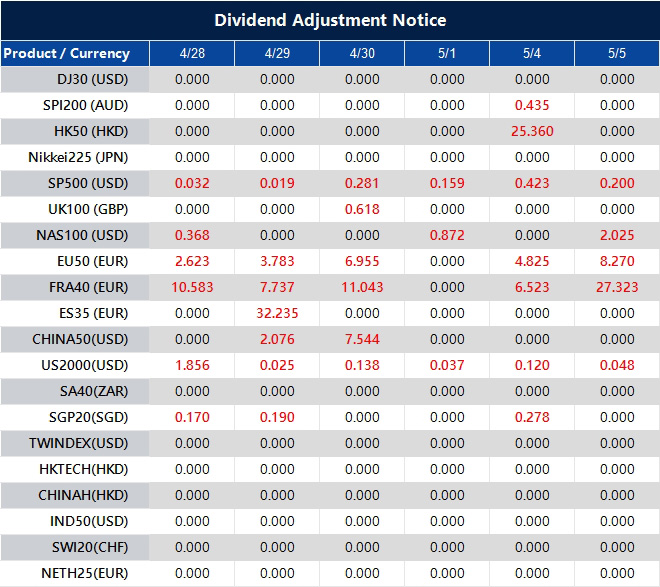
Dividend Adjustment Notice – Apr 28 ,2026

Dear Client,

Please note that the dividends of the following products will be adjusted accordingly. Index dividends will be executed separately through a balance statement directly to your trading account, and the comment will be in the following format “Div & Product Name & Net Volume”.

Please refer to the table below for more details:

Dividend Adjustment Notice

The above data is for reference only, please refer to the MT4/MT5 software for specific data.

If you’d like more information, please don’t hesitate to contact [email protected].

FXStreet’s compiled figures show gold prices in the Philippines declined, according to data released on Tuesday

Gold prices in the Philippines fell on Tuesday, based on data compiled by FXStreet. Gold was priced at PHP 9,158.46 per gram, down from PHP 9,186.80 on Monday.

Gold also dropped to PHP 106,822.70 per tola from PHP 107,153.00 a day earlier. Other listed prices were PHP 91,584.20 for 10 grams and PHP 284,860.10 per troy ounce.

How Local Gold Prices Are Calculated

FXStreet calculates local gold prices by converting international prices using the USD/PHP exchange rate and local measurement units. The figures are updated daily at publication time, and local rates may vary slightly.

Gold is commonly used as a store of value and for jewellery, and it is often treated as a safe-haven asset in volatile periods. It is also used as a hedge against inflation and currency weakness.

Central banks are the largest holders of gold. World Gold Council data shows central banks added 1,136 tonnes, worth about $70 billion, to reserves in 2022, the highest annual total on record.

Gold often moves inversely to the US Dollar and US Treasuries, and it can also move against risk assets such as equities. Prices can be affected by geopolitics, recession fears, interest rates, and US Dollar strength because gold is priced in US dollars.

Key Drivers For The Gold Outlook

The slight dip in gold prices is just daily market noise and should not distract from the larger trends at play. We should instead focus on gold’s relationship with interest rates and the US dollar, which are the real drivers. As a non-yielding asset, gold’s direction in the coming weeks will heavily depend on expectations for the next move from the US Federal Reserve.

Looking back, the Fed’s cautious pivot away from the aggressive rate hikes of 2024 and 2025 has created significant market uncertainty. Recent US inflation data, which came in at a stubborn 2.8% for March 2026, suggests the Fed may delay its next anticipated rate cut. This indecision is an ideal environment for traders using options to bet on price swings around key economic data releases.

We also cannot ignore the powerful underlying demand from central banks, which has provided a solid floor under the gold price. Following the record buying we saw in previous years, global central banks added another 1,050 tonnes to their reserves through 2025, according to World Gold Council data. This persistent buying, particularly from emerging economies, means that any significant price dips are likely to be viewed as buying opportunities by major players.

Geopolitical tensions continue to support gold’s role as a safe-haven asset, encouraging diversification into hard assets. We have seen this play out over the last year with unresolved trade disputes and regional conflicts keeping investors on edge. While a strong rally in equity markets could temporarily draw money away from gold, the fundamental reasons for holding it remain firmly in place.

For derivative traders, this environment suggests focusing on strategies that profit from volatility rather than a specific direction. Straddles or strangles could be effective ways to play the price swings ahead of the next Fed meeting or inflation report. Given the historically high price of gold, using call spreads to position for further upside offers a more capital-efficient approach than buying futures contracts outright.

Create your live VT Markets account and start trading now.

FXStreet data shows gold prices in the United Arab Emirates declined, reflecting a fall in local rates

Gold prices in the United Arab Emirates fell on Tuesday, based on data compiled by FXStreet. Gold was priced at AED 551.34 per gram, down from AED 552.88 on Monday.

The price per tola dropped to AED 6,430.66 from AED 6,448.66 a day earlier. Other listed prices were AED 5,513.71 for 10 grams and AED 17,148.39 per troy ounce.

How FXStreet Calculates Local Gold Prices

FXStreet converts international prices into AED using the USD/AED rate and local measurement units. Prices are updated daily at publication time and are for reference, as local rates may vary slightly.

Central banks are the largest holders of gold. They added 1,136 tonnes worth around $70 billion in 2022, the highest annual total since records began, according to the World Gold Council.

Gold often moves inversely to the US Dollar and US Treasuries, and can also move opposite to risk assets such as equities. Prices may also shift with interest rates, geopolitical events and recession fears, and are influenced by the US Dollar as gold is priced in dollars (XAU/USD).

We are seeing a minor dip in gold prices today, April 28, 2026, which may present an opportunity. This slight downturn should be viewed against a backdrop of persistent global uncertainty and shifting monetary policy. The key is to determine if this is a brief consolidation before the next move higher.

Potential Strategy Considerations

The current market environment is heavily influenced by expectations of lower interest rates. Looking back, the Federal Reserve’s pivot away from the aggressive hikes of 2024-2025 has made non-yielding assets like gold more appealing. As of this morning, U.S. 10-year Treasury yields are hovering around 3.8%, well below the peaks we saw in late 2025, which supports this view.

We must also consider the immense demand from central banks, which has provided a strong floor for prices. Following the record purchases in 2022 and 2023, central banks, particularly in Asia, continued to add to their reserves throughout 2025, a trend that is showing no signs of stopping. This institutional buying creates a structural demand that limits significant downside potential.

Given these underlying supportive factors, traders could see this small price drop as a chance to enter or add to bullish positions. Buying call options with strike prices above the current market level could be a cost-effective way to speculate on a rebound in the coming weeks. This strategy allows for participation in potential gains while capping the initial risk.

However, we must remain aware of the inverse relationship between gold and the U.S. dollar. Any unexpected economic data that strengthens the dollar could act as a headwind for gold prices. Therefore, any long positions in gold futures or options should be managed with disciplined stop-losses or hedged with exposure to the U.S. Dollar Index (DXY).

Create your live VT Markets account and start trading now.

Citing compiled data, Pakistan’s gold prices declined, with bullion trading lower across markets on Tuesday

Gold prices in Pakistan fell on Tuesday, based on FXStreet data. Gold was priced at PKR 41,934.30 per gram, down from PKR 42,062.44 on Monday.

Gold also dropped per tola to PKR 489,113.50 from PKR 490,608.10 a day earlier. Other listed rates were PKR 419,339.80 for 10 grams and PKR 1,304,309.00 per troy ounce.

Pakistan Gold Rate Update

FXStreet derives Pakistan gold prices by converting international prices using the USD/PKR rate and local units. The figures are updated daily at the time of publication and are intended as reference, as local prices may vary.

Central banks are cited as the largest holders of gold. They added 1,136 tonnes worth about $70 billion in 2022, according to the World Gold Council, the highest annual total since records began.

Gold is described as often moving opposite to the US Dollar and US Treasuries, and also tending to move against risk assets such as equities. Its price can also shift with geopolitical events, recession concerns, interest rates, and changes in the US Dollar because gold is priced in dollars (XAU/USD).

We are seeing a slight dip in local gold prices, which reflects a minor pullback from recent highs. This shouldn’t distract from the larger trend of gold’s strength as a safe-haven asset. The continued global uncertainty provides a strong underlying floor for the price.

Market Outlook For Gold

We have to remember the context of the massive central bank buying that defined the market over the past few years. Looking back, the record purchases in 2022 and the over 1,000 tonnes added again in 2023 created a new dynamic of consistent demand. This institutional buying continues to absorb supply and support prices against significant downturns.

The inverse relationship with the US dollar and interest rates is becoming critical again. After a period in 2025 where this link was tested, market focus is now shifting to potential rate cuts later this year as global growth shows signs of slowing. Derivative markets are beginning to price in a more dovish stance, which is historically bullish for non-yielding assets like gold.

For the coming weeks, we should view these small dips as potential opportunities to establish long positions. Using call options could be a prudent way to capture upside potential while defining risk. Selling out-of-the-money puts could also be considered to collect premium, betting that the strong fundamental support will limit any significant sell-offs.

Create your live VT Markets account and start trading now.

FXStreet-compiled data show India’s gold prices declined, with metal values falling across the country on Tuesday

Gold prices in India fell on Tuesday, based on FXStreet data. Gold was priced at INR 14,228.40 per gram, down from INR 14,271.99 on Monday.

Gold dropped to INR 165,958.10 per tola from INR 166,474.50 a day earlier. FXStreet listed prices of INR 142,285.60 for 10 grams and INR 442,531.00 per troy ounce.

How FXStreet Calculates Gold Prices In India

FXStreet converts international gold prices into Indian rupees using USD/INR and local units. Prices are updated daily using market rates at the time of publication, and local rates may vary slightly.

Gold is commonly used as a store of value and is traded as a safe-haven asset during market stress. It is also used as a hedge against inflation and currency weakness.

Central banks are the largest holders of gold. They added 1,136 tonnes worth about $70 billion in 2022, the highest annual total on record, with buying reported in countries including China, India and Turkey.

Gold often moves inversely to the US Dollar and US Treasuries, and can also move opposite to risk assets such as equities. Prices may change due to geopolitics, recession fears, interest rates, and US Dollar strength because gold is priced in dollars (XAU/USD).

Market Outlook And Trading Strategies

The small dip in gold prices to around 14,228 INR per gram should be seen as a temporary pause rather than a trend reversal. We are looking at this minor pullback in the context of a market that is still digesting the Federal Reserve’s recent ambiguous signals on interest rates. This uncertainty creates an ideal environment for volatility, which derivative traders can use to their advantage.

Underlying support for gold remains exceptionally strong, which suggests buying into this weakness could be a viable strategy. We saw central banks continue their historic purchasing spree throughout 2025, building on the record levels set in the preceding years, with Q1 2026 data from the World Gold Council showing another net increase of over 290 tonnes globally. This consistent institutional demand provides a solid floor for prices.

The inverse correlation with the US Dollar is a key factor to watch in the coming weeks. With the latest US CPI data for March 2026 coming in at a slightly cooler 2.8%, market expectation for a potential rate cut later this year has put some pressure on the dollar. A weaker dollar makes gold cheaper for foreign buyers, which could fuel the next leg up.

Considering the choppy performance of equity markets like the S&P 500, which has struggled to find direction since late 2025, gold’s appeal as a safe-haven asset is enhanced. This rotation out of riskier assets, combined with persistent geopolitical tensions, reinforces the bullish case for the metal. Traders might consider buying call options to capitalize on potential upside with a defined risk.

For those anticipating a price rebound but wanting to generate income, selling cash-secured puts at a strike price below the current market level is an attractive option. This strategy allows traders to collect a premium while setting a lower entry point to go long on gold futures if the price briefly declines further. It’s a way to get paid while waiting for the uptrend to resume.

However, if the Federal Reserve signals a more hawkish stance in its next meeting, the US Dollar could strengthen and create a headwind for gold. To hedge against this, a protective strategy using put spreads could be used to profit from or limit losses during a potential short-term downturn. This provides a low-cost method to prepare for any unexpected tightening of monetary policy.

Create your live VT Markets account and start trading now.

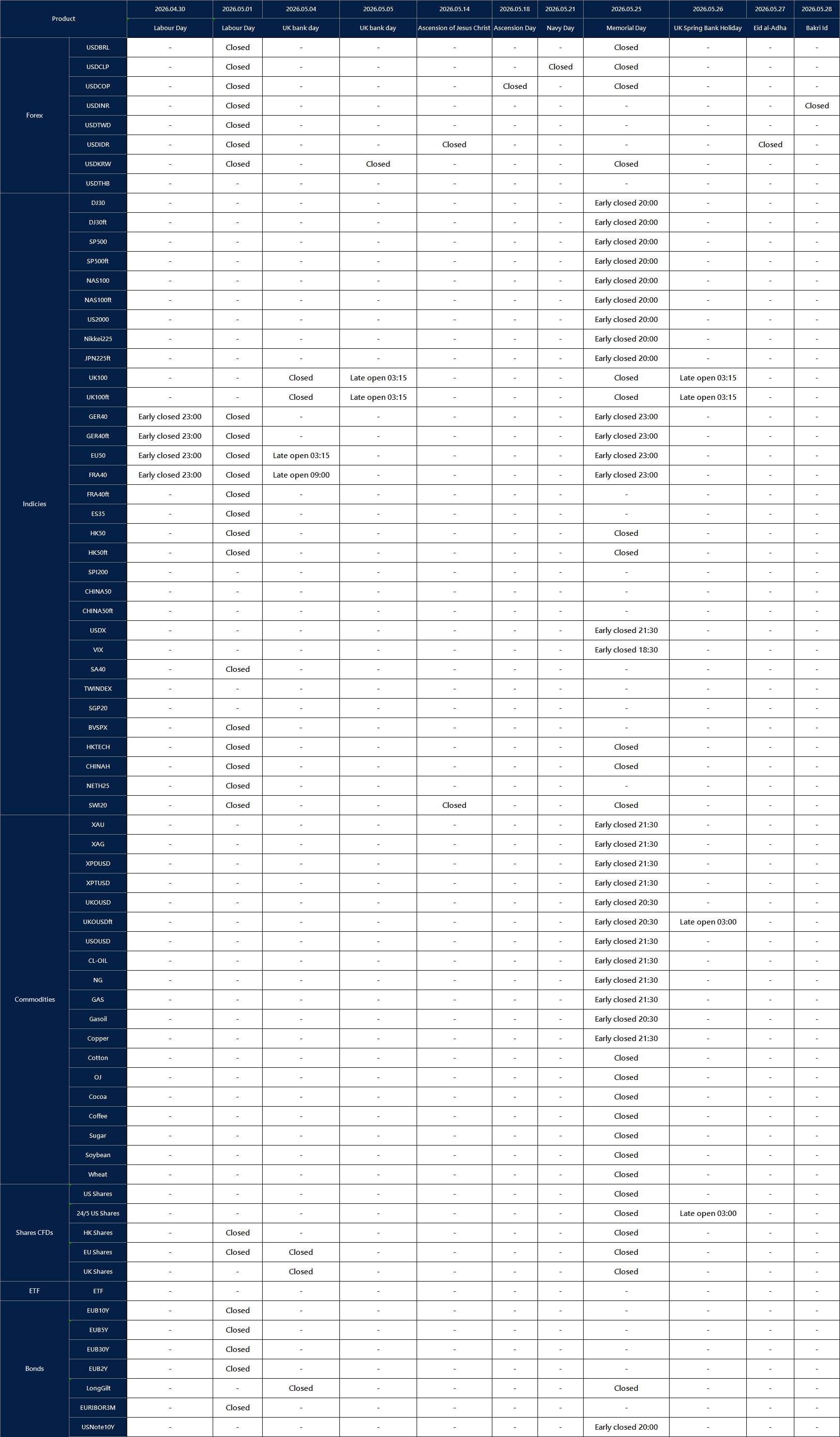
Holiday Trading Adjustment Notice – Apr 28 ,2026

Dear Client,

Affected by international holidays, the trading hours of some VT Markets products will be adjusted. Please check the following link for the affected products:

Holiday Trading Adjustment Notice

Note: The dash sign (-) indicates normal trading hours.

Friendly Reminder:
The above data is for reference only, please refer to the MT4/MT5 software for specific data.

If you’d like more information, please don’t hesitate to contact [email protected]

Following the Bank of Japan keeping rates at 0.75%, the yen strengthens, pushing USD/JPY down to 159.25

The Japanese Yen strengthened against major currencies after the Bank of Japan kept its policy rate unchanged at 0.75% for a third meeting, pushing USD/JPY down to around 159.25. The decision had been expected, as conflict in the Middle East has raised concerns about the economic outlook.

Markets are awaiting BoJ Governor Kazuo Ueda’s press conference at 06:30 GMT. Attention is on any guidance about a gradual upward policy path and whether inflation pressures are expected to come from growth rather than energy costs.

Focus On The Federal Reserve

The US Dollar focus is on the Federal Reserve decision due on Wednesday. The Fed is expected to hold rates for a third time in the 3.50%–3.75% range, while flagging upside inflation risks and downside growth risks linked to higher oil prices.

In US politics, White House press secretary Karoline Leavitt said President Donald Trump discussed Iran’s proposal with the national security team. The proposal includes reopening the Strait of Hormuz and a permanent ceasefire, and no details were given on whether Washington will pursue it.

BoJ press conferences follow each of its eight scheduled policy meetings. The Governor explains the rate decision, discusses growth and inflation, and gives clues about future policy, which can move the Yen.

The Japanese Yen is getting stronger even though the Bank of Japan (BoJ) kept its interest rate at 0.75%. This tells us that traders are more focused on the central bank’s future tone than its current actions. Implied volatility in USD/JPY one-week options has jumped to over 14%, signaling that the market is bracing for larger price swings in the days ahead.

Key Volatility Levels

Our attention now shifts to the Federal Reserve meeting this Wednesday, where they are expected to hold rates between 3.50%-3.75%. The significant interest rate difference between the US and Japan, which has consistently stayed above 2.5% for the last eight months, continues to be a major factor supporting the dollar. Traders should therefore watch for any subtle changes in the Fed’s language regarding inflation risks.

We saw a similar situation back in the summer of 2025 when tensions in the South China Sea caused a flight to the yen, pushing USD/JPY down 4% in a week. That move completely reversed once the Fed reiterated its hawkish inflation stance a month later. This reminds us that geopolitical-driven currency moves can be short-lived if the underlying monetary policy divergence remains.

The wild card remains the geopolitical situation in the Middle East and its effect on oil. With Brent crude futures for June delivery hovering near $95 a barrel, any news on the Strait of Hormuz could cause a significant price shock. The CBOE Crude Oil Volatility Index (OVX) is already elevated at 45, meaning options traders are paying a high premium for protection against sudden price spikes.

Given the binary risks from both the Fed’s announcement and potential geopolitical news, we are looking at long straddles on USD/JPY. This options strategy allows us to profit from a significant price move in either direction without having to guess the outcome correctly. It is a pure play on the expectation that volatility will increase from here.

We are watching key option strike prices with significant open interest clustered around the 158.00 and 161.00 levels. These areas represent where large volumes of derivative contracts are positioned, making them important zones of potential support or resistance. A decisive break of these levels following the Fed’s statement could trigger the next major trend.

Create your live VT Markets account and start trading now.

Back To Top
server

Hello there 👋

How can I help you?

Chat with our team instantly

Live Chat

Start a live conversation through...

  • Telegram
    hold On hold
  • Coming Soon...

Hello there 👋

How can I help you?

telegram

Scan the QR code with your smartphone to start a chat with us, or click here.

Don’t have the Telegram App or Desktop installed? Use Web Telegram instead.

QR code