






Key Points
- S&P 500 futures fell 1%, while the cash index in your chart trades at 6517.28, down 65.71 (-1.00%).
- Brent rose about 5% to $106.16 a barrel after Trump gave no clear signal on when the Strait of Hormuz might reopen.
- The US dollar index rose 0.3% to 99.858, while the euro slipped 0.25% to $1.156 as traders moved back into defensive positions.
Markets went back into defence after President Donald Trump said the US would hit Iran “extremely hard” within weeks and did not give traders the timeline they wanted for an end to the conflict.
That shift matters for the S&P 500 because the rebound over the prior two sessions had relied on hopes that the war might wind down soon. Trump’s comments removed that support.
Traders started selling equities again because the market is still trying to price two things at once: higher energy costs and weaker growth. That combination is what keeps dragging the discussion back toward stagflation.
The market is no longer asking whether the conflict is serious. It is asking how long the energy disruption lasts and how much economic damage builds while it stays in place.
Oil Above $106 Reopens the Inflation Problem
The sharpest signal came from crude. Reuters reported that the front-month Brent contract rose about 5% to $106.16 per barrel after the speech failed to offer reassurance on the Strait of Hormuz. Our research desk believes the only thing that really matters is whether the Strait reopens soon, and Trump’s remarks did not suggest that would happen quickly.
For equities, that is the problem in one line. Expensive oil lifts inflation, squeezes margins, and cuts into consumer spending power. The S&P 500 can absorb a geopolitical shock for a while if energy stays contained. It struggles much more when crude moves back toward crisis levels and the market cannot see a clear reopening path for a major fuel artery.
That also explains why the earlier optimism faded so fast. A war can continue politically and still leave markets calm if oil routes function. Once supply routes stay impaired, the macro cost rises quickly.
Dollar Strength Tightens Conditions Again
The dollar also turned higher as traders moved back into the usual haven trade. Reuters reported that the dollar index rose 0.3% to 99.858 after falling nearly 1% over the prior two days on ceasefire optimism. The euro weakened 0.25% to $1.156.
That adds another layer of pressure to the S&P 500. A firmer dollar tightens financial conditions and weighs on multinational earnings when overseas revenue is translated back into dollars. It also signals that traders are reducing risk rather than preparing to re-enter cyclicals and growth names.
When equities are already under pressure from higher yields and higher energy costs, a stronger dollar usually makes the rebound harder.
Technical Analysis
S&P 500 is trading near 6517, attempting a modest rebound after a sharp decline that pushed price down to the 6318 low. The broader structure remains under pressure following the rejection from the 7017 high, with price still struggling to regain upward momentum. Recent candles show a short-term bounce, but the recovery lacks strength, suggesting the move is more corrective than a true reversal.
From a technical standpoint, the trend remains bearish in the near term. Price is trading below the 10-day (6516) and 20-day (6610) moving averages, which are both sloping downward and acting as overhead resistance. The 5-day (6467) is beginning to turn higher, reflecting the current bounce, but this remains fragile unless price can reclaim higher levels. The broader structure continues to show lower highs and sustained selling pressure.
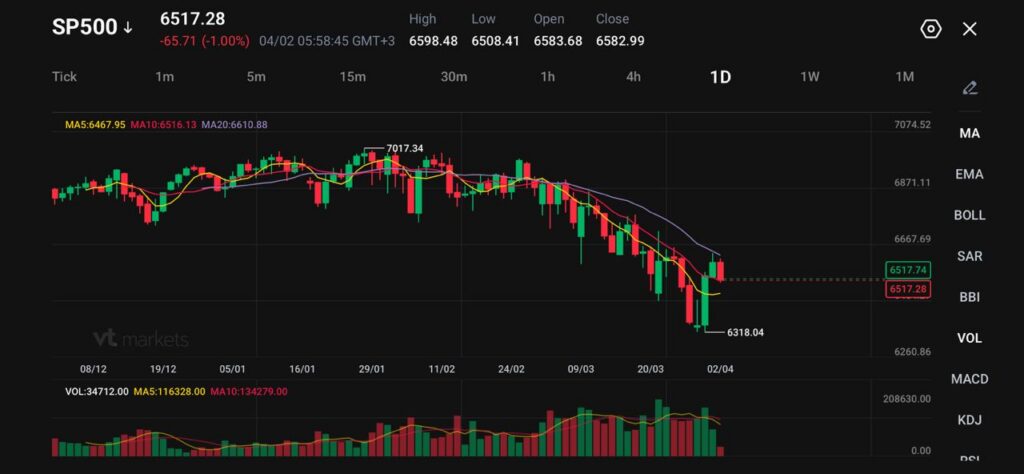
Key levels to watch:
- Support: 6400 → 6318 → 6200
- Resistance: 6520 → 6610 → 6700
The index is currently testing the 6515–6520 zone, which aligns closely with the 10-day average and is acting as immediate resistance. A sustained move above this level could open a recovery toward 6610, though stronger resistance is likely to emerge there.
On the downside, 6400 remains the first key support. A break below this level would expose the recent low at 6318, with further downside risk if selling resumes.
Overall, the S&P 500 remains in a short-term downtrend, with the current bounce showing limited conviction. Unless price can reclaim the 6610 area, rallies are likely to face resistance, keeping the bias tilted to the downside while the market works through this corrective phase.
What Traders Should Watch Next
The next move depends on oil, not speeches alone. Brent holding near $106.16, the status of the Strait of Hormuz, and the dollar’s reaction will drive the tone into the next session more than any single earnings or sector story. Both USD and oil should move higher while risk is shed, and that remains the cleanest way to frame the market right now.
A cautious path from here is clear. If crude stays high and the dollar keeps firming, the S&P 500 may struggle to recover more than a short relief bounce.
If oil falls back and the market sees real progress on shipping routes, the index can start rebuilding from the 6517 area toward resistance near 6610.
Learn more about trading Indices on VT Markets today.
Trader Questions
Why Did the S&P 500 Drop Again After Two Better Sessions?
The market had been hoping for a clearer end to the Iran conflict, but Trump’s speech offered no firm timeline and repeated threats to hit Iran “extremely hard” within weeks. That pushed traders back into defence and sent S&P 500 futures down 1%.
Why Are Oil Prices So Important for the S&P 500 Right Now?
Higher oil prices push up inflation, raise business costs, and squeeze consumer spending. Reuters reported Brent up about 5% to $106.16 a barrel after the speech, which brought the inflation problem back to the centre of equity pricing.
What is Driving Stagflation Fears in Markets?
Traders are now dealing with a weaker growth outlook amid high energy-driven inflation. That is the classic stagflation setup, and Reuters said Trump’s comments revived those concerns after the market had briefly hoped the war might wind down.
Why Did the Dollar Strengthen While Stocks Fell?
Traders moved back into the US dollar because the speech raised the odds of a longer conflict and kept energy supply fears alive. Reuters reported the dollar index up 0.3% to 99.925, showing that traders were rotating back into havens.
How Does the Strait of Hormuz Affect Us Equities?
The Strait of Hormuz is one of the most important fuel shipping routes in the world. If it stays blocked or restricted, energy prices stay high for longer. Reuters said the speech gave no real reassurance about when or how the strait would reopen, leaving markets on edge.
Start trading now – Click here to create your real VT Markets account







