






Key Points
- S&P 500 fell 1.74%, with futures now attempting a rebound.
- Trump delays action by 10 days, easing immediate risk sentiment.
- Rising yields and energy prices continue to drive stagflation concerns.
U.S. equity futures edged higher on Friday, with the S&P 500 attempting to stabilise after a 1.74% drop in the previous session.
The rebound follows a heavy selloff across major indices, with the Dow falling 1.01% and the Nasdaq dropping 2.38%, led by weakness in technology stocks.
Treasury yields moved higher during the session, putting pressure on valuations, particularly in growth sectors.
Any recovery may remain fragile as yields and macro risks continue to weigh on sentiment.
Geopolitical Delay Offers Temporary Relief
Markets found some relief after President Donald Trump extended the deadline for potential strikes on Iranian energy infrastructure by 10 days.
The move suggests ongoing negotiations, reducing the immediate risk of escalation.
In addition, Trump stated that Iran allowed 10 oil tankers to pass through the Strait of Hormuz, easing concerns over a complete disruption in supply.
However, Iran has rejected the U.S.’s 15-point proposal and presented its own conditions, including control over the Strait, keeping tensions unresolved.
Relief rallies may be short-lived unless there is clear progress toward de-escalation.
Rising Yields and Energy Prices Drive Stagflation Fears
The broader market reaction reflects growing concern over stagflation.
A sharp rise in energy prices is feeding into inflation expectations, while higher Treasury yields tighten financial conditions.
This combination is particularly challenging for equities, as it raises discount rates while also threatening economic growth.
Technology stocks, which are sensitive to interest rate changes, led the decline in the previous session.
Continued pressure from yields may limit upside in equities, especially in rate-sensitive sectors.
Technical Outlook Shows Downtrend Pressure
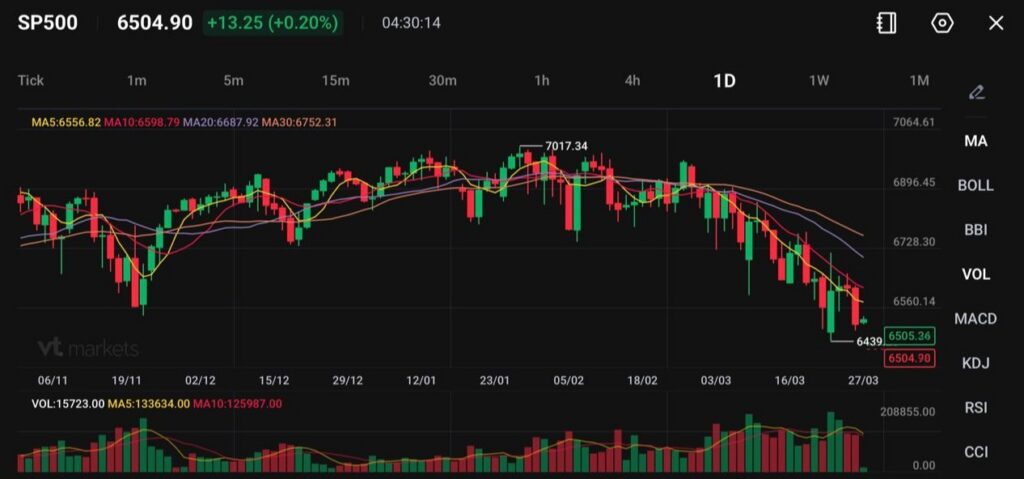
The S&P 500 (SP500) is trading around 6505, attempting a mild rebound after a sharp sell-off that drove price down to the ~6439 low. The broader structure has shifted from a prior range into a clear short-term downtrend, and this bounce looks corrective rather than impulsive so far.
Trend Structure and Momentum
Price has broken below all key moving averages, with:
- MA5: 6556
- MA10: 6598
- MA20: 6687
- MA30: 6752
All moving averages are now sloping downward and stacked bearishly, confirming sustained downside pressure. The recent candles show lower highs and lower lows, which is classic trend continuation behaviour.
The current bounce is testing the underside of the short-term averages, particularly the MA5 and MA10 zone (6550–6600), which now acts as dynamic resistance.
Volume increased during the sell-off phase and has eased slightly during the bounce. That tells you buyers are not fully committed yet.
Key Levels to Watch
- Immediate Resistance: 6550 → 6600
- Stronger Resistance: 6685 → 6750
- Support: 6439 → 6400
- Breakdown Level: Below 6400 opens 6300 region
The 6439 low is the key near-term floor. A clean break below that level would likely accelerate downside momentum.
On the upside, price needs to reclaim 6600 first, then 6685 (MA20 zone) to shift sentiment back toward neutral.
Price Behaviour Insight
The rejection from the 7017 high earlier has led to a full structure shift. What used to be a sideways market has now transitioned into a distribution phase, followed by a breakdown.
The recent bounce shows:
- Smaller candles
- Less aggressive buying
- Resistance holding quickly
This is typical of a bearish pullback, not a reversal.
What to Watch Next
Watch how price reacts around 6550–6600:
- Rejection here: Likely continuation lower toward 6439 and potentially 6400
- Break and hold above 6600: Opens a squeeze toward 6685
Also keep an eye on:
- US yields (higher yields pressure equities)
- USDX strength (strong dollar often weighs on risk assets)
Cautious Outlook
The short-term bias remains bearish while below 6600, with rallies likely to be sold into. Momentum only shifts if price can reclaim and hold above the 20-day average (~6685). Until then, the structure favours lower highs and continued pressure on support zones.
What Traders Should Watch Next
Markets remain driven by a mix of geopolitical and macro forces. Key areas to monitor include:
- Progress in U.S.–Iran negotiations
- Movement in Treasury yields
- Oil price stability and supply flows through Hormuz
- Performance of technology stocks
For now, the S&P 500 is attempting to find footing, but the balance between easing geopolitical risk and tightening financial conditions remains finely poised.
Learn more about trading Indices on VT Markets today.
FAQs
Why Did the S&P 500 Fall Sharply Recently?
The S&P 500 dropped 1.74% due to rising Treasury yields, higher oil prices, and growing stagflation concerns.
What Triggered the Rebound in US Stock Futures?
Futures rose after Trump delayed potential strikes on Iran by 10 days, easing immediate geopolitical fears.
How Do Rising Oil Prices Affect US Stocks?
Higher oil prices increase inflation risk, raise costs for businesses, and pressure central banks to keep policy tight.
Why Are Treasury Yields Important for Equities?
Rising yields increase borrowing costs and reduce the present value of future earnings, weighing on stock valuations.
Why Did Technology Stocks Lead the Decline?
Tech stocks are more sensitive to interest rates, so higher yields tend to trigger stronger selloffs in the sector.
What Are Stagflation Risks and Why Do They Matter?
Stagflation combines slowing growth with rising inflation, which is challenging for both equities and central banks.
Is the Current Market Bounce Sustainable?
The rebound may be fragile unless yields stabilise and geopolitical tensions ease.
Start trading now – Click here to create your real VT Markets account







