






Key Points
- Brent crude for June rose $5.27, or 4.5%, to $123.30 a barrel at 0347 GMT after gaining 6.1% in the previous session.
- WTI futures for June rose $2.42, or 2.3%, to $109.30 a barrel after climbing 7% in the previous session.
- CL-OIL traded at 109.329, up 0.907 points, or 0.84%, with buyers holding price above the 5-day, 10-day, and 20-day moving averages.
- OPEC+ is likely to agree a small increase of around 188,000 barrels per day in output quotas on Sunday.
Oil prices rose again on Thursday as the market moved from pricing a prolonged blockade to pricing possible military action. Reports said US President Donald Trump is due to receive a briefing on plans for a series of military strikes on Iran, intending to push Tehran back into talks over its nuclear programme.
Brent crude futures for June rose $5.27, or 4.5%, to $123.30 a barrel as of 0347 GMT after gaining 6.1% in the previous session. The June contract, which has risen for a ninth day, expires on Thursday. The more active July contract traded at $113.10, up $2.66, or 2.4%, after gaining 5.8% in the previous session.
US West Texas Intermediate futures for June climbed $2.42, or 2.3%, to $109.30 a barrel after rising 7% in the previous session. WTI has now climbed in eight of the last nine sessions. Both Brent and WTI are on track for their fourth month of gains.
The message is clear. Traders are no longer treating the Iran conflict as a short-term shock. They are now pricing a longer energy disruption, a deeper supply squeeze, and a higher risk that the ceasefire fails to become a settlement.
Hormuz Closure Keeps The Market Tight
The US and Israel began air strikes on Iran on February 28. Iran then retaliated by closing off almost all shipping through the Strait of Hormuz, one of the world’s key energy chokepoints. The ceasefire has paused active combat, but it has not reopened the strait. The US has also imposed a blockade on Iranian ports.
The IEA says the Strait of Hormuz handles a large share of global energy trade, including almost 20% of global LNG flows in 2025. That makes the closure a major problem for refiners, shippers, utilities, and governments trying to limit fuel inflation.
The talks remain stuck. The US wants Iran’s alleged nuclear weapons programme on the table. Iran wants some control over the strait, reparations for war damage, and relief from sanctions. Until either side moves, the market is likely to keep a high risk premium in Brent and WTI.
ING analysts said the oil market has moved from over-optimism to the reality of the supply disruption in the Persian Gulf. That shift matters because the market had been hoping the ceasefire would lead to faster relief. Instead, traders now see a longer period of blocked flows and tighter inventories.
A Months-Long Blockade Raises The Inflation Threat
Trump spoke on Wednesday with oil companies about how to reduce the impact of a possible months-long US blockade, according to a White House official. Reuters reported that the discussion involved major energy companies and focused on oil production, shipments, natural gas, and oil futures.
That tells the market two things. First, Washington is preparing for the conflict to last longer. Second, the White House knows oil prices are now a domestic inflation risk.
Higher crude prices feed into transport, shipping, power, petrochemicals, and food costs. If oil stays near $110 to $120, central banks may have less room to cut rates. That can support the US dollar, pressure equities, and raise the cost base for companies exposed to fuel and logistics.
The cautious forecast is that oil-linked inflation risk will stay active while Hormuz remains largely closed. A softer price move may need real signs of shipping recovery, not only diplomatic language.
OPEC+ Relief Looks Too Small For Now
OPEC+ is likely to agree a small increase of around 188,000 barrels per day in output quotas on Sunday. The meeting comes just after the United Arab Emirates’ withdrawal from OPEC, effective May 1.
In normal conditions, a supply increase would cap prices. This time, the market may treat it as too small. The scale of disruption around Hormuz and the Persian Gulf has reduced exports from major producers, while the UAE’s exit could weaken the group’s ability to control prices over time.
Analysts also argue the UAE’s extra freedom to raise output after exports restart may not change market fundamentals this year. Wood Mackenzie analysts said Gulf countries, including the UAE, will take months to return to pre-war production volumes.
That means OPEC+ may slow the rally, but it is unlikely to reverse it unless shipping routes reopen. The cautious forecast is that a 188,000-barrel-per-day quota increase will look symbolic if Hormuz remains constrained and military risk rises.
Technical Analysis Shows Buyers Still In Control
CL-OIL is trading near 109.30, extending its recovery and pushing back toward the upper end of the recent range after rebounding from the mid-April pullback. Price action shows buyers stepping back in with conviction, with the market now approaching levels that previously acted as a supply zone.
From a technical standpoint, momentum has turned firmly bullish in the near term. Price is holding above the 5-day (101.72) and 10-day (95.83) moving averages, both sloping higher and providing strong dynamic support. The 20-day (97.53) sits well below current price, reinforcing the strength of the rebound and suggesting the broader trend remains constructive despite earlier volatility.
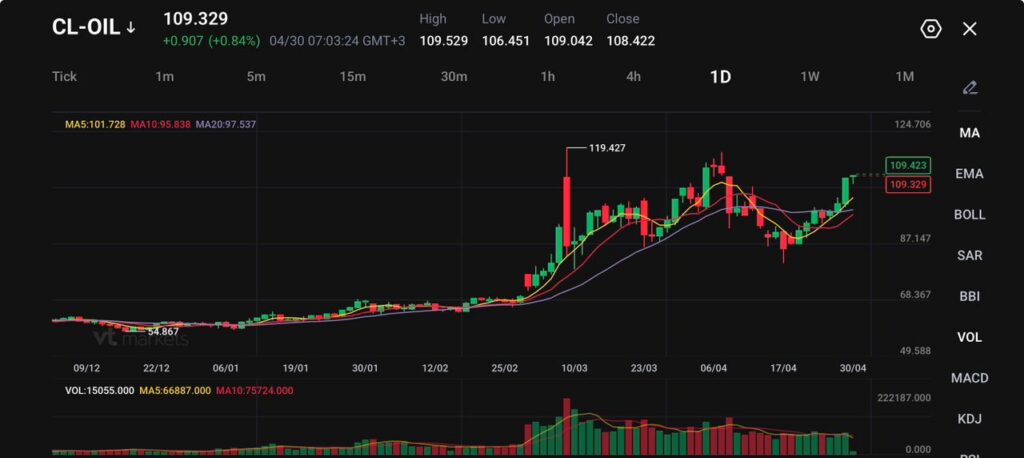
Key levels to watch:
- Support: 101.70 → 97.50 → 95.80
- Resistance: 110.00 → 115.90 → 119.40
Price is now testing the 110.00 resistance zone, a key psychological level and an area where prior rallies have struggled to hold. A clean break and sustained move above this level could open the path toward 115.90, with further upside potential back toward the 119.40 high if momentum accelerates.
On the downside, 101.70 is acting as immediate support, aligning with short-term trend structure. A break below this level would weaken the current recovery and expose 97.50, though that would still sit within a broader bullish framework unless selling pressure intensifies further.
Overall, oil is reasserting its upward momentum after a corrective phase, with the 110 level now acting as the key inflexion point for whether the next leg higher can develop.
Market Implications
The oil rally now has a wider market force. If crude holds above $109 and Brent stays near the $120 area, inflation expectations may rise again. That can keep central banks cautious, support the dollar, and weigh on rate-sensitive equity sectors.
Energy shares may continue to attract buyers, but airlines, transport firms, consumer names, and manufacturers may face pressure from higher input costs. Emerging markets that import fuel may also feel strain through weaker trade balances and softer currencies.
The cautious forecast favours a bullish but volatile oil market while CL-OIL holds above 101.728. A move through 109.529 would keep 119.427 in focus. A fall below 106.451 may trigger short-term profit-taking, but the broader supply-risk premium is likely to stay in place while Hormuz remains shut and the US weighs military options.
Learn more about trading Energies on VT Markets here.
Trader Questions
Why Are Oil Prices Rising Again?
Oil prices are rising because markets are pricing a higher risk of military escalation against Iran.
Reports said US President Donald Trump is due to receive a briefing on possible military strikes on Iran, aimed at breaking the deadlock in negotiations over Iran’s nuclear programme. This has raised fears of deeper supply disruption in the Middle East.
How Much Did Brent And WTI Rise?
Brent crude futures for June rose $5.27, or 4.5%, to $123.30 a barrel as of 0347 GMT, after gaining 6.1% in the previous session.
The more active July Brent contract traded at $113.10, up $2.66, or 2.4%, after rising 5.8% in the previous session. US WTI futures for June rose $2.42, or 2.3%, to $109.30 a barrel, after climbing 7% in the previous session.
Why Is The Strait Of Hormuz Important For Oil?
The Strait of Hormuz is one of the world’s most important energy chokepoints.
Iran closed off almost all shipping through the strait after the US and Israel began air strikes on Iran on February 28. That has disrupted Middle East energy exports and kept a strong risk premium in oil prices.
Why Is Oil Rising Despite The Ceasefire?
Oil is rising because the ceasefire has paused active combat, but it has not ended the conflict or reopened the Strait of Hormuz.
The US has also imposed a blockade on Iranian ports. Talks remain deadlocked, with the US demanding discussion of Iran’s alleged nuclear weapons programme, while Iran wants control over the strait, reparations, and sanctions relief.
What Does A Months-Long US Blockade Mean For Oil?
A months-long US blockade could keep Iranian exports restricted and prolong shipping disruption across the region.
Trump spoke with oil companies about how to reduce the impact of a possible months-long blockade. That suggests Washington is preparing for a longer conflict, which may keep supply risk high and support oil prices.
Start trading now – Click here to create your real VT Markets account







