






Key Points
- CL-OIL is holding near the $100 level, with benchmark crude recently trading around $104, up roughly 7–8% on the day.
- Brent has moved above $101–102, while WTI has pushed past $104, marking a sharp repricing of geopolitical risk.
- The rally is driven by escalating tensions and a U.S. naval blockade targeting Iranian-linked shipping through the Strait of Hormuz.
- Shipping conditions remain constrained, with tankers avoiding the region and transit volumes still below normal levels.
Oil prices jumped sharply above the $100 mark as geopolitical risks returned to the forefront, following failed U.S.-Iran talks and a planned blockade of the Strait of Hormuz.
Brent crude climbed to around $101–102, while WTI moved above $104, as markets reacted to the renewed threat of supply disruption in one of the world’s most critical energy chokepoints.
The move marks a reversal from the brief easing seen during the recent ceasefire period, reinforcing how sensitive oil remains to developments in the Middle East.
Supply Risk Back in Focus – Blockading an Already Blockaded Straight
The key driver behind the latest rally is not demand, but supply risk.
The Strait of Hormuz handles roughly 20% of global oil flows, making it one of the most strategically important routes in the energy market.
With the U.S. preparing a naval blockade targeting Iranian-linked shipping, the market is now pricing in the potential loss of up to 2 million barrels per day of supply.
Even partial disruption is enough to tighten the market quickly. Tankers have already started avoiding the region, adding to concerns around near-term availability.
Market Reaction Spreads Beyond Oil
The spike in oil is not happening in isolation.
- Equity futures have come under pressure as higher energy costs raise concerns about inflation and growth
- Energy-linked assets are seeing renewed interest
- Safe-haven flows are picking up as geopolitical risk increases
At the same time, the move highlights a familiar pattern. When geopolitical shocks hit supply, oil tends to react immediately, while broader markets adjust more gradually.
Read more: Why Crude Oil Prices Swing Wildly
A Fragile Setup
Despite the sharp move, the outlook remains highly dependent on how the situation evolves.
There are two competing forces:
- Escalation risk: Further disruption or retaliation could push prices higher, especially if shipping through Hormuz is restricted further
- De-escalation potential: Any renewed negotiations or easing of tensions could quickly reverse part of the rally
This creates a market that is reactive rather than directional, with price swings driven more by headlines than fundamentals.
USOIL Technical Analysis
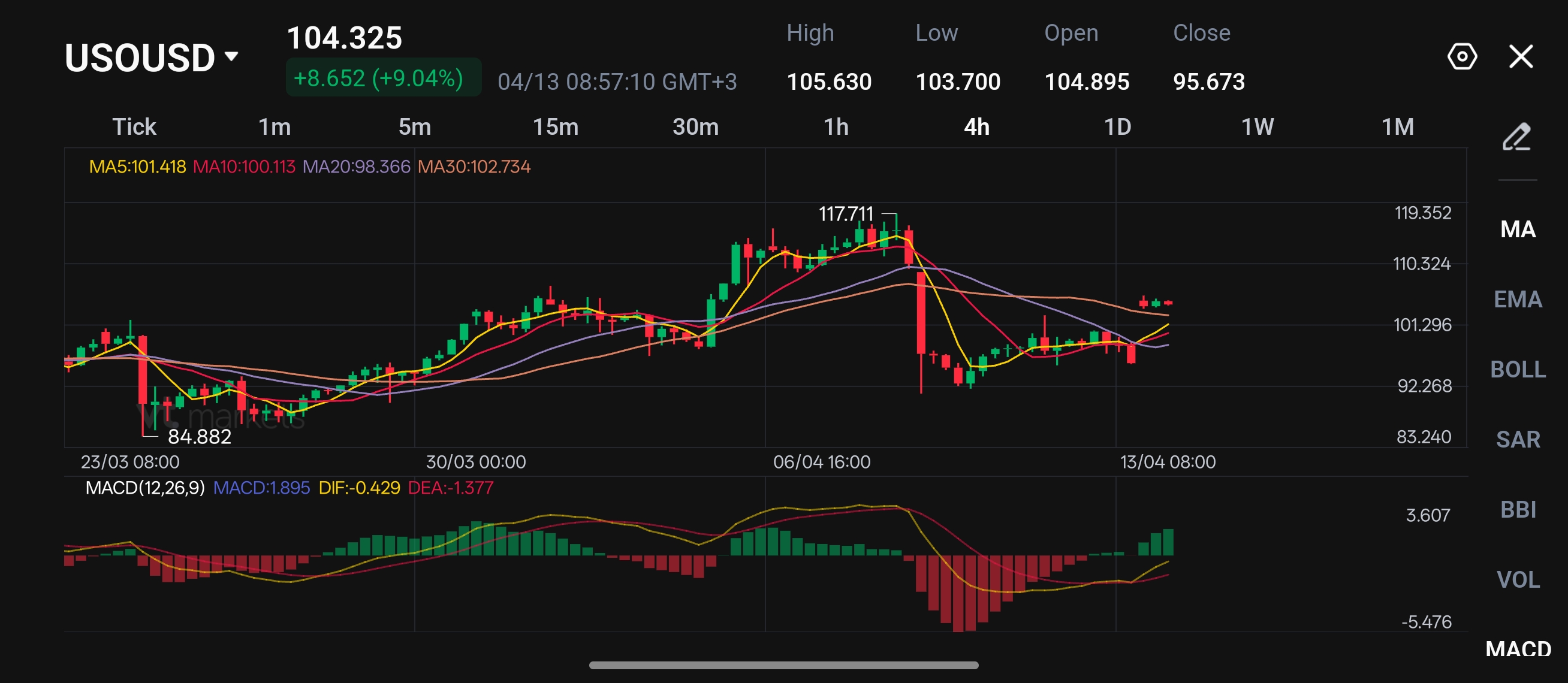
US Oil traded higher on Monday’s Asian session and currently trading above $100. Last week there was a huge bearish candlestick towards the downside and has create a huge fair value gap, it is likely that Oil will head towards previous high to fill the gap and trade above $110, provided if no successful negotiations is done.
The moving averages are slowly aligning for a bullish trend but it is not confirmed yet, we have to see 3 of the EMAs aligning towards the upside before taking any long positions.
MACD indicator is showing bullish histogram and the signal line is starting to cross into the positive region.
Key Levels To Watch:
Support: 100 -> 95.9 -> 91.2
Resistance: 105-> 109.2 -> 113.6
What to Watch
Traders should focus on three key developments:
- Strait of Hormuz traffic Any signs of further disruption or military escalation will directly impact supply expectations.
- Policy and military signals Statements from the U.S., Iran, and regional players will shape short-term sentiment.
- Oil price follow-through A sustained move above $100 could trigger broader positioning shifts across commodities and inflation-sensitive assets.
Market Takeaway
Oil’s move back above $100 is a reminder that geopolitics can quickly override fundamentals.
For now, the market is pricing in risk, not certainty. Whether this turns into a sustained rally or a short-term spike will depend on how the situation in the Middle East develops in the coming days.
Learn more about trading Energies on VT Markets here.
Trader Questions
What is driving oil prices above $100?
The move is being driven by supply risk, not demand. Escalating tensions and a potential blockade in the Strait of Hormuz are raising concerns about disrupted oil flows, pushing prices higher.
Why is the Strait of Hormuz so important for oil markets?
The Strait of Hormuz handles a significant share of global oil shipments. Any disruption there can quickly tighten supply, making it one of the most sensitive chokepoints for oil prices.
Is this oil rally likely to continue?
It depends on geopolitical developments. Further escalation could push prices higher, while any signs of de-escalation or resumed negotiations could reverse the move quickly.
Start trading now – Click here to create your real VT Markets account







