





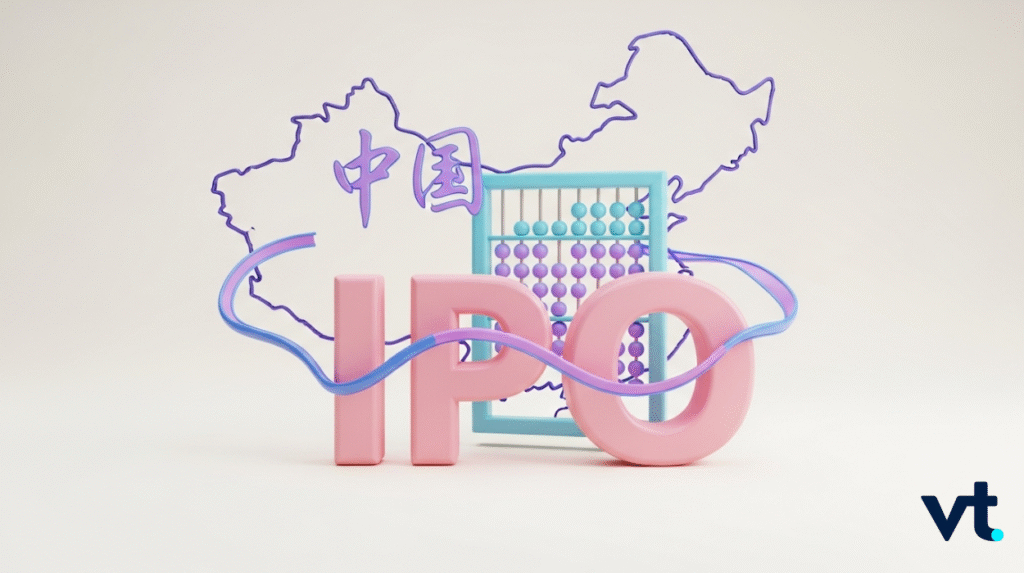
China’s IPO market is reopening, but it’s not a typical free-market boom. This revival is guided by policy, strategically focused on financing industries like technology and manufacturing. While capital is flowing, Beijing is still shaping who gets to access it and under what terms.
This isn’t simply about IPOs coming back; it’s about directing capital to the sectors China sees as critical for its future growth. Beijing’s emphasis on hard-tech industries such as AI, semiconductors, and robotics is clear — it wants to fund innovation but under its own terms.
A Positive Drive for Strategic Innovation
The numbers are telling: Mainland China’s IPO fundraising reached 25.7 billion yuan in Q1 2026, up from 16.5 billion yuan the previous year, as reported by SCMP. This increase is partly due to easing restrictions designed to drive tech innovation. Hong Kong has also seen a significant rise in IPO activity, with proceeds up 231% in 2025, totaling $37 billion.
The surge in applications is mostly coming from sectors aligned with China’s policy goals: semiconductors, AI, robotics, and biotech. These sectors have not only growth potential but also strategic importance, which is why China is focusing its capital markets on them.
While this policy-driven growth signals the government’s desire to support tech-driven development, it also creates a more regulated market — one that isn’t completely free, but carefully curated.
Confidence Gauge
For traders, the reopening of China’s IPO market suggests a renewed confidence in China’s tech and innovation sectors, even if that confidence is still being guided by policy. A large IPO pipeline indicates an active capital market, but it’s not a guarantee of sustained bullish momentum. The key question now is whether the IPOs will convert into actual listings and whether those companies will hold value post-listing.
The IPO cycle can influence market sentiment and investor appetite for China-linked equities, especially in growth sectors. The performance of newly listed companies, particularly in tech and innovation-driven industries, will tell us whether optimism is real or temporary.
Controlled Access and Strategic Oversight
The increase in IPO activity may seem bullish, but access to this boom is not unrestricted. China is actively managing who can list and under what conditions.
Red-chip companies, which are incorporated overseas, face increasing scrutiny. Regulators are pushing some of these firms to restructure before listing in Hong Kong, citing concerns over ownership opacity and compliance. While these regulations may seem restrictive, they signal a desire for greater transparency and better corporate governance.
At the same time, Hong Kong regulators are tightening rules on IPO sponsors, increasing the inspection of listing documents. This ensures that companies listing in Hong Kong meet certain standards, but it also means that the government is keeping a tight grip on the market’s structure.
A Step Toward Innovation, With Caution
Despite regulatory constraints, there is a positive side to China’s controlled IPO revival. By directing capital into strategically important industries, Beijing is fostering innovation that could drive long-term growth. The policy support for tech and advanced manufacturing is critical for China’s development in these sectors, and the IPO market is a tool to channel resources where they’re needed most.
For traders, this is a mixed yet constructive development. While the state is exerting more control, the focus on tech-driven innovation can still position China’s capital markets as a key growth area. As talent flows toward China’s growing tech ecosystem, the country is likely to become an increasingly attractive hub for global talent, especially in fields like AI and robotics.
The IPO revival signals that China’s capital markets are aligning with its long-term growth plans, especially in high-tech sectors, which could offer opportunities for investors.
We equip traders with the tools, insights, and execution capabilities to navigate these transformative shifts, helping you position ahead of major market developments. Join our platform today.
What’s at Stake for Traders
For traders, this feeds directly into how China exposure is perceived. A functioning IPO market often signals improving confidence, even if that confidence is still being guided.
A large pipeline, on its own, is not necessarily bullish. It only supports sentiment if applications convert into actual listings at a steady pace.
The reopening phase is only the first step. The next phase will determine whether sentiment strengthens or stalls. From here, traders should focus on a few factors:
- Pipeline conversion: Does the large queue of applicants result in consistent listings? How quickly will companies in the IPO pipeline convert into actual deals?
- Sector leadership: Will semiconductors, AI, and biotech continue to dominate the listings? This would signal that Beijing’s policy focus remains on these industries.
- Regulatory follow-through: How will STAR and ChiNext reforms impact the pace and quality of IPOs in the long term? If reforms lead to faster approvals and more inclusive criteria, it could be a positive sign for investors.
- Post-IPO performance: Strong aftermarket trading would confirm real market confidence. If IPOs fail to perform well after listing, it may signal that investor sentiment is not as strong as it initially appeared.
These factors will shape whether China’s IPO revival leads to broad market strength or whether sentiment falters.
Where to Watch
For traders, the key will be monitoring whether the IPO pipeline continues to convert into tangible deals and if hard-tech sectors remain at the forefront. As China’s innovation-focused growth continues, the performance of China-linked indices will reflect the broader sentiment toward China’s capital markets.
At VT Markets, we offer CFDs on a range of China and Hong Kong-linked products, allowing traders to tap into China’s evolving IPO landscape and broader market trends. These include:
| CHINA50 (China A50 Index Cash CFD): A key gauge of China’s large-cap equity market, sensitive to macroeconomic conditions, policy changes, and sentiment toward China’s biggest firms. | CHINA50ft (CHINA50 Future): A futures contract that reflects the performance of China’s largest companies, offering traders a way to capitalize on movements in Chinese blue-chip stocks. | CHINAH (Hong Kong China H-shares Cash): A product tracking Chinese companies listed in Hong Kong, offering exposure to the performance of firms in this key global financial center. |
| HK50 (Hang Seng Index Cash CFD): Represents the Hang Seng Index, offering a broad overview of Hong Kong-listed companies and serving as a barometer for investor confidence in Hong Kong equities. | HK50ft (HK50 Future): A futures product on the Hang Seng Index, providing traders with a leveraged way to trade the broader Hong Kong market. | HKTECH (Hang Seng TECH Index CFD): Focused on Hong Kong’s technology sector, allowing traders to gain exposure to the rising tech giants in the region. |
China’s IPO market is driven by policy support and sector demand, but also shaped by regulatory caution and global uncertainty. As China’s innovation-focused growth continues, monitor price movements and stay ahead of the changes unfolding in China’s IPO market. Download App Now.
Click for Refresher!
1. What sectors are driving China’s IPO revival?
China’s IPO revival is primarily driven by technology, including semiconductors, AI, and robotics, as well as sectors like biotech and healthcare, which align with Beijing’s strategic goals for self-reliance.
2. How does China’s government regulate the IPO process?
China’s government is not simply reopening the IPO market. It is guiding capital flows toward strategic sectors by controlling which companies can list, monitoring offshore structures, and tightening regulatory standards.
3. What impact does China’s IPO revival have on investor sentiment?
The IPO revival signals improved market confidence in China’s tech-driven growth, especially with policy-backed sectors. However, the success of this revival depends on whether IPOs convert into real deals.
4. How can traders capitalise on China’s IPO market recovery at VT Markets?
Traders can access China-linked indices such as China50, China50FT, and CHINAH, which reflect the IPO trends and investor sentiment around Chinese and Hong Kong-listed firms.
5. Will China’s IPO market remain politically controlled?
Yes, China’s IPO market will remain guided by government priorities. The focus will be on tech innovation, but with tight control over who gets to list and under what conditions to ensure regulatory compliance.
Start trading now – Click here to create your real VT Markets account







