






Key Points
- USDX trades at 98.679, up 0.043 (+0.04%), but it remains on track for a weekly drop of more than 1%.
- A two-week US-Iran ceasefire and lower oil prices have eased the inflation shock that supported the dollar through March.
- One-year US inflation expectations rose to 3.4% in March from 3.0% in February, while expected gasoline-price inflation jumped to 9.4%.
The dollar is no longer trading with the same urgency that drove it higher through the worst of the Iran shock. USDX is holding near 98.679, a modest rebound on the day, but still well below the recent peak at 100.481. The main reason is straightforward.
A two-week ceasefire has reduced the immediate need for safe-haven positioning, and the drop in oil has pulled out part of the inflation premium that had been supporting the greenback.
That has changed the tone, but not the full structure. The ceasefire is temporary, Hormuz traffic is still not fully normal, and markets are still treating the current calm as conditional rather than durable. That keeps the dollar softer than it was, but not yet in a clean bearish trend.
Lower Oil Has Softened the Dollar’s Main Support
The dollar’s March strength came from two linked forces: war risk and higher-for-longer rate pricing. Oil fed both. Once crude fell sharply after the ceasefire announcement, the market had less reason to keep chasing the dollar higher.
That matters because the US still benefits when energy shocks hurt importers more than exporters, but that advantage narrows when crude retreats. The market is now pricing in a less severe inflation spillover than it was one week ago, which has made defensive dollar longs less attractive.
The problem for dollar bears is that oil has eased, not normalised. Shipping disruption, political uncertainty, and the risk of renewed escalation still leave a residual premium in rates and currencies.
Inflation Still Limits the Downside
The dollar has weakened, but inflation risk remains high enough to prevent the market from rebuilding an easy Fed-cut story. March survey data showed one-year inflation expectations rising to 3.4% from 3.0%, while expected gasoline-price inflation jumped to 9.4%, the highest since the 2022 energy shock.
That keeps the rates backdrop sticky. A lower dollar usually needs either cleaner disinflation or visibly weaker growth data. Right now, the market has neither.
The ceasefire has cut one part of the problem, but households are still expecting higher fuel costs, and businesses are still facing elevated logistics prices.
That is why the dollar is slipping in an orderly way instead of breaking lower.
CPI is the Next Real Test
The next move in USDX depends on whether the upcoming CPI data confirms that the conflict has already filtered into broader price pressure. Service data has already pointed in that direction. Input prices rose at the fastest pace in more than 13 years, while growth slowed, which is exactly the kind of mix that makes central banks cautious.
If CPI comes in firm, the dollar can stabilise quickly because traders will go back to higher-for-longer thinking. If CPI lands softer than feared, the latest pullback can extend because the market will have room to remove more of the inflation premium that built through March.
That leaves the dollar trading off two clocks at once: the truce clock and the inflation clock.
USDX Technical Outlook
The US Dollar Index (USDX) is trading near 98.68, continuing its pullback after failing to sustain gains above the 100.48 high. Price action shows a clear shift in momentum, with a series of lower highs forming and recent candles reflecting sustained selling pressure.
The move lower has now pushed the index beneath key short-term support, suggesting the bullish phase has paused and a corrective structure is developing.
From a technical standpoint, the trend is tilting bearish in the short term. Price is trading below the 5-day (99.09) and 10-day (99.46) moving averages, both of which are turning lower and acting as immediate resistance.
The 20-day (99.42) is also flattening and beginning to roll over, reinforcing the loss of upside momentum. This alignment indicates that rallies are likely to face selling pressure unless the index can reclaim higher ground.
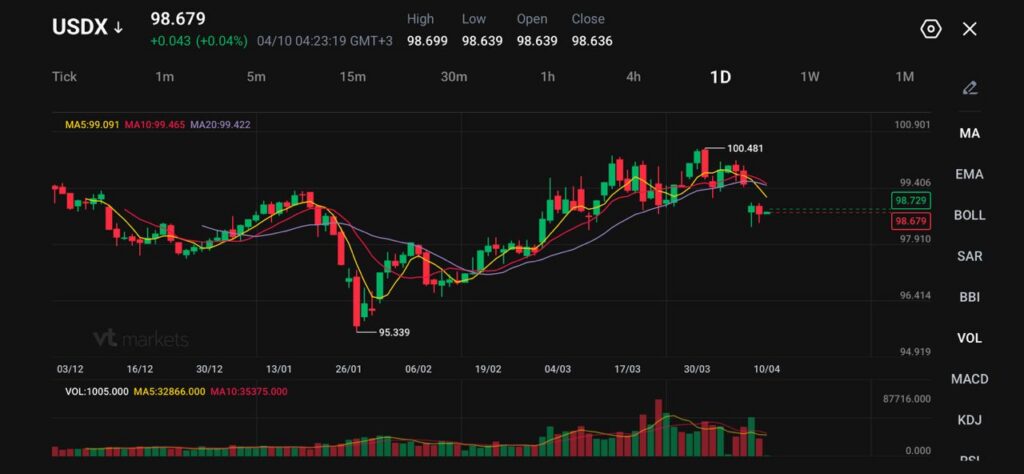
Key levels to watch:
- Support: 98.70 → 97.90 → 96.40
- Resistance: 99.40 → 100.00 → 100.50
The immediate focus is on the 98.70 zone, which price is currently hovering around. A sustained break below this level could open the path toward 97.90, where stronger support may emerge.
On the upside, 99.40 now acts as near-term resistance. A move back above this level would suggest stabilisation and could lead to a recovery toward the 100.00 handle.
Overall, USDX is showing signs of short-term weakness after rejecting the 100 level. The structure now favours consolidation or further downside unless buyers can regain control above the 99.40–100.00 region.
What Traders Should Watch Next
The market is now weighing three variables together: whether the ceasefire holds, whether shipping through Hormuz improves enough to keep oil lower, and whether CPI confirms or challenges the inflation story.
A stable truce and softer inflation would likely keep pressure on the dollar. A renewed threat to Hormuz or a hotter inflation print would likely pull buyers back quickly.
Learn more about trading Indices on VT Markets today.
Trader Questions
Why is the Dollar Index Holding Near 99 Instead of Falling More Sharply?
The dollar has lost part of its war-driven safe-haven premium, but traders have not fully abandoned it because the ceasefire is temporary, Hormuz disruptions have not fully cleared, and inflation risk is still high. Recent market coverage also showed the dollar stabilising after touching a one-month low near 98.525.
What Caused the Weekly Drop in USDX?
The biggest driver was the two-week US-Iran ceasefire, which helped push oil lower and reduced fears of a more immediate inflation shock. That made defensive dollar positioning less urgent than it was during the worst of the March energy spike.
Why Does Oil Still Matter for the Dollar Even After the Ceasefire?
Oil still shapes inflation expectations and Fed pricing. Even after the truce, Brent and WTI remained elevated because the market still doubts how quickly flows through Hormuz can normalise. As long as energy stays expensive, the dollar keeps some support from higher-for-longer rate expectations.
Why Hasn’t the Ceasefire Fully Reversed Safe-Haven Demand?
Because the pause looks fragile. Market reports still describe the truce as uncertain, with continued attacks in the region and ongoing limits on ship crossings through Hormuz. That keeps traders from treating the current calm as a full resolution.
What Are Markets Waiting for Next on the Macro Side?
The next major test is US March CPI. Inflation expectations have already moved higher, and the market wants to see whether the oil shock has started feeding into official price data strongly enough to keep the Fed cautious.
Start trading now – Click here to create your real VT Markets account







